Birdr

Giant Snipe vs Pantanal Snipe

Gallinago undulata versus Gallinago paraguaiae

Play a quiz with Giant Snipe and Pantanal Snipe
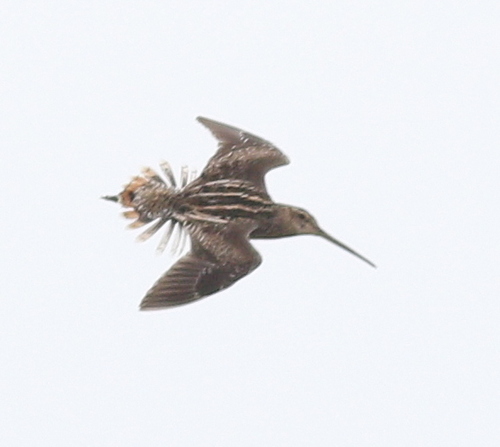
Giant Snipe (Gallinago undulata) Giant Snipe
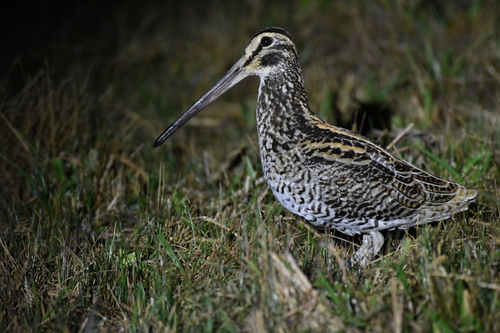
Pantanal Snipe (Gallinago paraguaiae) Pantanal Snipe

Media

Loading…

In short

The Giant Snipe and Pantanal Snipe can be distinguished by size and plumage differences. The Giant Snipe is notably larger and often solitary, while the Pantanal Snipe is generally darker and more heavily marked. Vocalizations are crucial but challenging to use in the field.

Identification tips

Size

The Giant Snipe is significantly larger than the Pantanal Snipe, making size a reliable field mark when both species are present.

Plumage

The Giant Snipe has a more typical snipe plumage, while the Pantanal Snipe is generally darker, less rufescent above, and more heavily marked below.

Behaviour

Giant Snipes are usually encountered alone and are more likely to be detected by flushing or during their display-flight calls at nightfall. Pantanal Snipes may be found in groups, especially during non-breeding seasons.

Habitat

Giant Snipes are often found in marshy areas, while Pantanal Snipes inhabit tropical to subtropical regions north and east of the Andes.

Voice

Giant Snipes are detected by their display-flight calls at nightfall. Pantanal Snipes have two types of vocal display calls, but these are not typically used for field identification.

Submit a better description

Use the same sections as the comparison. Your text is published immediately.

The Giant Snipe and Pantanal Snipe can be distinguished by size and plumage differences. The Giant Snipe is notably larger and often solitary, while the Pantanal Snipe is generally darker and more heavily marked. Vocalizations are crucial but challenging to use in the field.

  • Size: Look for the larger size of the Giant Snipe.
  • Plumage: Note the darker and more heavily marked appearance of the Pantanal Snipe.
  • Behavior: Observe solitary behavior in Giant Snipe versus potential grouping in Pantanal Snipe.
  • Habitat: Consider the habitat; Giant Snipes are more marsh-associated.
  • Vocalizations: Use calls if heard, but they are not always reliable in the field.

The Giant Snipe is significantly larger than the Pantanal Snipe, making size a reliable field mark when both species are present.

The Giant Snipe has a more typical snipe plumage, while the Pantanal Snipe is generally darker, less rufescent above, and more heavily marked below.

Giant Snipes are usually encountered alone and are more likely to be detected by flushing or during their display-flight calls at nightfall. Pantanal Snipes may be found in groups, especially during non-breeding seasons.

Giant Snipes are often found in marshy areas, while Pantanal Snipes inhabit tropical to subtropical regions north and east of the Andes.

Giant Snipes are detected by their display-flight calls at nightfall. Pantanal Snipes have two types of vocal display calls, but these are not typically used for field identification.

Discard your changes?

You have unsaved edits. If you leave now, those changes will be lost.

Giant Snipe · Pantanal Snipe · My Tricky Birds