Birdr

Gila Woodpecker vs Masked Tityra

Melanerpes uropygialis versus Tityra semifasciata

Play a quiz with Gila Woodpecker and Masked Tityra
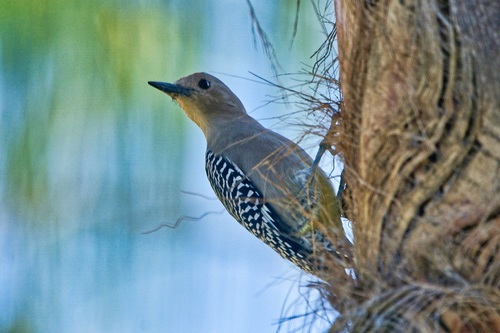
Gila Woodpecker (Melanerpes uropygialis) Gila Woodpecker
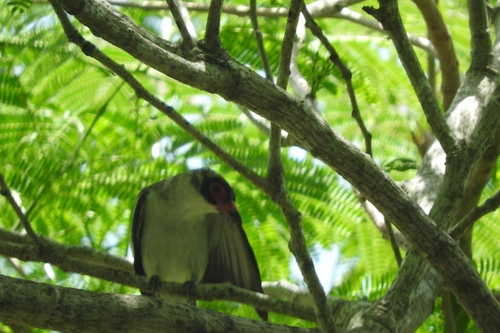
Masked Tityra (Tityra semifasciata) Masked Tityra

Media

Loading…

In short

The Gila Woodpecker and Masked Tityra are distinct in both appearance and habitat. The Gila Woodpecker is a desert-dwelling bird with a barred back and a distinctive red cap on males, while the Masked Tityra is a tropical bird with a pale body and a striking black mask. These differences make them unlikely to be confused in the field.

Identification tips

1. Location: Gila Woodpeckers are found in desert areas, especially with saguaro cacti, while Masked Tityras are in tropical forests. 2. Plumage: Look for the red cap on male Gila Woodpeckers and the black mask on Masked Tityras. 3. Behavior: Note the woodpecker's trunk-clinging behavior versus the tityra's open perching. 4. Calls: Listen for the distinct woodpecker calls of the Gila versus the varied calls of the Masked Tityra.

Size

The Gila Woodpecker is slightly smaller and more compact than the Masked Tityra, which has a more elongated body typical of passerines.

Plumage

Gila Woodpeckers have a brownish body with black-and-white barring on the back and wings, and males have a red cap. Masked Tityras are pale with a prominent black mask and a contrasting white body.

Behaviour

Gila Woodpeckers are often seen clinging to tree trunks or cacti, exhibiting typical woodpecker behavior. Masked Tityras are more likely to be seen perched openly in the canopy or flying between trees.

Habitat

Gila Woodpeckers inhabit arid desert regions, often associated with saguaro cacti, while Masked Tityras are found in tropical forests and edges, often in more humid environments.

Voice

Gila Woodpeckers have a loud, rolling call typical of woodpeckers. Masked Tityras produce a variety of calls, including whistles and harsh notes, differing significantly from woodpecker sounds.

Submit a better description

Use the same sections as the comparison. Your text is published immediately.

The Gila Woodpecker and Masked Tityra are distinct in both appearance and habitat. The Gila Woodpecker is a desert-dwelling bird with a barred back and a distinctive red cap on males, while the Masked Tityra is a tropical bird with a pale body and a striking black mask. These differences make them unlikely to be confused in the field.

1. Location: Gila Woodpeckers are found in desert areas, especially with saguaro cacti, while Masked Tityras are in tropical forests. 2. Plumage: Look for the red cap on male Gila Woodpeckers and the black mask on Masked Tityras. 3. Behavior: Note the woodpecker's trunk-clinging behavior versus the tityra's open perching. 4. Calls: Listen for the distinct woodpecker calls of the Gila versus the varied calls of the Masked Tityra.

The Gila Woodpecker is slightly smaller and more compact than the Masked Tityra, which has a more elongated body typical of passerines.

Gila Woodpeckers have a brownish body with black-and-white barring on the back and wings, and males have a red cap. Masked Tityras are pale with a prominent black mask and a contrasting white body.

Gila Woodpeckers are often seen clinging to tree trunks or cacti, exhibiting typical woodpecker behavior. Masked Tityras are more likely to be seen perched openly in the canopy or flying between trees.

Gila Woodpeckers inhabit arid desert regions, often associated with saguaro cacti, while Masked Tityras are found in tropical forests and edges, often in more humid environments.

Gila Woodpeckers have a loud, rolling call typical of woodpeckers. Masked Tityras produce a variety of calls, including whistles and harsh notes, differing significantly from woodpecker sounds.

Discard your changes?

You have unsaved edits. If you leave now, those changes will be lost.

Gila Woodpecker · Masked Tityra · My Tricky Birds