Birdr

Gilded Barbet vs Dickcissel

Capito auratus versus Spiza americana

Play a quiz with Gilded Barbet and Dickcissel
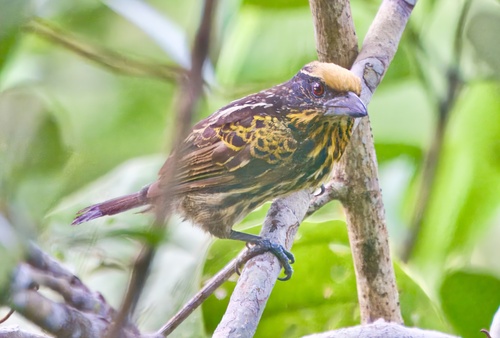
Gilded Barbet (Capito auratus) Gilded Barbet
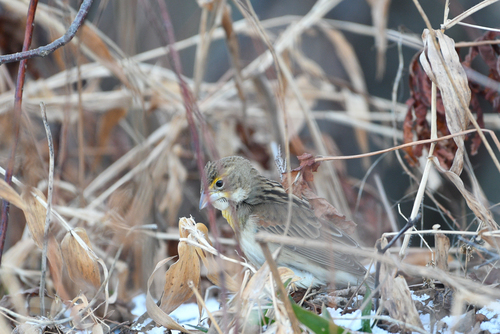
Dickcissel (Spiza americana) Dickcissel

Media

Loading…

In short

The most reliable field mark to separate Gilded Barbet from Dickcissel is overall structure and head pattern: Gilded Barbet is a thickset, large-headed bird with a stubby bill and a mostly black upper body, while Dickcissel is a slim, sparrow-like bird with a pale, conical bill and a distinctive yellow eyebrow and breast. In all ages, Gilded Barbet shows black wings with yellow spotting and a bold, contrasting facial mask, whereas Dickcissel has brownish upperparts with black streaks and a rust shoulder patch. Females and immatures of both species can cause confusion, but the barbet's heavy build and unique wing pattern remain distinctive. Habitat and context are also strong clues: Gilded Barbet is a forest bird of the Amazon and Orinoco basins, while Dickcissel is found in North American grasslands and fields.

Identification tips

  1. Structure: Gilded Barbet is thickset with a large head and stubby bill, unlike the slim, sparrow-like Dickcissel with its pale, conical bill. This difference is obvious even at a distance.
  2. Wing Pattern (all ages): Gilded Barbet always shows black wings with yellow spotting on the greater coverts and yellow edging on the remiges. Dickcissel's wings are dark with a rust shoulder patch but never show yellow spotting or bold patterning.
  3. Head Pattern: Gilded Barbet has a black facial mask and bold yellow eyebrows that run as parallel lines over the mantle. Dickcissel has a yellow line over the eye, but never a black mask or eyebrow lines; adult males have a black throat patch and grey cheeks/crown, while females/juveniles are brownish on the head.
  4. Upperparts: Gilded Barbet's upperparts, tail, and wings are mainly black, while Dickcissel's are brownish with black streaks and a rust patch on the shoulder.
  5. Underparts: Gilded Barbet has a pale yellow belly with black streaking on the flanks (and chest in females), while Dickcissel has light underparts with streaked flanks in females/juveniles and a yellow breast in adult males.
  6. Throat and Crown (sex/age): Gilded Barbet's throat varies from red to orange (sometimes streaked black in western females), and the crown can be deep yellow to reddish-orange. Dickcissel males have a black throat patch; females/juveniles have plain or lightly streaked throats.
  7. Bill Color: Gilded Barbet has a broadly black-tipped grey bill; Dickcissel's bill is large and pale, conical, and lacks dark markings.
  8. Eye Color: Gilded Barbet has dark maroon irides; Dickcissel's eye color is not specified but is not a field mark.
  9. Leg Color: Gilded Barbet has greyish legs; Dickcissel's leg color is not specified but is not distinctive.
  10. Sexual Dimorphism: Female Gilded Barbets have more yellow/orange on the wing coverts and yellowish streaking on the auriculars and back, but still show the thickset structure and black-and-yellow wing pattern. Female/juvenile Dickcissels are brownish and streaked, resembling sparrows.
  11. Flight Jizz: Gilded Barbet appears heavy and short-tailed in flight, often moving between forest trees. Dickcissel is slim, with a longer wingspan relative to body, and flies in open country.
  12. Habitat: Gilded Barbet is only found in tropical forests of the Amazon and Orinoco basins; Dickcissel is a bird of open fields, prairies, and agricultural land.
  13. Vocalization: Only Dickcissel's song and call are described; a buzzy 'fpppt' in flight and a sharp, repetitive song from exposed perches are diagnostic for Dickcissel.
  14. Geographic Range: If seen in North American grasslands, it is Dickcissel; if in Amazonian or Orinoco forest, it is Gilded Barbet.
  15. Common Pitfall: Female/juvenile Dickcissels can resemble sparrows and are unlikely to be confused with Gilded Barbet except in very poor light or distant views. The barbet's structure and wing pattern are always distinctive.

Size

Gilded Barbet is noticeably larger and bulkier, reaching about 20 cm (8 in) in length, with a thickset body and large head. Dickcissel is smaller and lighter, measuring 14–16 cm (5.5–6.3 in) in length and weighing about 27 g. The Dickcissel's wingspan is slightly longer relative to its body (25–26 cm), but its overall impression is that of a slim, sparrow-sized bird. In the field, the barbet's robust build and short tail stand out against the Dickcissel's more delicate, finch-like proportions.

Plumage

Juvenile and female Dickcissels are brownish above with black streaks and streaked flanks, resembling sparrows, and lack the bold head and wing pattern of Gilded Barbet. In all ages, Gilded Barbet has black upperparts, wings, and tail, with yellow spotting on the wing coverts and yellow edging on the remiges, plus a bold yellow eyebrow extending as parallel lines over the mantle. Adult male Dickcissels have a black throat patch and yellow breast, but their upperparts are brown and streaked, with a rust patch on the shoulder and no black mask or yellow wing spotting. Female Gilded Barbets show more yellow and orange on the wing coverts and yellowish streaking on the auriculars and back, but always retain the thickset structure and black-and-yellow wing pattern. In flight, Dickcissel shows dark wings with a rust shoulder patch but lacks any yellow spotting or bold facial mask. Gilded Barbet's underparts are pale yellow with black streaking on the flanks, while Dickcissel's are light with streaked flanks in females and juveniles, and a yellow breast in adult males.

Behaviour

Gilded Barbet is typically seen in the mid to upper levels of tropical forest, often moving slowly and deliberately as it forages for fruit. It may perch quietly for long periods and is rarely seen in open country. Dickcissel, by contrast, is usually found in open fields and grasslands, often perching conspicuously on fences or tall weeds, and is much more likely to be seen in flocks, especially outside the breeding season. Dickcissel's flight is strong and direct, often accompanied by its characteristic call.

Habitat

Gilded Barbet is restricted to tropical moist lowland forests and woodland in the western Amazon and Orinoco basins, including the lower foothills of the Andes. It is never found in open country or grasslands. Dickcissel breeds in prairie grasslands and agricultural fields of the Midwestern United States and migrates to open habitats in Central and northern South America for the winter. If the bird is in a forest interior or edge in Amazonia, it is almost certainly a Gilded Barbet; if in an open field or prairie, especially in North America, it is a Dickcissel.

Voice

Dickcissel has a distinctive, buzzy flight call ('fpppt') and a sharp, repetitive song ('dick dick ciss ciss ciss'), often given from an exposed perch. Gilded Barbet's vocalizations are not described in the provided notes, so voice is only diagnostic for Dickcissel.

Submit a better description

Use the same sections as the comparison. Your text is published immediately.

The most reliable field mark to separate Gilded Barbet from Dickcissel is overall structure and head pattern: Gilded Barbet is a thickset, large-headed bird with a stubby bill and a mostly black upper body, while Dickcissel is a slim, sparrow-like bird with a pale, conical bill and a distinctive yellow eyebrow and breast. In all ages, Gilded Barbet shows black wings with yellow spotting and a bold, contrasting facial mask, whereas Dickcissel has brownish upperparts with black streaks and a rust shoulder patch. Females and immatures of both species can cause confusion, but the barbet's heavy build and unique wing pattern remain distinctive. Habitat and context are also strong clues: Gilded Barbet is a forest bird of the Amazon and Orinoco basins, while Dickcissel is found in North American grasslands and fields.

  1. Structure: Gilded Barbet is thickset with a large head and stubby bill, unlike the slim, sparrow-like Dickcissel with its pale, conical bill. This difference is obvious even at a distance.
  2. Wing Pattern (all ages): Gilded Barbet always shows black wings with yellow spotting on the greater coverts and yellow edging on the remiges. Dickcissel's wings are dark with a rust shoulder patch but never show yellow spotting or bold patterning.
  3. Head Pattern: Gilded Barbet has a black facial mask and bold yellow eyebrows that run as parallel lines over the mantle. Dickcissel has a yellow line over the eye, but never a black mask or eyebrow lines; adult males have a black throat patch and grey cheeks/crown, while females/juveniles are brownish on the head.
  4. Upperparts: Gilded Barbet's upperparts, tail, and wings are mainly black, while Dickcissel's are brownish with black streaks and a rust patch on the shoulder.
  5. Underparts: Gilded Barbet has a pale yellow belly with black streaking on the flanks (and chest in females), while Dickcissel has light underparts with streaked flanks in females/juveniles and a yellow breast in adult males.
  6. Throat and Crown (sex/age): Gilded Barbet's throat varies from red to orange (sometimes streaked black in western females), and the crown can be deep yellow to reddish-orange. Dickcissel males have a black throat patch; females/juveniles have plain or lightly streaked throats.
  7. Bill Color: Gilded Barbet has a broadly black-tipped grey bill; Dickcissel's bill is large and pale, conical, and lacks dark markings.
  8. Eye Color: Gilded Barbet has dark maroon irides; Dickcissel's eye color is not specified but is not a field mark.
  9. Leg Color: Gilded Barbet has greyish legs; Dickcissel's leg color is not specified but is not distinctive.
  10. Sexual Dimorphism: Female Gilded Barbets have more yellow/orange on the wing coverts and yellowish streaking on the auriculars and back, but still show the thickset structure and black-and-yellow wing pattern. Female/juvenile Dickcissels are brownish and streaked, resembling sparrows.
  11. Flight Jizz: Gilded Barbet appears heavy and short-tailed in flight, often moving between forest trees. Dickcissel is slim, with a longer wingspan relative to body, and flies in open country.
  12. Habitat: Gilded Barbet is only found in tropical forests of the Amazon and Orinoco basins; Dickcissel is a bird of open fields, prairies, and agricultural land.
  13. Vocalization: Only Dickcissel's song and call are described; a buzzy 'fpppt' in flight and a sharp, repetitive song from exposed perches are diagnostic for Dickcissel.
  14. Geographic Range: If seen in North American grasslands, it is Dickcissel; if in Amazonian or Orinoco forest, it is Gilded Barbet.
  15. Common Pitfall: Female/juvenile Dickcissels can resemble sparrows and are unlikely to be confused with Gilded Barbet except in very poor light or distant views. The barbet's structure and wing pattern are always distinctive.

Gilded Barbet is noticeably larger and bulkier, reaching about 20 cm (8 in) in length, with a thickset body and large head. Dickcissel is smaller and lighter, measuring 14–16 cm (5.5–6.3 in) in length and weighing about 27 g. The Dickcissel's wingspan is slightly longer relative to its body (25–26 cm), but its overall impression is that of a slim, sparrow-sized bird. In the field, the barbet's robust build and short tail stand out against the Dickcissel's more delicate, finch-like proportions.

Juvenile and female Dickcissels are brownish above with black streaks and streaked flanks, resembling sparrows, and lack the bold head and wing pattern of Gilded Barbet. In all ages, Gilded Barbet has black upperparts, wings, and tail, with yellow spotting on the wing coverts and yellow edging on the remiges, plus a bold yellow eyebrow extending as parallel lines over the mantle. Adult male Dickcissels have a black throat patch and yellow breast, but their upperparts are brown and streaked, with a rust patch on the shoulder and no black mask or yellow wing spotting. Female Gilded Barbets show more yellow and orange on the wing coverts and yellowish streaking on the auriculars and back, but always retain the thickset structure and black-and-yellow wing pattern. In flight, Dickcissel shows dark wings with a rust shoulder patch but lacks any yellow spotting or bold facial mask. Gilded Barbet's underparts are pale yellow with black streaking on the flanks, while Dickcissel's are light with streaked flanks in females and juveniles, and a yellow breast in adult males.

Gilded Barbet is typically seen in the mid to upper levels of tropical forest, often moving slowly and deliberately as it forages for fruit. It may perch quietly for long periods and is rarely seen in open country. Dickcissel, by contrast, is usually found in open fields and grasslands, often perching conspicuously on fences or tall weeds, and is much more likely to be seen in flocks, especially outside the breeding season. Dickcissel's flight is strong and direct, often accompanied by its characteristic call.

Gilded Barbet is restricted to tropical moist lowland forests and woodland in the western Amazon and Orinoco basins, including the lower foothills of the Andes. It is never found in open country or grasslands. Dickcissel breeds in prairie grasslands and agricultural fields of the Midwestern United States and migrates to open habitats in Central and northern South America for the winter. If the bird is in a forest interior or edge in Amazonia, it is almost certainly a Gilded Barbet; if in an open field or prairie, especially in North America, it is a Dickcissel.

Dickcissel has a distinctive, buzzy flight call ('fpppt') and a sharp, repetitive song ('dick dick ciss ciss ciss'), often given from an exposed perch. Gilded Barbet's vocalizations are not described in the provided notes, so voice is only diagnostic for Dickcissel.

Discard your changes?

You have unsaved edits. If you leave now, those changes will be lost.

Gilded Barbet · Dickcissel · My Tricky Birds