
Birdr

Glaucous Gull vs Lesser Black-backed Gull

Larus hyperboreus versus Larus fuscus

Play a quiz with Glaucous Gull and Lesser Black-backed Gull
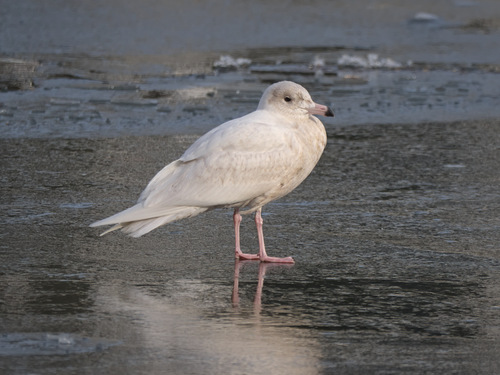
Glaucous Gull (Larus hyperboreus) Glaucous Gull
Lesser Black-backed Gull (Larus fuscus) Lesser Black-backed Gull

Media

Loading…

In short

The Glaucous Gull and Lesser Black-backed Gull can be distinguished primarily by their size and plumage. The Glaucous Gull is larger and lacks the dark mantle of the Lesser Black-backed Gull. These differences are most apparent in adults, but also noticeable in juveniles.

Identification tips

  1. Size and Structure: Look for the larger size and bulkier build of the Glaucous Gull. 2. Plumage: Check for the absence of black on the wings of the Glaucous Gull compared to the dark mantle of the Lesser Black-backed Gull. 3. Location: Consider the habitat; Glaucous Gulls are more likely in Arctic areas, while Lesser Black-backed Gulls prefer temperate coasts. 4. Age Considerations: Juvenile Glaucous Gulls are paler than the more patterned juveniles of the Lesser Black-backed Gull.

Size

The Glaucous Gull is significantly larger than the Lesser Black-backed Gull, with a bulkier build and a more robust bill.

Plumage

The Glaucous Gull has a pale, almost white plumage with no black on the wings, while the Lesser Black-backed Gull has a dark gray to black mantle and wings. Juvenile Glaucous Gulls are pale brown, contrasting with the darker, more patterned juveniles of the Lesser Black-backed Gull.

Behaviour

Both species are opportunistic feeders, but the Glaucous Gull is more likely to be seen scavenging in Arctic environments, while the Lesser Black-backed Gull is often found in coastal areas.

Habitat

The Glaucous Gull is typically found in Arctic regions, nesting on cliffs and tundra, whereas the Lesser Black-backed Gull is more common in temperate coastal areas and inland waters.

Voice

Vocalizations are not a primary distinguishing feature between these species in the field.

Submit a better description

Use the same sections as the comparison. Your text is published immediately.

The Glaucous Gull and Lesser Black-backed Gull can be distinguished primarily by their size and plumage. The Glaucous Gull is larger and lacks the dark mantle of the Lesser Black-backed Gull. These differences are most apparent in adults, but also noticeable in juveniles.

  1. Size and Structure: Look for the larger size and bulkier build of the Glaucous Gull. 2. Plumage: Check for the absence of black on the wings of the Glaucous Gull compared to the dark mantle of the Lesser Black-backed Gull. 3. Location: Consider the habitat; Glaucous Gulls are more likely in Arctic areas, while Lesser Black-backed Gulls prefer temperate coasts. 4. Age Considerations: Juvenile Glaucous Gulls are paler than the more patterned juveniles of the Lesser Black-backed Gull.

The Glaucous Gull is significantly larger than the Lesser Black-backed Gull, with a bulkier build and a more robust bill.

The Glaucous Gull has a pale, almost white plumage with no black on the wings, while the Lesser Black-backed Gull has a dark gray to black mantle and wings. Juvenile Glaucous Gulls are pale brown, contrasting with the darker, more patterned juveniles of the Lesser Black-backed Gull.

Both species are opportunistic feeders, but the Glaucous Gull is more likely to be seen scavenging in Arctic environments, while the Lesser Black-backed Gull is often found in coastal areas.

The Glaucous Gull is typically found in Arctic regions, nesting on cliffs and tundra, whereas the Lesser Black-backed Gull is more common in temperate coastal areas and inland waters.

Vocalizations are not a primary distinguishing feature between these species in the field.

Discard your changes?

You have unsaved edits. If you leave now, those changes will be lost.

Glaucous Gull · Lesser Black-backed Gull · My Tricky Birds