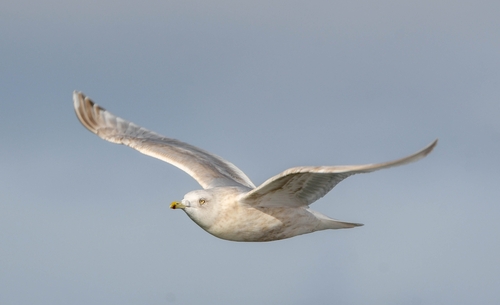
Glaucous-winged Gull vs Iceland Gull
Larus glaucescens versus Larus glaucoides
Play a quiz with Glaucous-winged Gull and Iceland Gull
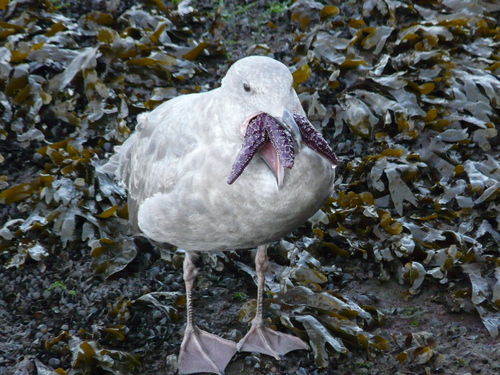
Glaucous-winged Gull
Iceland Gull
In short
The Glaucous-winged Gull and Iceland Gull can be tricky to differentiate, especially in winter plumage. The most reliable field mark is the wing-tip coloration: Glaucous-winged Gulls have gray wingtips that match the mantle, while Iceland Gulls have white or very pale gray wingtips. Both species are medium to large gulls, but their structure and plumage details can help in identification.
Identification tips
- Wing-tip color: Glaucous-winged Gulls have gray wingtips; Iceland Gulls have white or very pale gray wingtips.
- Size and structure: Glaucous-winged Gulls are larger and bulkier.
- Mantle color: Glaucous-winged Gulls have a medium gray mantle; Iceland Gulls have a paler mantle.
- Location: Consider geographical range, especially in winter, as Iceland Gulls are more likely in the North Atlantic.
Size
The Glaucous-winged Gull is generally larger and bulkier than the Iceland Gull, which is more slender.
Plumage
Glaucous-winged Gulls have gray wingtips that blend with the mantle, whereas Iceland Gulls have white or very pale gray wingtips. The mantle of the Glaucous-winged Gull is a consistent medium gray, while the Iceland Gull's mantle is paler. Juvenile and immature plumages can be variable, but the wing-tip color remains a key difference.
Behaviour
Both species exhibit typical gull behaviors, including scavenging and foraging in coastal areas. There are no significant behavioral differences noted in the sources.
Habitat
Glaucous-winged Gulls are typically found along the Pacific coast of North America, often in urban areas and coastal environments. Iceland Gulls are more associated with Arctic and sub-Arctic regions, often seen in winter along the North Atlantic coasts.
Voice
Vocalizations are not distinctly different between the two species, with both producing typical gull calls.