Glaucous-winged Gull vs Slaty-backed Gull
Larus glaucescens versus Larus schistisagus
Play a quiz with Glaucous-winged Gull and Slaty-backed Gull
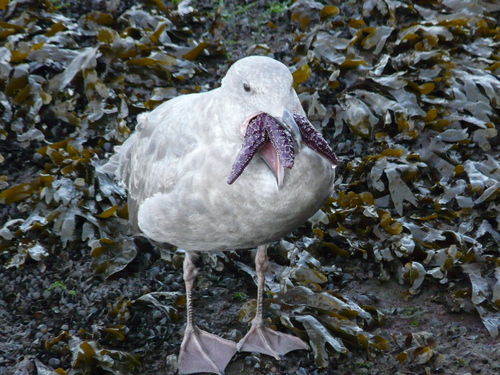
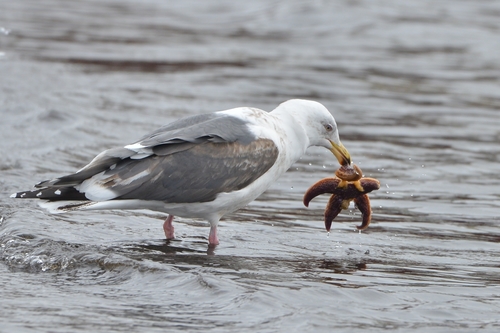
Glaucous-winged Gull
Slaty-backed Gull
In short
The Glaucous-winged Gull and Slaty-backed Gull are similar large gulls, but the Glaucous-winged Gull typically has a paler gray mantle and wingtips that match its mantle color, while the Slaty-backed Gull has darker slaty-gray upperparts and contrasting blackish wingtips. Observing the mantle and wingtip coloration is the most reliable field mark for distinguishing these species.
Identification tips
- Look for the mantle and wingtip color: Glaucous-winged Gulls have pale gray mantles and matching wingtips, while Slaty-backed Gulls have darker mantles with blackish wingtips. 2. Check for the 'string of pearls' pattern on the wingtips of adult Slaty-backed Gulls. 3. Consider the location: Glaucous-winged Gulls are more common along the Pacific coast of North America, whereas Slaty-backed Gulls are more frequent in the northwestern Pacific.
Size
Both species are large gulls, but the Slaty-backed Gull is slightly larger and bulkier than the Glaucous-winged Gull.
Plumage
The Glaucous-winged Gull has a pale gray mantle and wingtips that are similar in color to the mantle, while the Slaty-backed Gull has a darker slaty-gray mantle with blackish wingtips. In adults, the Slaty-backed Gull often shows a white 'string of pearls' pattern on the wingtips.
Behaviour
Both species exhibit similar gull-like behaviors, including scavenging and aggressive interactions during the breeding season.
Habitat
Both species are coastal and can be found in similar habitats, such as beaches, harbors, and coastal waters. However, the Glaucous-winged Gull is more commonly found along the Pacific coast of North America, while the Slaty-backed Gull is more prevalent in the northwestern Pacific, including parts of Asia.
Voice
Vocalizations are similar between the two species, consisting of typical gull calls and cries. Distinguishing them by voice alone is challenging.