Birdr

Golden-bellied Flycatcher vs Green-naped Tanager

Myiodynastes hemichrysus versus Tangara fucosa

Play a quiz with Golden-bellied Flycatcher and Green-naped Tanager
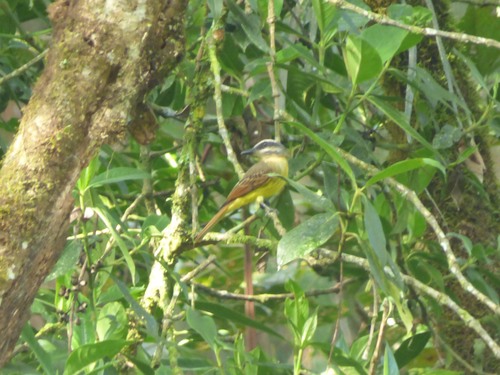
Golden-bellied Flycatcher (Myiodynastes hemichrysus) Golden-bellied Flycatcher
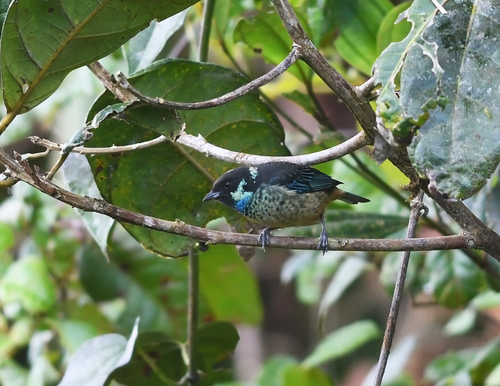
Green-naped Tanager (Tangara fucosa) Green-naped Tanager

Media

Loading…

In short

The Golden-bellied Flycatcher and Green-naped Tanager are easily distinguished by their plumage and behavior. The flycatcher has a distinctive golden belly and is more often seen sallying for insects, while the tanager sports a green nape and is typically found foraging in mixed-species flocks.

Identification tips

1. Look for the golden-yellow belly of the flycatcher versus the green nape of the tanager. 2. Note the behavior: flycatchers perch openly, tanagers forage in flocks. 3. Consider the habitat: flycatchers at edges, tanagers in interiors. 4. Size and shape: flycatchers are larger and more robust.

Size

The Golden-bellied Flycatcher is generally larger and more robust compared to the smaller, more compact Green-naped Tanager.

Plumage

The Golden-bellied Flycatcher has a golden-yellow belly and a streaked head, while the Green-naped Tanager features a green nape and a more uniform, metallic green body.

Behaviour

Golden-bellied Flycatchers are typically seen perching openly and sallying for insects, whereas Green-naped Tanagers are more likely to be found foraging in mixed-species flocks.

Habitat

Both species inhabit forested areas, but the Golden-bellied Flycatcher is often found at the forest edge, while the Green-naped Tanager prefers the forest interior.

Voice

Vocalizations are not well-documented for these species, but flycatchers generally have more varied calls compared to tanagers.

Submit a better description

Use the same sections as the comparison. Your text is published immediately.

The Golden-bellied Flycatcher and Green-naped Tanager are easily distinguished by their plumage and behavior. The flycatcher has a distinctive golden belly and is more often seen sallying for insects, while the tanager sports a green nape and is typically found foraging in mixed-species flocks.

1. Look for the golden-yellow belly of the flycatcher versus the green nape of the tanager. 2. Note the behavior: flycatchers perch openly, tanagers forage in flocks. 3. Consider the habitat: flycatchers at edges, tanagers in interiors. 4. Size and shape: flycatchers are larger and more robust.

The Golden-bellied Flycatcher is generally larger and more robust compared to the smaller, more compact Green-naped Tanager.

The Golden-bellied Flycatcher has a golden-yellow belly and a streaked head, while the Green-naped Tanager features a green nape and a more uniform, metallic green body.

Golden-bellied Flycatchers are typically seen perching openly and sallying for insects, whereas Green-naped Tanagers are more likely to be found foraging in mixed-species flocks.

Both species inhabit forested areas, but the Golden-bellied Flycatcher is often found at the forest edge, while the Green-naped Tanager prefers the forest interior.

Vocalizations are not well-documented for these species, but flycatchers generally have more varied calls compared to tanagers.

Discard your changes?

You have unsaved edits. If you leave now, those changes will be lost.

Golden-bellied Flycatcher · Green-naped Tanager · My Tricky Birds