Birdr

Great Antshrike vs Black-hooded Antshrike

Taraba major versus Thamnophilus bridgesi

Play a quiz with Great Antshrike and Black-hooded Antshrike
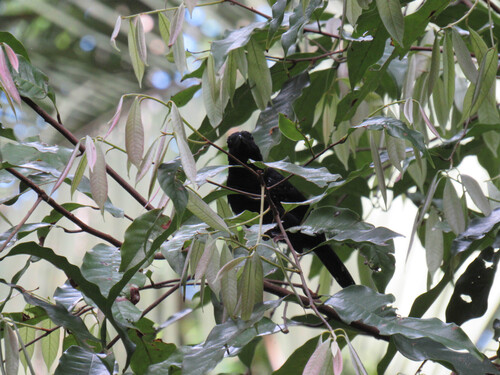
Great Antshrike (Taraba major) Great Antshrike
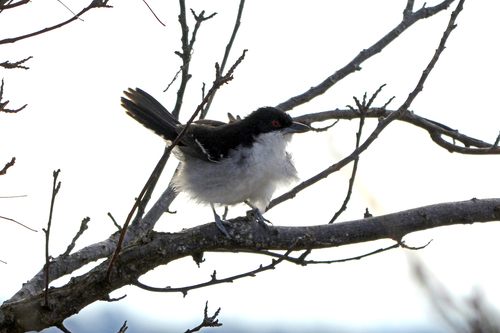
Black-hooded Antshrike (Thamnophilus bridgesi) Black-hooded Antshrike

Media

Loading…

In short

The Great Antshrike and Black-hooded Antshrike can be distinguished by their plumage and size. The Great Antshrike is larger with a distinctive bicolored plumage, while the Black-hooded Antshrike has a more uniform appearance with a black hood. Both species inhabit dense undergrowth, making them challenging to spot.

Identification tips

  1. Size: Look for the larger size and robust build of the Great Antshrike. 2. Plumage: Note the bicolored pattern of the Great Antshrike versus the black hood of the Black-hooded Antshrike. 3. Habitat: Both species are in dense undergrowth, but the Great Antshrike may be in more varied environments. 4. Vocalizations: Pay attention to any differences in song or call, if heard.

Size

The Great Antshrike is larger and more robust compared to the smaller, more slender Black-hooded Antshrike.

Plumage

Male Great Antshrikes are black above and white below, while females are rich rufous-brown. The Black-hooded Antshrike has a black hood and is generally more uniformly colored.

Behaviour

Both species are known to skulk in dense undergrowth, making them difficult to observe.

Habitat

Both species prefer dense, low-growth habitats, but the Great Antshrike is often found in a wider range of environments.

Voice

Vocalizations are not detailed in the sources, but listening for differences in song and call can aid identification.

Submit a better description

Use the same sections as the comparison. Your text is published immediately.

The Great Antshrike and Black-hooded Antshrike can be distinguished by their plumage and size. The Great Antshrike is larger with a distinctive bicolored plumage, while the Black-hooded Antshrike has a more uniform appearance with a black hood. Both species inhabit dense undergrowth, making them challenging to spot.

  1. Size: Look for the larger size and robust build of the Great Antshrike. 2. Plumage: Note the bicolored pattern of the Great Antshrike versus the black hood of the Black-hooded Antshrike. 3. Habitat: Both species are in dense undergrowth, but the Great Antshrike may be in more varied environments. 4. Vocalizations: Pay attention to any differences in song or call, if heard.

The Great Antshrike is larger and more robust compared to the smaller, more slender Black-hooded Antshrike.

Male Great Antshrikes are black above and white below, while females are rich rufous-brown. The Black-hooded Antshrike has a black hood and is generally more uniformly colored.

Both species are known to skulk in dense undergrowth, making them difficult to observe.

Both species prefer dense, low-growth habitats, but the Great Antshrike is often found in a wider range of environments.

Vocalizations are not detailed in the sources, but listening for differences in song and call can aid identification.

Discard your changes?

You have unsaved edits. If you leave now, those changes will be lost.

Great Antshrike · Black-hooded Antshrike · My Tricky Birds