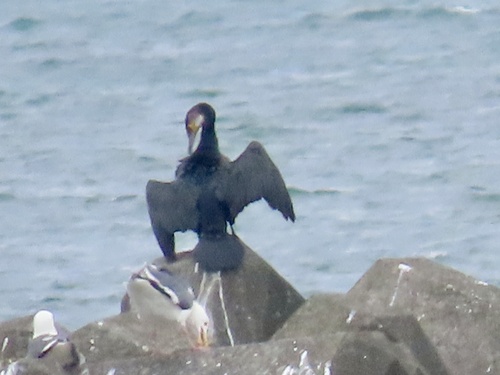
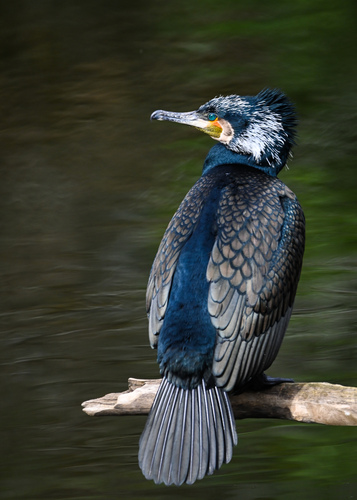
Great Cormorant vs Japanese Cormorant
Phalacrocorax carbo versus Phalacrocorax capillatus
Play a quiz with Great Cormorant and Japanese Cormorant
Great Cormorant
Japanese Cormorant
In short
The Great Cormorant and Japanese Cormorant are similar in appearance but can be distinguished by subtle differences in plumage and size. The Great Cormorant is generally larger and has a more robust build, while the Japanese Cormorant has distinct white patches on its face during breeding season.
Identification tips
Look for the white facial patch on the Japanese Cormorant during the breeding season. Note the larger size and bulkier build of the Great Cormorant. Observe habitat preference: the Japanese Cormorant is more likely to be found in coastal areas.
Size
The Great Cormorant is larger and bulkier than the Japanese Cormorant.
Plumage
The Great Cormorant typically shows a more uniform dark plumage, while the Japanese Cormorant has a distinctive white patch on the face during the breeding season. Both species have glossy black plumage, but the Japanese Cormorant may appear slightly more iridescent.
Behaviour
Both species are adept divers, but the Great Cormorant is known for diving to greater depths. They both feed on fish but may differ slightly in foraging techniques.
Habitat
The Great Cormorant is more widespread and can be found in a variety of aquatic habitats, including inland waters, while the Japanese Cormorant is more coastal, often found along rocky shores.
Voice
Vocalizations are not a primary distinguishing feature between these two species.