Birdr

Great Cormorant vs Little Black Cormorant

Phalacrocorax carbo versus Phalacrocorax sulcirostris

Play a quiz with Great Cormorant and Little Black Cormorant
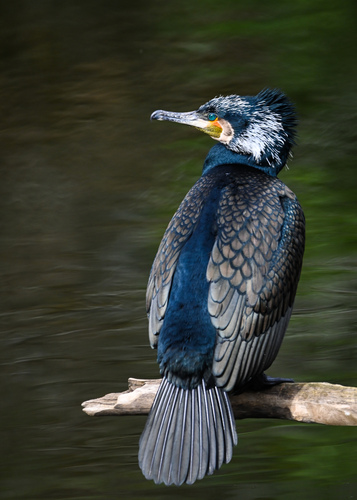
Great Cormorant (Phalacrocorax carbo) Great Cormorant
Little Black Cormorant (Phalacrocorax sulcirostris) Little Black Cormorant

Media

Loading…

In short

The Great Cormorant is larger and more robust compared to the Little Black Cormorant, with a thicker neck and heavier bill. The Little Black Cormorant is smaller, more slender, and uniformly dark, lacking the white facial features of the Great Cormorant.

Identification tips

1. Size and Bulk: Great Cormorant is larger and bulkier. 2. Facial Markings: Look for white patches on the face of Great Cormorant during breeding season. 3. Plumage: Little Black Cormorant is uniformly dark. 4. Habitat: Consider the location; coastal vs. inland waters.

Size

The Great Cormorant is noticeably larger and bulkier than the Little Black Cormorant.

Plumage

The Great Cormorant typically has a white patch on its face and throat during the breeding season, which the Little Black Cormorant lacks. The Little Black Cormorant is uniformly black with a slight greenish sheen.

Behaviour

Both species dive for fish, but the Great Cormorant often dives deeper and can handle larger prey. The Little Black Cormorant may be seen in larger flocks.

Habitat

Great Cormorants are more likely to be found in coastal areas, while Little Black Cormorants are often seen in inland freshwater bodies.

Voice

Vocalizations are not a reliable differentiator in the field for these species.

Submit a better description

Use the same sections as the comparison. Your text is published immediately.

The Great Cormorant is larger and more robust compared to the Little Black Cormorant, with a thicker neck and heavier bill. The Little Black Cormorant is smaller, more slender, and uniformly dark, lacking the white facial features of the Great Cormorant.

1. Size and Bulk: Great Cormorant is larger and bulkier. 2. Facial Markings: Look for white patches on the face of Great Cormorant during breeding season. 3. Plumage: Little Black Cormorant is uniformly dark. 4. Habitat: Consider the location; coastal vs. inland waters.

The Great Cormorant is noticeably larger and bulkier than the Little Black Cormorant.

The Great Cormorant typically has a white patch on its face and throat during the breeding season, which the Little Black Cormorant lacks. The Little Black Cormorant is uniformly black with a slight greenish sheen.

Both species dive for fish, but the Great Cormorant often dives deeper and can handle larger prey. The Little Black Cormorant may be seen in larger flocks.

Great Cormorants are more likely to be found in coastal areas, while Little Black Cormorants are often seen in inland freshwater bodies.

Vocalizations are not a reliable differentiator in the field for these species.

Discard your changes?

You have unsaved edits. If you leave now, those changes will be lost.

Great Cormorant · Little Black Cormorant · My Tricky Birds