Birdr

Great Eared-Nightjar vs Indian Nightjar

Lyncornis macrotis versus Caprimulgus asiaticus

Play a quiz with Great Eared-Nightjar and Indian Nightjar
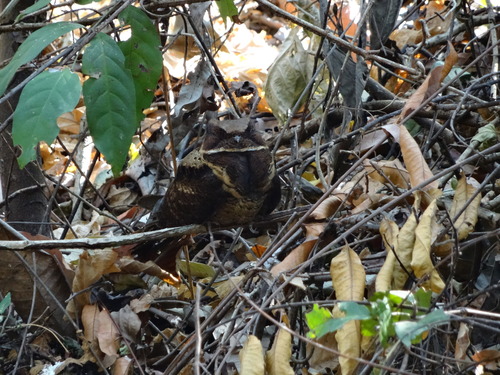
Great Eared-Nightjar (Lyncornis macrotis) Great Eared-Nightjar
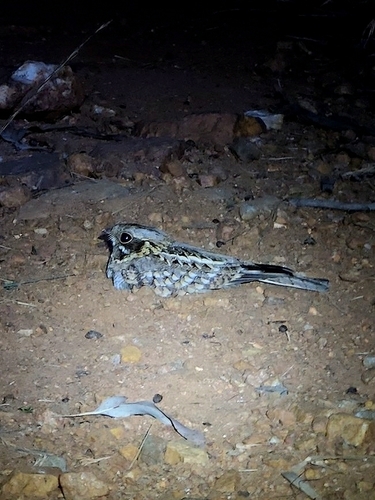
Indian Nightjar (Caprimulgus asiaticus) Indian Nightjar

Media

Loading…

In short

The Great Eared-Nightjar and Indian Nightjar can be distinguished primarily by size and ear tufts. The Great Eared-Nightjar is larger and has prominent ear tufts, while the Indian Nightjar is smaller and lacks these tufts.

Identification tips

  1. Look for the presence of ear tufts; only the Great Eared-Nightjar has them. 2. Compare size; the Great Eared-Nightjar is larger. 3. Note the habitat; forested areas suggest Great Eared-Nightjar, while open areas suggest Indian Nightjar. 4. Listen for vocalizations; complex calls indicate Great Eared-Nightjar.

Size

The Great Eared-Nightjar is significantly larger than the Indian Nightjar.

Plumage

The Great Eared-Nightjar has prominent ear tufts and a more robust appearance. The Indian Nightjar lacks ear tufts and has a more streamlined body.

Behaviour

Both species are nocturnal and exhibit similar behavior, often seen hawking for insects at dusk.

Habitat

The Great Eared-Nightjar is typically found in forested areas, while the Indian Nightjar prefers open country and scrubland.

Voice

The vocalizations of these species differ, with the Great Eared-Nightjar having a more varied and complex call compared to the simpler, repetitive call of the Indian Nightjar.

Submit a better description

Use the same sections as the comparison. Your text is published immediately.

The Great Eared-Nightjar and Indian Nightjar can be distinguished primarily by size and ear tufts. The Great Eared-Nightjar is larger and has prominent ear tufts, while the Indian Nightjar is smaller and lacks these tufts.

  1. Look for the presence of ear tufts; only the Great Eared-Nightjar has them. 2. Compare size; the Great Eared-Nightjar is larger. 3. Note the habitat; forested areas suggest Great Eared-Nightjar, while open areas suggest Indian Nightjar. 4. Listen for vocalizations; complex calls indicate Great Eared-Nightjar.

The Great Eared-Nightjar is significantly larger than the Indian Nightjar.

The Great Eared-Nightjar has prominent ear tufts and a more robust appearance. The Indian Nightjar lacks ear tufts and has a more streamlined body.

Both species are nocturnal and exhibit similar behavior, often seen hawking for insects at dusk.

The Great Eared-Nightjar is typically found in forested areas, while the Indian Nightjar prefers open country and scrubland.

The vocalizations of these species differ, with the Great Eared-Nightjar having a more varied and complex call compared to the simpler, repetitive call of the Indian Nightjar.

Discard your changes?

You have unsaved edits. If you leave now, those changes will be lost.

Great Eared-Nightjar · Indian Nightjar · My Tricky Birds