Birdr

Great Kiskadee vs Social Flycatcher

Pitangus sulphuratus versus Myiozetetes similis

Play a quiz with Great Kiskadee and Social Flycatcher
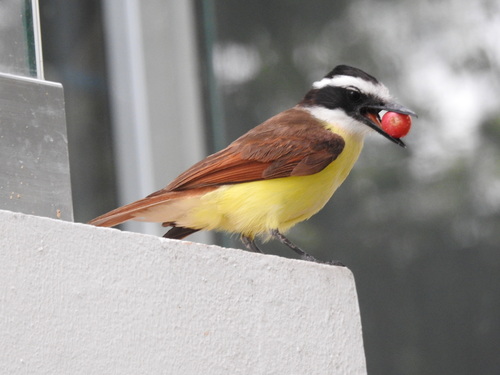
Great Kiskadee (Pitangus sulphuratus) Great Kiskadee
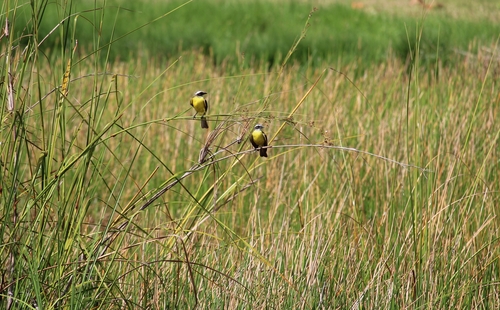
Social Flycatcher (Myiozetetes similis) Social Flycatcher

Media

Loading…

In short

The Great Kiskadee and Social Flycatcher are both yellow-bellied flycatchers with bold black-and-white striped heads, but differ notably in size and bill shape. The Great Kiskadee is larger with a more robust, straight bill, while the Social Flycatcher is smaller with a shorter, decurved bill. Both species are vocal, but their calls differ, aiding in identification.

Identification tips

Size

The Great Kiskadee is larger and more robust compared to the smaller, more compact Social Flycatcher.

Plumage

Both species have bright yellow underparts and black-and-white striped crowns. However, the Great Kiskadee has a more pronounced black mask and a slightly more vibrant yellow belly.

Behaviour

The Great Kiskadee is more versatile in its foraging, often seen catching fish and other small vertebrates, whereas the Social Flycatcher primarily focuses on insects. Both are often seen perched in the open.

Habitat

Both species inhabit open areas in tropical and subtropical regions, but the Great Kiskadee is more likely to be found near water bodies due to its diverse diet.

Voice

The Great Kiskadee is known for its loud, distinctive 'kis-ka-dee' call, while the Social Flycatcher has a variety of harsh, chattering calls. These vocal differences are useful for identification.

Submit a better description

Use the same sections as the comparison. Your text is published immediately.

The Great Kiskadee and Social Flycatcher are both yellow-bellied flycatchers with bold black-and-white striped heads, but differ notably in size and bill shape. The Great Kiskadee is larger with a more robust, straight bill, while the Social Flycatcher is smaller with a shorter, decurved bill. Both species are vocal, but their calls differ, aiding in identification.

  • Size and Bill Shape: Look for the larger size and straight bill of the Great Kiskadee versus the smaller size and decurved bill of the Social Flycatcher.
  • Vocalizations: Listen for the Great Kiskadee's 'kis-ka-dee' call compared to the Social Flycatcher's chattering sounds.
  • Habitat Preferences: Note the Great Kiskadee's preference for areas near water, which can help distinguish it from the Social Flycatcher in overlapping ranges.

The Great Kiskadee is larger and more robust compared to the smaller, more compact Social Flycatcher.

Both species have bright yellow underparts and black-and-white striped crowns. However, the Great Kiskadee has a more pronounced black mask and a slightly more vibrant yellow belly.

The Great Kiskadee is more versatile in its foraging, often seen catching fish and other small vertebrates, whereas the Social Flycatcher primarily focuses on insects. Both are often seen perched in the open.

Both species inhabit open areas in tropical and subtropical regions, but the Great Kiskadee is more likely to be found near water bodies due to its diverse diet.

The Great Kiskadee is known for its loud, distinctive 'kis-ka-dee' call, while the Social Flycatcher has a variety of harsh, chattering calls. These vocal differences are useful for identification.

Discard your changes?

You have unsaved edits. If you leave now, those changes will be lost.

Great Kiskadee · Social Flycatcher · My Tricky Birds