Birdr

Great Reed Warbler vs Common Grasshopper Warbler

Acrocephalus arundinaceus versus Locustella naevia

Play a quiz with Great Reed Warbler and Common Grasshopper Warbler
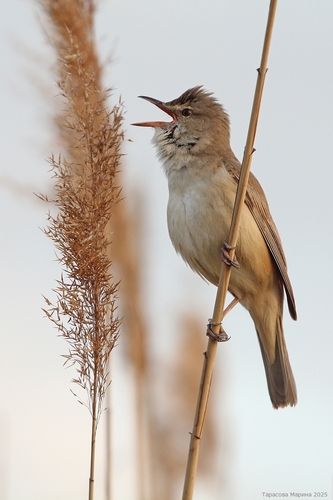
Great Reed Warbler (Acrocephalus arundinaceus) Great Reed Warbler
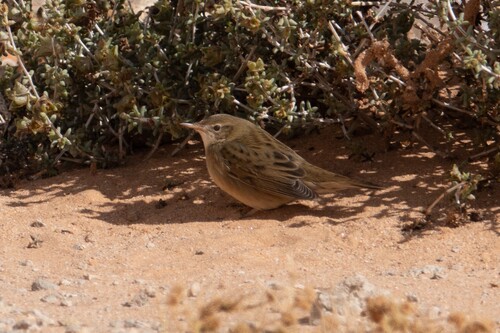
Common Grasshopper Warbler (Locustella naevia) Common Grasshopper Warbler

Media

Loading…

In short

The Great Reed Warbler and Common Grasshopper Warbler can be distinguished by size and habitat preference. The Great Reed Warbler is significantly larger and often found in reed beds, while the Common Grasshopper Warbler is smaller, more secretive, and prefers grassy or scrubby areas.

Identification tips

  1. Size: Look for the larger size of the Great Reed Warbler. 2. Habitat: Note the habitat; Great Reed Warblers are in reed beds, Grasshopper Warblers in grassy areas. 3. Song: Listen for the loud, harsh song of the Great Reed Warbler versus the insect-like trill of the Grasshopper Warbler. 4. Behavior: Observe the more open perching behavior of the Great Reed Warbler compared to the skulking nature of the Grasshopper Warbler.

Size

The Great Reed Warbler is much larger than the Common Grasshopper Warbler, with a more robust build.

Plumage

Both species have brownish plumage, but the Great Reed Warbler has a more uniform brown with a paler throat and underparts, while the Common Grasshopper Warbler has a more streaked appearance.

Behaviour

The Great Reed Warbler is more likely to be seen perched openly on reeds, whereas the Common Grasshopper Warbler is secretive and often skulks in dense vegetation.

Habitat

Great Reed Warblers are typically found in reed beds near water, while Common Grasshopper Warblers prefer drier grassy or scrubby areas.

Voice

The Great Reed Warbler has a loud, harsh song often delivered from a prominent perch, while the Common Grasshopper Warbler's song is a continuous, insect-like trill, usually given from a concealed position.

Submit a better description

Use the same sections as the comparison. Your text is published immediately.

The Great Reed Warbler and Common Grasshopper Warbler can be distinguished by size and habitat preference. The Great Reed Warbler is significantly larger and often found in reed beds, while the Common Grasshopper Warbler is smaller, more secretive, and prefers grassy or scrubby areas.

  1. Size: Look for the larger size of the Great Reed Warbler. 2. Habitat: Note the habitat; Great Reed Warblers are in reed beds, Grasshopper Warblers in grassy areas. 3. Song: Listen for the loud, harsh song of the Great Reed Warbler versus the insect-like trill of the Grasshopper Warbler. 4. Behavior: Observe the more open perching behavior of the Great Reed Warbler compared to the skulking nature of the Grasshopper Warbler.

The Great Reed Warbler is much larger than the Common Grasshopper Warbler, with a more robust build.

Both species have brownish plumage, but the Great Reed Warbler has a more uniform brown with a paler throat and underparts, while the Common Grasshopper Warbler has a more streaked appearance.

The Great Reed Warbler is more likely to be seen perched openly on reeds, whereas the Common Grasshopper Warbler is secretive and often skulks in dense vegetation.

Great Reed Warblers are typically found in reed beds near water, while Common Grasshopper Warblers prefer drier grassy or scrubby areas.

The Great Reed Warbler has a loud, harsh song often delivered from a prominent perch, while the Common Grasshopper Warbler's song is a continuous, insect-like trill, usually given from a concealed position.

Discard your changes?

You have unsaved edits. If you leave now, those changes will be lost.

Great Reed Warbler · Common Grasshopper Warbler · My Tricky Birds