Birdr

Great Reed Warbler vs River Warbler

Acrocephalus arundinaceus versus Locustella fluviatilis

Play a quiz with Great Reed Warbler and River Warbler
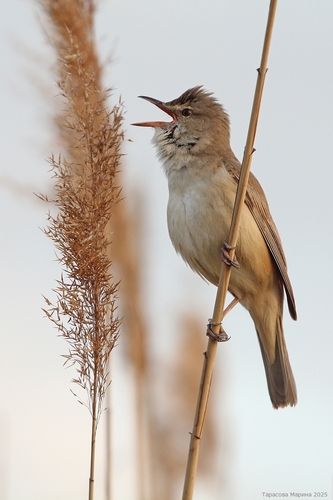
Great Reed Warbler (Acrocephalus arundinaceus) Great Reed Warbler
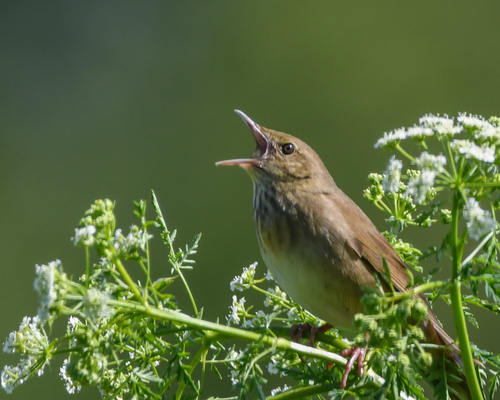
River Warbler (Locustella fluviatilis) River Warbler

Media

Loading…

In short

The Great Reed Warbler and River Warbler are both medium-sized warblers, but they differ in structure and vocalizations. The Great Reed Warbler is larger with a more robust build, while the River Warbler is smaller and more slender. Their songs are distinct, with the Great Reed Warbler having a loud, varied song and the River Warbler producing a high-pitched, insect-like trill.

Identification tips

  1. Size and Structure: Look for the larger size and robust build of the Great Reed Warbler compared to the smaller, slender River Warbler. 2. Plumage: Note the warmer brown tones and more pronounced supercilium in the Great Reed Warbler. 3. Vocalizations: Listen for the loud, varied song of the Great Reed Warbler versus the high-pitched trill of the River Warbler. 4. Habitat: Observe the habitat; Great Reed Warblers are more likely in reed beds, while River Warblers are in dense, damp undergrowth.

Size

The Great Reed Warbler is larger and more robust than the River Warbler, which is smaller and more slender.

Plumage

Great Reed Warbler has a generally warmer brown plumage with a more pronounced supercilium, while the River Warbler has a plain dark olive-brown back with a poorly marked buffish supercilium and broad dark streaks on the underparts.

Behaviour

The River Warbler often forages by creeping among low vegetation or running among grass, while the Great Reed Warbler is more often seen in reed beds.

Habitat

Great Reed Warblers are typically found in reed beds near water, whereas River Warblers prefer dense undergrowth in damp areas, often away from open water.

Voice

The Great Reed Warbler has a loud, varied song, while the River Warbler's song is a high-pitched, throbbing, insect-like trill. The River Warbler also has a sharp 'phit' contact call.

Submit a better description

Use the same sections as the comparison. Your text is published immediately.

The Great Reed Warbler and River Warbler are both medium-sized warblers, but they differ in structure and vocalizations. The Great Reed Warbler is larger with a more robust build, while the River Warbler is smaller and more slender. Their songs are distinct, with the Great Reed Warbler having a loud, varied song and the River Warbler producing a high-pitched, insect-like trill.

  1. Size and Structure: Look for the larger size and robust build of the Great Reed Warbler compared to the smaller, slender River Warbler. 2. Plumage: Note the warmer brown tones and more pronounced supercilium in the Great Reed Warbler. 3. Vocalizations: Listen for the loud, varied song of the Great Reed Warbler versus the high-pitched trill of the River Warbler. 4. Habitat: Observe the habitat; Great Reed Warblers are more likely in reed beds, while River Warblers are in dense, damp undergrowth.

The Great Reed Warbler is larger and more robust than the River Warbler, which is smaller and more slender.

Great Reed Warbler has a generally warmer brown plumage with a more pronounced supercilium, while the River Warbler has a plain dark olive-brown back with a poorly marked buffish supercilium and broad dark streaks on the underparts.

The River Warbler often forages by creeping among low vegetation or running among grass, while the Great Reed Warbler is more often seen in reed beds.

Great Reed Warblers are typically found in reed beds near water, whereas River Warblers prefer dense undergrowth in damp areas, often away from open water.

The Great Reed Warbler has a loud, varied song, while the River Warbler's song is a high-pitched, throbbing, insect-like trill. The River Warbler also has a sharp 'phit' contact call.

Discard your changes?

You have unsaved edits. If you leave now, those changes will be lost.

Great Reed Warbler · River Warbler · My Tricky Birds