Birdr

Great Skua vs South Polar Skua

Stercorarius skua versus Stercorarius maccormicki

Play a quiz with Great Skua and South Polar Skua
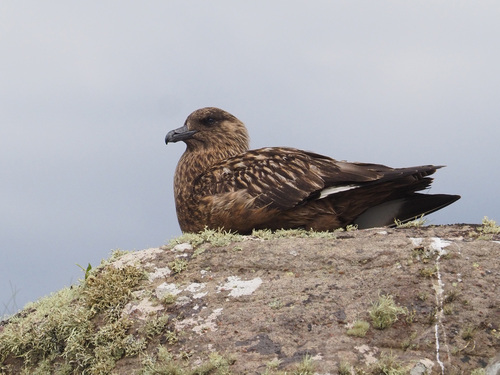
Great Skua (Stercorarius skua) Great Skua
South Polar Skua (Stercorarius maccormicki) South Polar Skua

Media

Loading…

In short

The Great Skua and South Polar Skua are robust seabirds with similar overall shapes, but they can be distinguished by plumage and subtle structural differences. The Great Skua generally has warmer tones and a bulkier appearance, while the South Polar Skua shows colder tones and lacks rufous in its plumage.

Identification tips

1. Look for the warmer, rufous tones in Great Skuas compared to the colder tones of South Polar Skuas. 2. Check for the white 'skua flash' on the primary bases of South Polar Skuas. 3. Note the buffy yellow nape on adult South Polar Skuas, which is absent in juveniles. 4. Consider geographic location and season, as Great Skuas are more common in the North Atlantic, while South Polar Skuas are found in southern oceans.

Size

Both species are large and powerful, but the Great Skua tends to be slightly bulkier with a heavier build.

Plumage

Great Skuas have warmer, more rufous tones in their plumage, whereas South Polar Skuas display colder tones and a characteristic white 'skua flash' along the primary bases. South Polar Skuas also have a buffy yellow nape and hindneck in adults, absent in juveniles.

Behaviour

Both species exhibit aggressive behavior typical of skuas, often seen harassing other seabirds for food. Behavior is similar and not a reliable distinguishing feature.

Habitat

Great Skuas are typically found in the North Atlantic, while South Polar Skuas breed in Antarctica and migrate to southern oceans. Overlap occurs during migration, especially in oceanic waters.

Voice

Vocalizations are not a primary distinguishing feature in the field; both species have harsh calls typical of skuas.

Submit a better description

Use the same sections as the comparison. Your text is published immediately.

The Great Skua and South Polar Skua are robust seabirds with similar overall shapes, but they can be distinguished by plumage and subtle structural differences. The Great Skua generally has warmer tones and a bulkier appearance, while the South Polar Skua shows colder tones and lacks rufous in its plumage.

1. Look for the warmer, rufous tones in Great Skuas compared to the colder tones of South Polar Skuas. 2. Check for the white 'skua flash' on the primary bases of South Polar Skuas. 3. Note the buffy yellow nape on adult South Polar Skuas, which is absent in juveniles. 4. Consider geographic location and season, as Great Skuas are more common in the North Atlantic, while South Polar Skuas are found in southern oceans.

Both species are large and powerful, but the Great Skua tends to be slightly bulkier with a heavier build.

Great Skuas have warmer, more rufous tones in their plumage, whereas South Polar Skuas display colder tones and a characteristic white 'skua flash' along the primary bases. South Polar Skuas also have a buffy yellow nape and hindneck in adults, absent in juveniles.

Both species exhibit aggressive behavior typical of skuas, often seen harassing other seabirds for food. Behavior is similar and not a reliable distinguishing feature.

Great Skuas are typically found in the North Atlantic, while South Polar Skuas breed in Antarctica and migrate to southern oceans. Overlap occurs during migration, especially in oceanic waters.

Vocalizations are not a primary distinguishing feature in the field; both species have harsh calls typical of skuas.

Discard your changes?

You have unsaved edits. If you leave now, those changes will be lost.

Great Skua · South Polar Skua · My Tricky Birds