Birdr

Great Spotted Cuckoo vs Levaillant's Cuckoo

Clamator glandarius versus Clamator levaillantii

Play a quiz with Great Spotted Cuckoo and Levaillant's Cuckoo
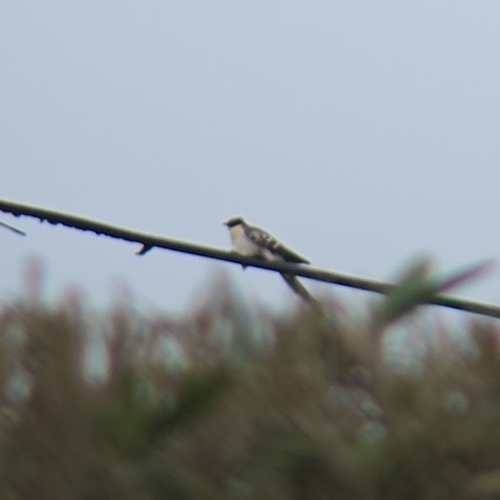
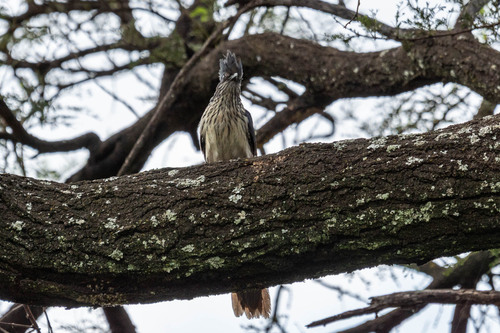
Great Spotted Cuckoo (Clamator glandarius) Great Spotted Cuckoo
Levaillant's Cuckoo (Clamator levaillantii) Levaillant's Cuckoo

Media

Loading…

In short

The Great Spotted Cuckoo and Levaillant's Cuckoo are both medium-sized cuckoos with similar body shapes, but they can be distinguished by plumage and vocalizations. The Great Spotted Cuckoo typically shows more contrast in its plumage, while Levaillant's Cuckoo has a more uniform appearance.

Identification tips

  1. Look for the pale head and dark mask of the Great Spotted Cuckoo. 2. Check for the spotted back in the Great Spotted Cuckoo, absent in Levaillant's. 3. Listen for the harsh, repeated calls of the Great Spotted Cuckoo. 4. Consider the geographic location: Great Spotted in Mediterranean areas, Levaillant's in sub-Saharan Africa.

Size

Both species are similar in size, with no significant differences that are easily observable in the field.

Plumage

The Great Spotted Cuckoo has a distinctive pale head and neck with a contrasting dark mask and a spotted back. In contrast, Levaillant's Cuckoo generally has a more uniform dark plumage with a less contrasting head pattern.

Behaviour

Both species exhibit similar behaviors typical of cuckoos, such as brood parasitism, but specific behavioral differences are not well-documented.

Habitat

Both species inhabit open woodlands and savannas, but the Great Spotted Cuckoo is more often found in Mediterranean regions, while Levaillant's Cuckoo is more associated with sub-Saharan Africa.

Voice

The Great Spotted Cuckoo has a distinctive, harsh call that is often repeated, while Levaillant's Cuckoo's call is less documented but generally described as a series of whistles.

Submit a better description

Use the same sections as the comparison. Your text is published immediately.

The Great Spotted Cuckoo and Levaillant's Cuckoo are both medium-sized cuckoos with similar body shapes, but they can be distinguished by plumage and vocalizations. The Great Spotted Cuckoo typically shows more contrast in its plumage, while Levaillant's Cuckoo has a more uniform appearance.

  1. Look for the pale head and dark mask of the Great Spotted Cuckoo. 2. Check for the spotted back in the Great Spotted Cuckoo, absent in Levaillant's. 3. Listen for the harsh, repeated calls of the Great Spotted Cuckoo. 4. Consider the geographic location: Great Spotted in Mediterranean areas, Levaillant's in sub-Saharan Africa.

Both species are similar in size, with no significant differences that are easily observable in the field.

The Great Spotted Cuckoo has a distinctive pale head and neck with a contrasting dark mask and a spotted back. In contrast, Levaillant's Cuckoo generally has a more uniform dark plumage with a less contrasting head pattern.

Both species exhibit similar behaviors typical of cuckoos, such as brood parasitism, but specific behavioral differences are not well-documented.

Both species inhabit open woodlands and savannas, but the Great Spotted Cuckoo is more often found in Mediterranean regions, while Levaillant's Cuckoo is more associated with sub-Saharan Africa.

The Great Spotted Cuckoo has a distinctive, harsh call that is often repeated, while Levaillant's Cuckoo's call is less documented but generally described as a series of whistles.

Discard your changes?

You have unsaved edits. If you leave now, those changes will be lost.

Great Spotted Cuckoo · Levaillant's Cuckoo · My Tricky Birds