Birdr

Great Spotted Cuckoo vs Pied Cuckoo

Clamator glandarius versus Clamator jacobinus

Play a quiz with Great Spotted Cuckoo and Pied Cuckoo
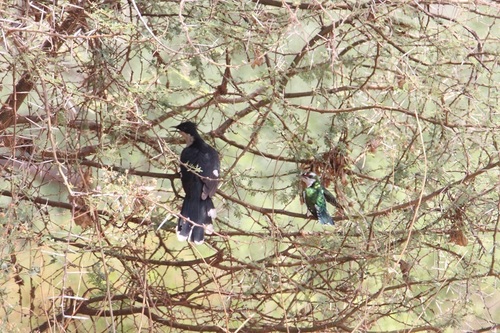
Great Spotted Cuckoo (Clamator glandarius) Great Spotted Cuckoo
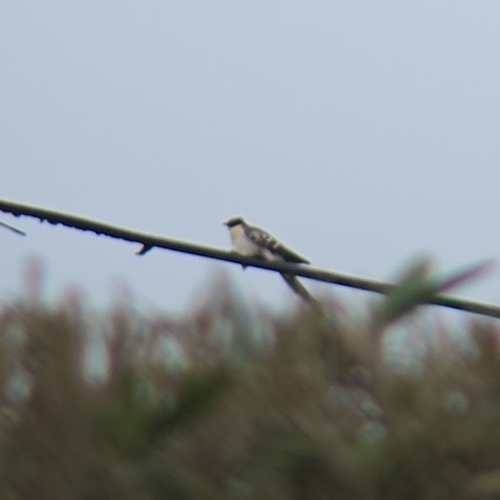
Pied Cuckoo (Clamator jacobinus) Pied Cuckoo

Media

Loading…

In short

The Great Spotted Cuckoo and Pied Cuckoo are both medium-sized cuckoos with distinctive plumage patterns. The Great Spotted Cuckoo is best identified by its pale head and spotted back, while the Pied Cuckoo has a striking black and white contrast with a prominent white wing patch. Both species can be found in similar habitats, but their vocalizations and specific plumage details can help in distinguishing them.

Identification tips

  1. Look for the pale grey head and spotted back of the Great Spotted Cuckoo. 2. Note the black and white contrast and white wing patch of the Pied Cuckoo. 3. Listen for the harsh calls of the Great Spotted Cuckoo versus the melodious calls of the Pied Cuckoo. 4. Consider the geographic location, as the Great Spotted Cuckoo is more common in the Mediterranean, while the Pied Cuckoo is found in South Asia and Africa.

Size

Both species are similar in size, being medium-sized cuckoos, though the Great Spotted Cuckoo may appear slightly bulkier.

Plumage

The Great Spotted Cuckoo has a pale grey head, a spotted back, and chestnut in the wings. The Pied Cuckoo shows a stark black and white contrast with a prominent white wing patch and lacks the chestnut coloration.

Behaviour

Both species exhibit similar behaviors typical of cuckoos, such as brood parasitism, but specific behavioral differences are not well-documented.

Habitat

Both species inhabit open woodlands and scrub areas, but the Great Spotted Cuckoo is more often found in Mediterranean regions, while the Pied Cuckoo is more common in South Asia and parts of Africa.

Voice

The vocalizations of these species differ, with the Great Spotted Cuckoo having a more varied call repertoire, often described as harsh and grating, while the Pied Cuckoo's calls are more melodious and whistled.

Submit a better description

Use the same sections as the comparison. Your text is published immediately.

The Great Spotted Cuckoo and Pied Cuckoo are both medium-sized cuckoos with distinctive plumage patterns. The Great Spotted Cuckoo is best identified by its pale head and spotted back, while the Pied Cuckoo has a striking black and white contrast with a prominent white wing patch. Both species can be found in similar habitats, but their vocalizations and specific plumage details can help in distinguishing them.

  1. Look for the pale grey head and spotted back of the Great Spotted Cuckoo. 2. Note the black and white contrast and white wing patch of the Pied Cuckoo. 3. Listen for the harsh calls of the Great Spotted Cuckoo versus the melodious calls of the Pied Cuckoo. 4. Consider the geographic location, as the Great Spotted Cuckoo is more common in the Mediterranean, while the Pied Cuckoo is found in South Asia and Africa.

Both species are similar in size, being medium-sized cuckoos, though the Great Spotted Cuckoo may appear slightly bulkier.

The Great Spotted Cuckoo has a pale grey head, a spotted back, and chestnut in the wings. The Pied Cuckoo shows a stark black and white contrast with a prominent white wing patch and lacks the chestnut coloration.

Both species exhibit similar behaviors typical of cuckoos, such as brood parasitism, but specific behavioral differences are not well-documented.

Both species inhabit open woodlands and scrub areas, but the Great Spotted Cuckoo is more often found in Mediterranean regions, while the Pied Cuckoo is more common in South Asia and parts of Africa.

The vocalizations of these species differ, with the Great Spotted Cuckoo having a more varied call repertoire, often described as harsh and grating, while the Pied Cuckoo's calls are more melodious and whistled.

Discard your changes?

You have unsaved edits. If you leave now, those changes will be lost.

Great Spotted Cuckoo · Pied Cuckoo · My Tricky Birds