
Birdr

Great Spotted Woodpecker vs Lesser Spotted Woodpecker

Dendrocopos major versus Dryobates minor

Play a quiz with Great Spotted Woodpecker and Lesser Spotted Woodpecker
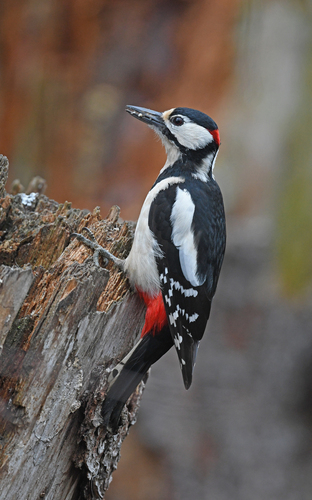
Great Spotted Woodpecker (Dendrocopos major) Great Spotted Woodpecker
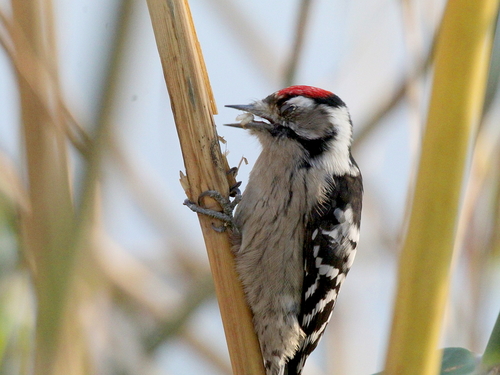
Lesser Spotted Woodpecker (Dryobates minor) Lesser Spotted Woodpecker

Media

Loading…

In short

The Great Spotted Woodpecker is larger and more robust than the Lesser Spotted Woodpecker, with a more pronounced red patch on the nape in males. The Lesser Spotted Woodpecker is notably smaller, with a barred back and lacks the large white shoulder patches seen on the Great Spotted.

Identification tips

  1. Size: Look for the larger size of the Great Spotted Woodpecker. 2. White shoulder patches: Only the Great Spotted has these. 3. Red markings: Males of both species have red, but in different places (nape for Great Spotted, crown for Lesser Spotted). 4. Drumming speed: Listen for the faster drumming of the Great Spotted. 5. Habitat preference: Note the tree size preference; Great Spotted on larger trees, Lesser Spotted on smaller branches.

Size

The Great Spotted Woodpecker is significantly larger and bulkier than the Lesser Spotted Woodpecker.

Plumage

The Great Spotted Woodpecker has large white shoulder patches and a red patch on the nape in males. The Lesser Spotted Woodpecker has a barred back and lacks the prominent white shoulder patches, with males showing a red crown instead.

Behaviour

Both species are adept climbers and often seen drumming on trees, but the Great Spotted Woodpecker is more likely to be seen on larger trees, while the Lesser Spotted prefers smaller branches.

Habitat

Both species inhabit woodlands, but the Great Spotted Woodpecker is more adaptable and can be found in a wider range of wooded habitats, including parks and gardens. The Lesser Spotted Woodpecker tends to favor deciduous woodlands.

Voice

The Great Spotted Woodpecker has a loud 'kick' call and a rapid drumming sound. The Lesser Spotted Woodpecker's call is softer, and its drumming is slower and more even.

Submit a better description

Use the same sections as the comparison. Your text is published immediately.

The Great Spotted Woodpecker is larger and more robust than the Lesser Spotted Woodpecker, with a more pronounced red patch on the nape in males. The Lesser Spotted Woodpecker is notably smaller, with a barred back and lacks the large white shoulder patches seen on the Great Spotted.

  1. Size: Look for the larger size of the Great Spotted Woodpecker. 2. White shoulder patches: Only the Great Spotted has these. 3. Red markings: Males of both species have red, but in different places (nape for Great Spotted, crown for Lesser Spotted). 4. Drumming speed: Listen for the faster drumming of the Great Spotted. 5. Habitat preference: Note the tree size preference; Great Spotted on larger trees, Lesser Spotted on smaller branches.

The Great Spotted Woodpecker is significantly larger and bulkier than the Lesser Spotted Woodpecker.

The Great Spotted Woodpecker has large white shoulder patches and a red patch on the nape in males. The Lesser Spotted Woodpecker has a barred back and lacks the prominent white shoulder patches, with males showing a red crown instead.

Both species are adept climbers and often seen drumming on trees, but the Great Spotted Woodpecker is more likely to be seen on larger trees, while the Lesser Spotted prefers smaller branches.

Both species inhabit woodlands, but the Great Spotted Woodpecker is more adaptable and can be found in a wider range of wooded habitats, including parks and gardens. The Lesser Spotted Woodpecker tends to favor deciduous woodlands.

The Great Spotted Woodpecker has a loud 'kick' call and a rapid drumming sound. The Lesser Spotted Woodpecker's call is softer, and its drumming is slower and more even.

Discard your changes?

You have unsaved edits. If you leave now, those changes will be lost.

Great Spotted Woodpecker · Lesser Spotted Woodpecker · My Tricky Birds