Birdr

Great Spotted Woodpecker vs Syrian Woodpecker

Dendrocopos major versus Dendrocopos syriacus

Play a quiz with Great Spotted Woodpecker and Syrian Woodpecker
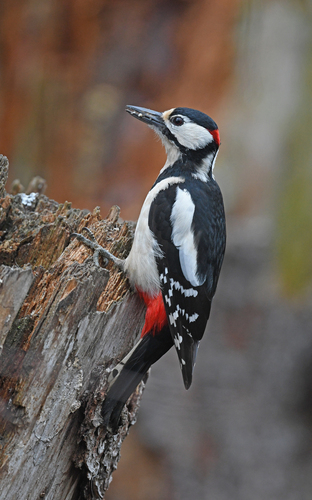
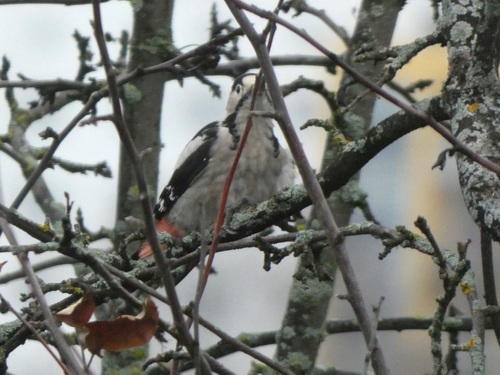
Great Spotted Woodpecker (Dendrocopos major) Great Spotted Woodpecker
Syrian Woodpecker (Dendrocopos syriacus) Syrian Woodpecker

Media

Loading…

In short

The Great Spotted Woodpecker and Syrian Woodpecker are similar in appearance but can be distinguished by subtle differences in plumage and vocalizations. The Syrian Woodpecker lacks the black cheek stripe that extends to the nape, which is present in the Great Spotted Woodpecker. Both species share similar habitats and behaviors, making vocalizations and plumage the most reliable field marks.

Identification tips

  1. Look for the black cheek stripe that extends to the nape in the Great Spotted Woodpecker. 2. Note the paler underparts and lack of large white shoulder patches in the Syrian Woodpecker. 3. Listen for the softer call of the Syrian Woodpecker. 4. Consider habitat: Syrian Woodpeckers are more likely in orchards and open woodlands.

Size

Both species are similar in size, with no significant differences that are easily observable in the field.

Plumage

The Great Spotted Woodpecker has a black cheek stripe that extends to the nape, while the Syrian Woodpecker's cheek stripe stops at the neck. Additionally, the Syrian Woodpecker's underparts are slightly paler, and it lacks the large white shoulder patches seen in the Great Spotted Woodpecker.

Behaviour

Both species exhibit similar foraging behavior, often seen drumming on tree trunks and branches.

Habitat

Both species inhabit woodlands, but the Syrian Woodpecker is more commonly found in orchards and open woodlands, while the Great Spotted Woodpecker is more widespread across various forest types.

Voice

The Syrian Woodpecker's call is softer and less harsh compared to the Great Spotted Woodpecker. However, both species have similar drumming patterns, making vocalizations a secondary field mark.

Submit a better description

Use the same sections as the comparison. Your text is published immediately.

The Great Spotted Woodpecker and Syrian Woodpecker are similar in appearance but can be distinguished by subtle differences in plumage and vocalizations. The Syrian Woodpecker lacks the black cheek stripe that extends to the nape, which is present in the Great Spotted Woodpecker. Both species share similar habitats and behaviors, making vocalizations and plumage the most reliable field marks.

  1. Look for the black cheek stripe that extends to the nape in the Great Spotted Woodpecker. 2. Note the paler underparts and lack of large white shoulder patches in the Syrian Woodpecker. 3. Listen for the softer call of the Syrian Woodpecker. 4. Consider habitat: Syrian Woodpeckers are more likely in orchards and open woodlands.

Both species are similar in size, with no significant differences that are easily observable in the field.

The Great Spotted Woodpecker has a black cheek stripe that extends to the nape, while the Syrian Woodpecker's cheek stripe stops at the neck. Additionally, the Syrian Woodpecker's underparts are slightly paler, and it lacks the large white shoulder patches seen in the Great Spotted Woodpecker.

Both species exhibit similar foraging behavior, often seen drumming on tree trunks and branches.

Both species inhabit woodlands, but the Syrian Woodpecker is more commonly found in orchards and open woodlands, while the Great Spotted Woodpecker is more widespread across various forest types.

The Syrian Woodpecker's call is softer and less harsh compared to the Great Spotted Woodpecker. However, both species have similar drumming patterns, making vocalizations a secondary field mark.

Discard your changes?

You have unsaved edits. If you leave now, those changes will be lost.

Great Spotted Woodpecker · Syrian Woodpecker · My Tricky Birds