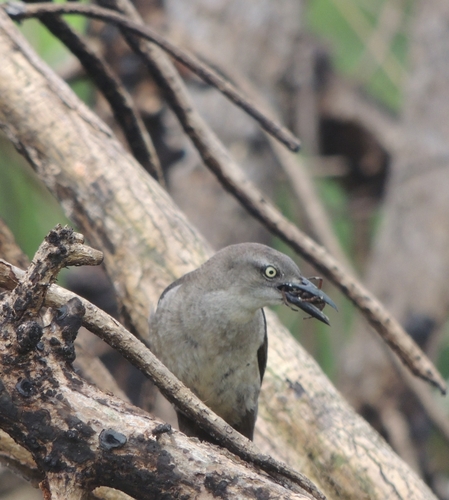
Great-tailed Grackle vs Nicaraguan Grackle
Quiscalus mexicanus versus Quiscalus nicaraguensis
Play a quiz with Great-tailed Grackle and Nicaraguan Grackle
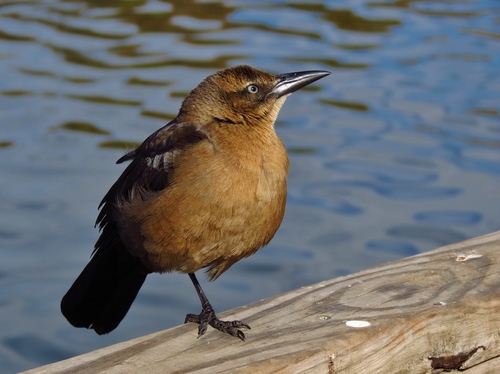
Great-tailed Grackle
Nicaraguan Grackle
In short
The Great-tailed Grackle and the Nicaraguan Grackle are similar in appearance, but differ in size and habitat preferences. The Great-tailed Grackle is larger and more widespread, while the Nicaraguan Grackle is more localized to Nicaragua and Costa Rica.
Identification tips
1. Size: Look for the larger size of the Great-tailed Grackle, especially in males. 2. Habitat: Note the habitat; Great-tailed Grackles are more likely in drier, open areas, while Nicaraguan Grackles prefer wetlands. 3. Range: Consider the geographic location; Nicaraguan Grackles are limited to Nicaragua and Costa Rica.
Size
The Great-tailed Grackle is larger, with males reaching up to 46 cm, while the Nicaraguan Grackle is smaller, typically around 30 cm.
Plumage
Both species have glossy black plumage in males, but the Great-tailed Grackle has a more pronounced iridescence. Females of both species are brown, but the Great-tailed Grackle female is larger.
Behaviour
Both species exhibit similar behaviors, including varied vocalizations and elaborate displays, but the Great-tailed Grackle is noted for its flamboyant courtship displays.
Habitat
The Great-tailed Grackle is found in a variety of habitats from the midwestern U.S. to northern South America, often in drier areas with scattered trees. The Nicaraguan Grackle is more restricted to marshy and wetland areas in Nicaragua and Costa Rica.
Voice
Both species have a large and varied vocal repertoire, making vocalization a less reliable distinguishing feature.