Birdr

Great Thick-knee vs Indian Thick-knee

Esacus recurvirostris versus Burhinus indicus

Play a quiz with Great Thick-knee and Indian Thick-knee

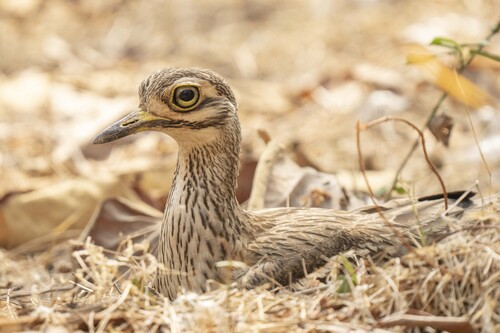
Great Thick-knee (Esacus recurvirostris) Great Thick-knee
Indian Thick-knee (Burhinus indicus) Indian Thick-knee

Media

Loading…

In short

The Great Thick-knee is larger and more robust than the Indian Thick-knee, with a notably heavier bill and a distinctive white wing bar visible in flight. The Indian Thick-knee is more slender with a less pronounced bill and lacks the prominent wing bar.

Identification tips

  1. Look for the white wing bar on the Great Thick-knee during flight. 2. Compare the bill size: the Great Thick-knee has a heavier bill. 3. Note the habitat: Great Thick-knees are more likely near water, while Indian Thick-knees prefer drier areas. 4. Listen for vocalizations: the Great Thick-knee has a deeper, more resonant call.

Size

The Great Thick-knee is significantly larger and bulkier compared to the more slender Indian Thick-knee.

Plumage

The Great Thick-knee has a prominent white wing bar visible in flight, which the Indian Thick-knee lacks. Both species have similar cryptic plumage with brown and buff tones, but the Great Thick-knee's plumage appears more contrasting.

Behaviour

Both species are generally nocturnal and crepuscular, often seen standing still or moving slowly during the day. The Great Thick-knee may appear more sluggish due to its larger size.

Habitat

The Great Thick-knee is typically found near large rivers and lakes, while the Indian Thick-knee prefers drier, open habitats like grasslands and scrublands.

Voice

The calls of the two species differ, with the Great Thick-knee having a more resonant and deeper call compared to the Indian Thick-knee's higher-pitched and more rapid calls.

Submit a better description

Use the same sections as the comparison. Your text is published immediately.

The Great Thick-knee is larger and more robust than the Indian Thick-knee, with a notably heavier bill and a distinctive white wing bar visible in flight. The Indian Thick-knee is more slender with a less pronounced bill and lacks the prominent wing bar.

  1. Look for the white wing bar on the Great Thick-knee during flight. 2. Compare the bill size: the Great Thick-knee has a heavier bill. 3. Note the habitat: Great Thick-knees are more likely near water, while Indian Thick-knees prefer drier areas. 4. Listen for vocalizations: the Great Thick-knee has a deeper, more resonant call.

The Great Thick-knee is significantly larger and bulkier compared to the more slender Indian Thick-knee.

The Great Thick-knee has a prominent white wing bar visible in flight, which the Indian Thick-knee lacks. Both species have similar cryptic plumage with brown and buff tones, but the Great Thick-knee's plumage appears more contrasting.

Both species are generally nocturnal and crepuscular, often seen standing still or moving slowly during the day. The Great Thick-knee may appear more sluggish due to its larger size.

The Great Thick-knee is typically found near large rivers and lakes, while the Indian Thick-knee prefers drier, open habitats like grasslands and scrublands.

The calls of the two species differ, with the Great Thick-knee having a more resonant and deeper call compared to the Indian Thick-knee's higher-pitched and more rapid calls.

Discard your changes?

You have unsaved edits. If you leave now, those changes will be lost.

Great Thick-knee · Indian Thick-knee · My Tricky Birds