Birdr

Greater Flameback vs Buff-rumped Woodpecker

Chrysocolaptes guttacristatus versus Meiglyptes grammithorax

Play a quiz with Greater Flameback and Buff-rumped Woodpecker
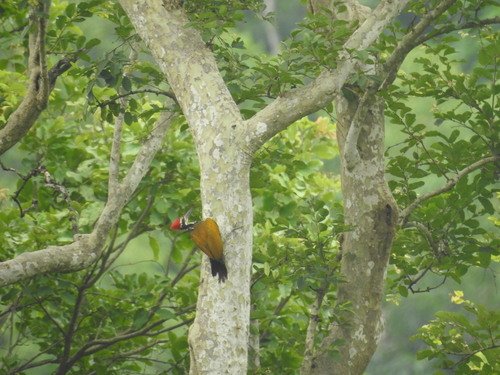
Greater Flameback (Chrysocolaptes guttacristatus) Greater Flameback
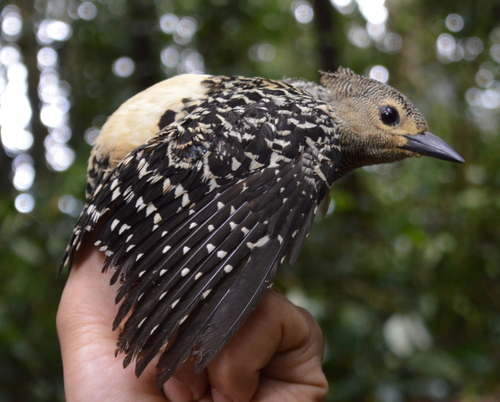
Buff-rumped Woodpecker (Meiglyptes grammithorax) Buff-rumped Woodpecker

Media

Loading…

In short

The Greater Flameback is best identified by its bright golden-orange back and prominent white throat, while the Buff-rumped Woodpecker features a distinctive buff-colored rump and more muted overall coloration. Both species are found in wooded habitats, but their plumage and vocalizations offer reliable identification clues.

Identification tips

  1. Look for the bright golden-orange back and white throat of the Greater Flameback. 2. Note the buff rump and barred body pattern of the Buff-rumped Woodpecker. 3. Listen for the loud, sharp calls of the Greater Flameback compared to the softer calls of the Buff-rumped Woodpecker. 4. Consider habitat: Greater Flamebacks are more common in open forests, while Buff-rumped Woodpeckers prefer dense forest interiors.

Size

Both species are medium-sized woodpeckers, but the Greater Flameback is generally larger and more robust.

Plumage

The Greater Flameback has a bright golden-orange back and a white throat, with males showing a red crown. In contrast, the Buff-rumped Woodpecker has a buff-colored rump, a barred pattern on the body, and lacks the bright coloration of the Greater Flameback.

Behaviour

Both species exhibit typical woodpecker behavior, such as drumming and foraging on tree trunks, but specific behavioral differences are not well-documented.

Habitat

Both species inhabit wooded areas, but the Greater Flameback is more often found in open forests and edges, while the Buff-rumped Woodpecker prefers denser forest interiors.

Voice

The Greater Flameback's calls are loud and distinctive, often described as a series of sharp notes. The Buff-rumped Woodpecker's vocalizations are softer and less conspicuous, making them less noticeable in the field.

Submit a better description

Use the same sections as the comparison. Your text is published immediately.

The Greater Flameback is best identified by its bright golden-orange back and prominent white throat, while the Buff-rumped Woodpecker features a distinctive buff-colored rump and more muted overall coloration. Both species are found in wooded habitats, but their plumage and vocalizations offer reliable identification clues.

  1. Look for the bright golden-orange back and white throat of the Greater Flameback. 2. Note the buff rump and barred body pattern of the Buff-rumped Woodpecker. 3. Listen for the loud, sharp calls of the Greater Flameback compared to the softer calls of the Buff-rumped Woodpecker. 4. Consider habitat: Greater Flamebacks are more common in open forests, while Buff-rumped Woodpeckers prefer dense forest interiors.

Both species are medium-sized woodpeckers, but the Greater Flameback is generally larger and more robust.

The Greater Flameback has a bright golden-orange back and a white throat, with males showing a red crown. In contrast, the Buff-rumped Woodpecker has a buff-colored rump, a barred pattern on the body, and lacks the bright coloration of the Greater Flameback.

Both species exhibit typical woodpecker behavior, such as drumming and foraging on tree trunks, but specific behavioral differences are not well-documented.

Both species inhabit wooded areas, but the Greater Flameback is more often found in open forests and edges, while the Buff-rumped Woodpecker prefers denser forest interiors.

The Greater Flameback's calls are loud and distinctive, often described as a series of sharp notes. The Buff-rumped Woodpecker's vocalizations are softer and less conspicuous, making them less noticeable in the field.

Discard your changes?

You have unsaved edits. If you leave now, those changes will be lost.

Greater Flameback · Buff-rumped Woodpecker · My Tricky Birds