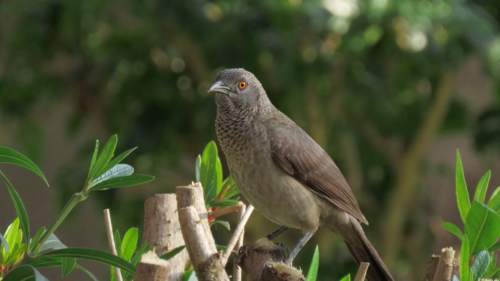
Greater Honeyguide vs Brown Babbler
Indicator indicator versus Turdoides plebejus
Play a quiz with Greater Honeyguide and Brown Babbler
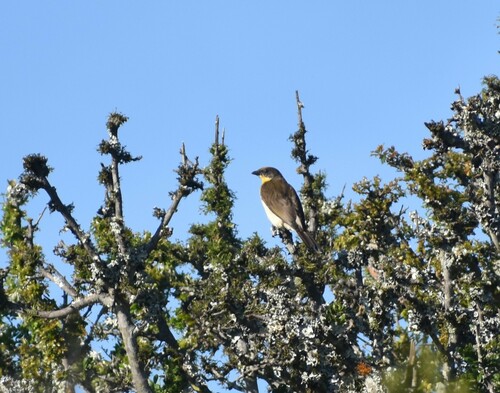
Greater Honeyguide
Brown Babbler
In short
The Greater Honeyguide and Brown Babbler can be distinguished primarily by their behavior and habitat preferences. The Greater Honeyguide is known for its unique interaction with humans and honey badgers, leading them to beehives, while the Brown Babbler is a social bird often found in noisy groups. Their plumage and vocalizations also differ significantly.
Identification tips
- Look for the Greater Honeyguide's white outer tail feathers and listen for its whistling call. 2. Observe behavior: Greater Honeyguides may lead you to beehives, while Brown Babblers are often in noisy groups. 3. Note habitat: Honeyguides prefer open areas, while Babblers are in dense vegetation.
Size
The Greater Honeyguide is slightly smaller and more slender compared to the bulkier Brown Babbler.
Plumage
The Greater Honeyguide has a more uniform olive-brown plumage with a pale throat and white outer tail feathers, whereas the Brown Babbler is generally brown with a more streaked appearance and lacks the distinctive white tail feathers.
Behaviour
Greater Honeyguides are often solitary and exhibit the unique behavior of leading humans or animals to beehives. In contrast, Brown Babblers are highly social, often seen in groups, and engage in cooperative foraging.
Habitat
Greater Honeyguides are typically found in open woodlands and savannas, while Brown Babblers prefer dense undergrowth in woodlands, thickets, and gardens.
Voice
The Greater Honeyguide has a distinct whistling call, whereas the Brown Babbler is known for its loud, chattering calls, often heard when they are in groups.