Birdr

Greater Painted-Snipe vs Painted Stork

Rostratula benghalensis versus Mycteria leucocephala

Play a quiz with Greater Painted-Snipe and Painted Stork
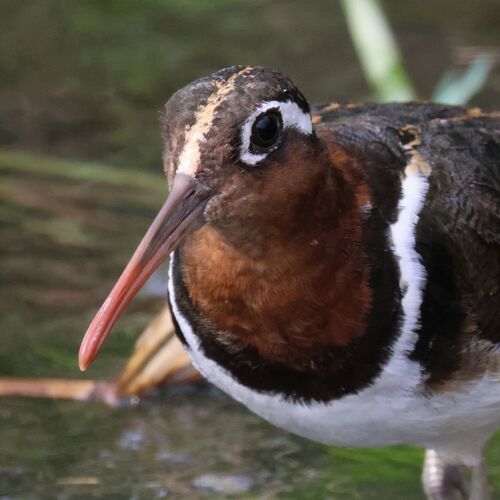
Greater Painted-Snipe (Rostratula benghalensis) Greater Painted-Snipe
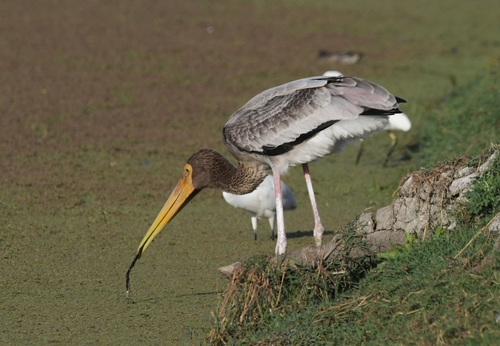
Painted Stork (Mycteria leucocephala) Painted Stork

Media

Loading…

In short

The Greater Painted-Snipe and Painted Stork are easily distinguished by size and structure: the Painted Stork is much larger with a long, straight bill, while the Greater Painted-Snipe is smaller with a shorter, slightly curved bill. Both species have 'painted' in their name but belong to different families and have distinct appearances.

Identification tips

  1. Size and Shape: Look for the large size and long, straight bill of the Painted Stork versus the smaller size and shorter, slightly curved bill of the Greater Painted-Snipe. 2. Plumage: Note the contrasting black and white plumage with pinkish wings of the Painted Stork compared to the mottled browns of the Greater Painted-Snipe. 3. Habitat and Behavior: Observe the habitat; Painted Storks are more likely to be seen in open water bodies, while Greater Painted-Snipes prefer dense, marshy areas.

Size

The Painted Stork is significantly larger, standing at about 93-102 cm tall, whereas the Greater Painted-Snipe is much smaller, around 25-30 cm in length.

Plumage

The Greater Painted-Snipe has a more cryptic plumage with mottled browns and whites, while the Painted Stork has a striking black and white body with a pinkish tinge on the wings and a distinctive yellow-orange bill.

Behaviour

The Greater Painted-Snipe is often found skulking in dense vegetation near water, while the Painted Stork is more likely to be seen wading openly in shallow waters, often in groups.

Habitat

Greater Painted-Snipe prefers marshy wetlands with dense cover, whereas Painted Stork is found in open wetlands, rivers, and lakes.

Voice

The Painted Stork is generally silent but may produce low grunts, while the Greater Painted-Snipe is known for its soft, whistling calls.

Submit a better description

Use the same sections as the comparison. Your text is published immediately.

The Greater Painted-Snipe and Painted Stork are easily distinguished by size and structure: the Painted Stork is much larger with a long, straight bill, while the Greater Painted-Snipe is smaller with a shorter, slightly curved bill. Both species have 'painted' in their name but belong to different families and have distinct appearances.

  1. Size and Shape: Look for the large size and long, straight bill of the Painted Stork versus the smaller size and shorter, slightly curved bill of the Greater Painted-Snipe. 2. Plumage: Note the contrasting black and white plumage with pinkish wings of the Painted Stork compared to the mottled browns of the Greater Painted-Snipe. 3. Habitat and Behavior: Observe the habitat; Painted Storks are more likely to be seen in open water bodies, while Greater Painted-Snipes prefer dense, marshy areas.

The Painted Stork is significantly larger, standing at about 93-102 cm tall, whereas the Greater Painted-Snipe is much smaller, around 25-30 cm in length.

The Greater Painted-Snipe has a more cryptic plumage with mottled browns and whites, while the Painted Stork has a striking black and white body with a pinkish tinge on the wings and a distinctive yellow-orange bill.

The Greater Painted-Snipe is often found skulking in dense vegetation near water, while the Painted Stork is more likely to be seen wading openly in shallow waters, often in groups.

Greater Painted-Snipe prefers marshy wetlands with dense cover, whereas Painted Stork is found in open wetlands, rivers, and lakes.

The Painted Stork is generally silent but may produce low grunts, while the Greater Painted-Snipe is known for its soft, whistling calls.

Discard your changes?

You have unsaved edits. If you leave now, those changes will be lost.

Greater Painted-Snipe · Painted Stork · My Tricky Birds