Birdr

Greater Rhea vs Solitary Tinamou

Rhea americana versus Tinamus solitarius

Play a quiz with Greater Rhea and Solitary Tinamou
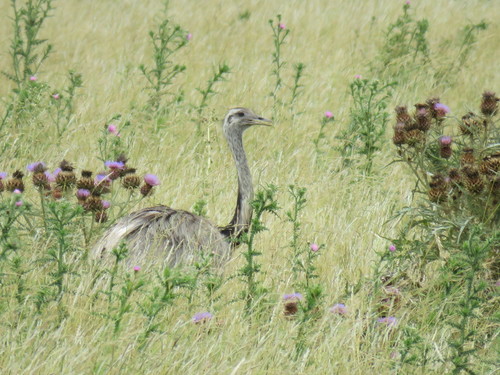
Greater Rhea (Rhea americana) Greater Rhea
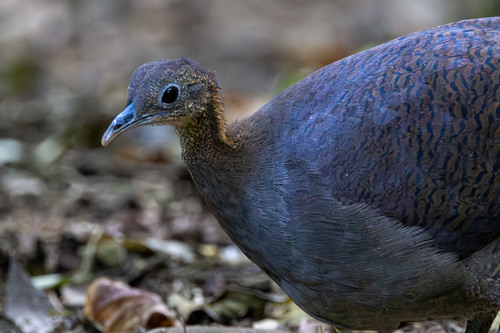
Solitary Tinamou (Tinamus solitarius) Solitary Tinamou

Media

Loading…

In short

The Greater Rhea and Solitary Tinamou are both large, ground-dwelling birds, but they differ significantly in size and appearance. The Greater Rhea is much larger and flightless, while the Solitary Tinamou is smaller and capable of short flights. Their habitats overlap in some regions, but their behaviors and vocalizations are distinct.

Identification tips

  1. Size and Shape: Look for the large, ostrich-like size of the Greater Rhea compared to the smaller, more compact Solitary Tinamou. 2. Habitat: Note the habitat; open grasslands suggest Greater Rhea, while dense forests indicate Solitary Tinamou. 3. Behavior: Observe social behavior; groups suggest Greater Rhea, solitary behavior suggests Solitary Tinamou. 4. Vocalizations: Listen for the Solitary Tinamou's distinctive whistle, especially at dawn or dusk.

Size

The Greater Rhea is significantly larger, standing up to 1.5 meters tall, whereas the Solitary Tinamou is much smaller, roughly the size of a chicken.

Plumage

Greater Rhea has grayish-brown plumage with a shaggy appearance, while Solitary Tinamou has a more uniform gray-brown plumage with a smoother texture.

Behaviour

Greater Rheas are often seen in open areas and are social, forming groups, whereas Solitary Tinamous are more elusive and solitary, often staying hidden in dense forest undergrowth.

Habitat

Greater Rheas inhabit open grasslands and savannas, while Solitary Tinamous prefer dense forests and are more likely to be found in the Atlantic Forest of Brazil.

Voice

Greater Rheas are generally silent but may produce low booming sounds, whereas Solitary Tinamous have a distinctive, mournful whistle that is often heard at dawn and dusk.

Submit a better description

Use the same sections as the comparison. Your text is published immediately.

The Greater Rhea and Solitary Tinamou are both large, ground-dwelling birds, but they differ significantly in size and appearance. The Greater Rhea is much larger and flightless, while the Solitary Tinamou is smaller and capable of short flights. Their habitats overlap in some regions, but their behaviors and vocalizations are distinct.

  1. Size and Shape: Look for the large, ostrich-like size of the Greater Rhea compared to the smaller, more compact Solitary Tinamou. 2. Habitat: Note the habitat; open grasslands suggest Greater Rhea, while dense forests indicate Solitary Tinamou. 3. Behavior: Observe social behavior; groups suggest Greater Rhea, solitary behavior suggests Solitary Tinamou. 4. Vocalizations: Listen for the Solitary Tinamou's distinctive whistle, especially at dawn or dusk.

The Greater Rhea is significantly larger, standing up to 1.5 meters tall, whereas the Solitary Tinamou is much smaller, roughly the size of a chicken.

Greater Rhea has grayish-brown plumage with a shaggy appearance, while Solitary Tinamou has a more uniform gray-brown plumage with a smoother texture.

Greater Rheas are often seen in open areas and are social, forming groups, whereas Solitary Tinamous are more elusive and solitary, often staying hidden in dense forest undergrowth.

Greater Rheas inhabit open grasslands and savannas, while Solitary Tinamous prefer dense forests and are more likely to be found in the Atlantic Forest of Brazil.

Greater Rheas are generally silent but may produce low booming sounds, whereas Solitary Tinamous have a distinctive, mournful whistle that is often heard at dawn and dusk.

Discard your changes?

You have unsaved edits. If you leave now, those changes will be lost.

Greater Rhea · Solitary Tinamou · My Tricky Birds