Birdr

Greater Sage-Grouse vs Dusky Grouse

Centrocercus urophasianus versus Dendragapus obscurus

Play a quiz with Greater Sage-Grouse and Dusky Grouse
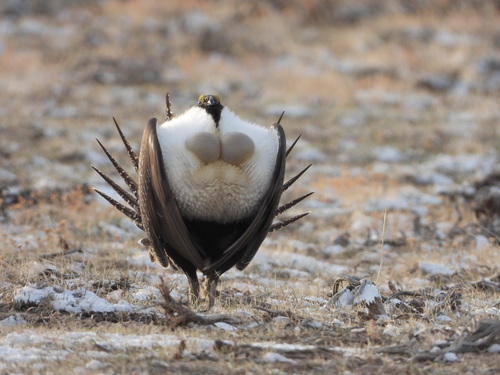
Greater Sage-Grouse (Centrocercus urophasianus) Greater Sage-Grouse
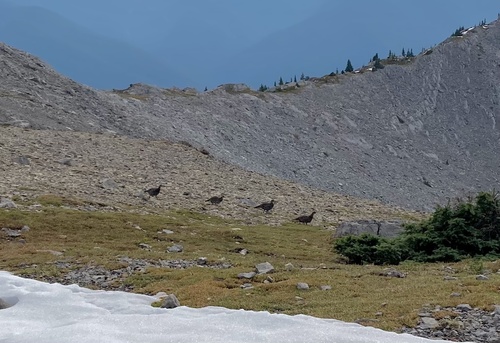
Dusky Grouse (Dendragapus obscurus) Dusky Grouse

Media

Loading…

In short

The Greater Sage-Grouse and Dusky Grouse can be distinguished by their habitat preferences and display behaviors. Greater Sage-Grouse are known for their elaborate lekking displays in sagebrush habitats, while Dusky Grouse are more often found in montane forests. Observing these behaviors and habitats can be key to identification.

Identification tips

  1. Habitat: Look for Greater Sage-Grouse in open sagebrush areas; Dusky Grouse are found in forested, mountainous regions. 2. Display Behavior: Greater Sage-Grouse males perform strutting displays on leks; Dusky Grouse are less likely to be seen displaying. 3. Size and Plumage: Greater Sage-Grouse are larger with more pronounced display features; Dusky Grouse are smaller and more uniformly colored. 4. Vocalizations: Listen for the popping sounds of Greater Sage-Grouse during displays and the hooting of Dusky Grouse in forests.

Size

Greater Sage-Grouse are generally larger than Dusky Grouse.

Plumage

Greater Sage-Grouse males have distinctive white chest feathers and yellow air sacs visible during displays, while Dusky Grouse have more uniform grayish plumage.

Behaviour

Greater Sage-Grouse perform dramatic strutting displays on leks, whereas Dusky Grouse are less conspicuous and often solitary or in small groups.

Habitat

Greater Sage-Grouse inhabit sagebrush-dominated areas, while Dusky Grouse prefer montane forests.

Voice

Greater Sage-Grouse males produce popping sounds during displays, while Dusky Grouse are known for their low hooting calls.

Submit a better description

Use the same sections as the comparison. Your text is published immediately.

The Greater Sage-Grouse and Dusky Grouse can be distinguished by their habitat preferences and display behaviors. Greater Sage-Grouse are known for their elaborate lekking displays in sagebrush habitats, while Dusky Grouse are more often found in montane forests. Observing these behaviors and habitats can be key to identification.

  1. Habitat: Look for Greater Sage-Grouse in open sagebrush areas; Dusky Grouse are found in forested, mountainous regions. 2. Display Behavior: Greater Sage-Grouse males perform strutting displays on leks; Dusky Grouse are less likely to be seen displaying. 3. Size and Plumage: Greater Sage-Grouse are larger with more pronounced display features; Dusky Grouse are smaller and more uniformly colored. 4. Vocalizations: Listen for the popping sounds of Greater Sage-Grouse during displays and the hooting of Dusky Grouse in forests.

Greater Sage-Grouse are generally larger than Dusky Grouse.

Greater Sage-Grouse males have distinctive white chest feathers and yellow air sacs visible during displays, while Dusky Grouse have more uniform grayish plumage.

Greater Sage-Grouse perform dramatic strutting displays on leks, whereas Dusky Grouse are less conspicuous and often solitary or in small groups.

Greater Sage-Grouse inhabit sagebrush-dominated areas, while Dusky Grouse prefer montane forests.

Greater Sage-Grouse males produce popping sounds during displays, while Dusky Grouse are known for their low hooting calls.

Discard your changes?

You have unsaved edits. If you leave now, those changes will be lost.

Greater Sage-Grouse · Dusky Grouse · My Tricky Birds