Birdr

Greater Sand Plover vs Malaysian Plover

Anarhynchus leschenaultii versus Anarhynchus peronii

Play a quiz with Greater Sand Plover and Malaysian Plover
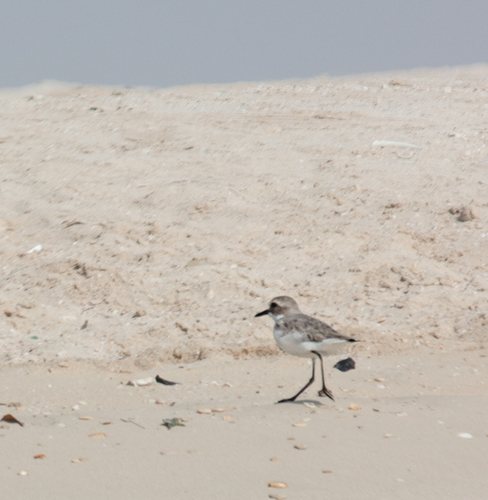
Greater Sand Plover (Anarhynchus leschenaultii) Greater Sand Plover
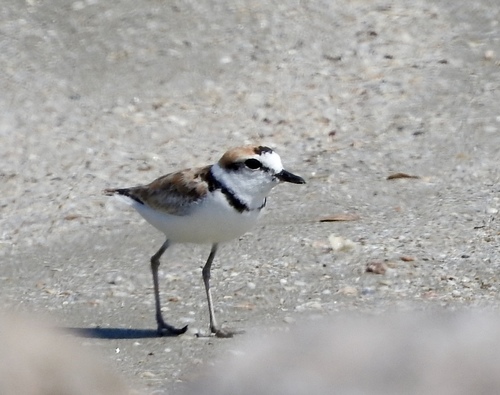
Malaysian Plover (Anarhynchus peronii) Malaysian Plover

Media

Loading…

In short

The Greater Sand Plover and Malaysian Plover can be differentiated by size and habitat preference. The Greater Sand Plover is larger and often found in more open coastal areas, while the Malaysian Plover is smaller and prefers sandy beaches with vegetation.

Identification tips

  1. Size: Look for the larger size of the Greater Sand Plover. 2. Breast Band: Check for the presence of a chestnut breast band in male Malaysian Plovers. 3. Habitat: Note the habitat; Greater Sand Plovers prefer open coastal areas, while Malaysian Plovers are found on sandy beaches. 4. Behavior: Observe group size; Greater Sand Plovers may be in flocks, Malaysian Plovers are often in pairs.

Size

The Greater Sand Plover is noticeably larger than the Malaysian Plover.

Plumage

The Greater Sand Plover has a more uniform sandy-brown upperpart, while the Malaysian Plover typically shows a distinct chestnut band across the breast in males, which is absent in females.

Behaviour

Greater Sand Plovers are more likely to be seen in flocks, especially during migration, whereas Malaysian Plovers are often seen in pairs and are territorial.

Habitat

Greater Sand Plovers are found in open coastal areas such as mudflats and estuaries, while Malaysian Plovers prefer sandy beaches with some vegetation and are often resident in these areas.

Voice

Vocalizations are not a primary distinguishing feature between these species in the field.

Submit a better description

Use the same sections as the comparison. Your text is published immediately.

The Greater Sand Plover and Malaysian Plover can be differentiated by size and habitat preference. The Greater Sand Plover is larger and often found in more open coastal areas, while the Malaysian Plover is smaller and prefers sandy beaches with vegetation.

  1. Size: Look for the larger size of the Greater Sand Plover. 2. Breast Band: Check for the presence of a chestnut breast band in male Malaysian Plovers. 3. Habitat: Note the habitat; Greater Sand Plovers prefer open coastal areas, while Malaysian Plovers are found on sandy beaches. 4. Behavior: Observe group size; Greater Sand Plovers may be in flocks, Malaysian Plovers are often in pairs.

The Greater Sand Plover is noticeably larger than the Malaysian Plover.

The Greater Sand Plover has a more uniform sandy-brown upperpart, while the Malaysian Plover typically shows a distinct chestnut band across the breast in males, which is absent in females.

Greater Sand Plovers are more likely to be seen in flocks, especially during migration, whereas Malaysian Plovers are often seen in pairs and are territorial.

Greater Sand Plovers are found in open coastal areas such as mudflats and estuaries, while Malaysian Plovers prefer sandy beaches with some vegetation and are often resident in these areas.

Vocalizations are not a primary distinguishing feature between these species in the field.

Discard your changes?

You have unsaved edits. If you leave now, those changes will be lost.

Greater Sand Plover · Malaysian Plover · My Tricky Birds