Birdr

Greater Scaup vs Common Eider

Aythya marila versus Somateria mollissima

Play a quiz with Greater Scaup and Common Eider

Greater Scaup (Aythya marila) Greater Scaup
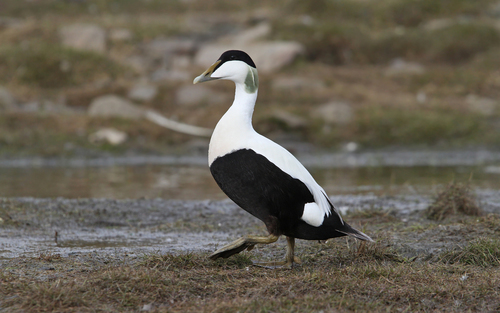
Common Eider (Somateria mollissima) Common Eider

Media

Loading…

In short

The Greater Scaup and Common Eider are both diving ducks but differ significantly in size and habitat preferences. The Greater Scaup is smaller and often found in freshwater or coastal environments, while the Common Eider is larger and primarily marine. Key identification features include the head shape and bill structure.

Identification tips

  1. Size and shape: Common Eider is larger with a more robust body and a sloping forehead. 2. Head and bill: Greater Scaup has a rounded head and a smaller, more delicate bill. 3. Plumage: Look for the male Greater Scaup's greenish head versus the male Common Eider's black cap. 4. Habitat: Consider the environment; Greater Scaup are more likely in freshwater, while Common Eiders prefer marine settings.

Size

The Common Eider is noticeably larger than the Greater Scaup.

Plumage

Male Greater Scaup have a glossy greenish head, while male Common Eiders have a distinctive black cap and white back. Female Greater Scaup are brown with a white patch at the base of the bill, whereas female Common Eiders are more uniformly brown.

Behaviour

Both species are diving ducks, but Common Eiders are more often seen in large flocks and engage in crèching behavior, where females group their ducklings together.

Habitat

Greater Scaup are found in freshwater lakes and coastal waters, while Common Eiders are primarily marine, often seen in coastal bays and estuaries.

Voice

Vocalizations are not a primary distinguishing feature between these species in the field.

Submit a better description

Use the same sections as the comparison. Your text is published immediately.

The Greater Scaup and Common Eider are both diving ducks but differ significantly in size and habitat preferences. The Greater Scaup is smaller and often found in freshwater or coastal environments, while the Common Eider is larger and primarily marine. Key identification features include the head shape and bill structure.

  1. Size and shape: Common Eider is larger with a more robust body and a sloping forehead. 2. Head and bill: Greater Scaup has a rounded head and a smaller, more delicate bill. 3. Plumage: Look for the male Greater Scaup's greenish head versus the male Common Eider's black cap. 4. Habitat: Consider the environment; Greater Scaup are more likely in freshwater, while Common Eiders prefer marine settings.

The Common Eider is noticeably larger than the Greater Scaup.

Male Greater Scaup have a glossy greenish head, while male Common Eiders have a distinctive black cap and white back. Female Greater Scaup are brown with a white patch at the base of the bill, whereas female Common Eiders are more uniformly brown.

Both species are diving ducks, but Common Eiders are more often seen in large flocks and engage in crèching behavior, where females group their ducklings together.

Greater Scaup are found in freshwater lakes and coastal waters, while Common Eiders are primarily marine, often seen in coastal bays and estuaries.

Vocalizations are not a primary distinguishing feature between these species in the field.

Discard your changes?

You have unsaved edits. If you leave now, those changes will be lost.

Greater Scaup · Common Eider · My Tricky Birds