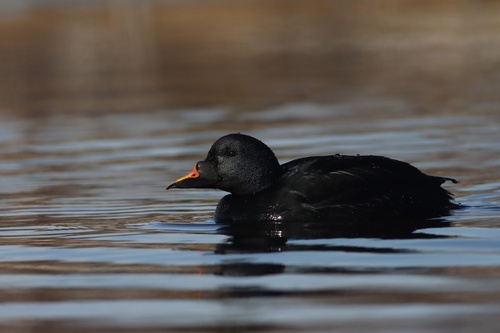
Greater Scaup vs Common Scoter
Aythya marila versus Melanitta nigra
Play a quiz with Greater Scaup and Common Scoter
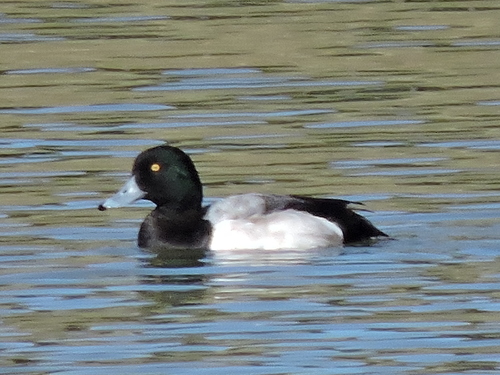
Common Scoter
In short
The Greater Scaup and Common Scoter are both diving ducks, but they can be distinguished by their plumage and habitat preferences. The Greater Scaup typically shows a white wing stripe, while the Common Scoter is uniformly dark with a yellow patch on the male's bill. Their habitats also differ, with scaups favoring freshwater and coastal areas, and scoters preferring marine environments.
Identification tips
- Look for the white wing stripe in flight for Greater Scaup. 2. Note the yellow patch on the male Common Scoter's bill. 3. Observe habitat: Greater Scaup in freshwater or coastal areas, Common Scoter in marine environments. 4. Consider flock composition: Greater Scaup often mix with other species, Common Scoter form large sea flocks.
Size
Greater Scaup is slightly smaller than Common Scoter, with a wingspan of approximately 71-80 cm compared to the Scoter's 79-90 cm.
Plumage
Greater Scaup males have a glossy greenish head, white flanks, and a black breast, while females are brown with a white patch near the bill. Common Scoter males are sooty black with a distinctive yellow patch on the bill, and females are dark brown without the white wing stripe seen in scaups.
Behaviour
Both species are diving ducks, but the Common Scoter is more often seen in large flocks at sea, while the Greater Scaup is more commonly found in mixed-species flocks in freshwater or coastal areas.
Habitat
Greater Scaup are found in freshwater lakes and coastal waters, often seen in North America. Common Scoters prefer marine environments and are more widespread in the Western Palearctic.
Voice
Common Scoter males produce thin, piping whistles, while Greater Scaup are generally quieter. Both species are not particularly vocal.