Birdr

Greater Scaup vs Spectacled Eider

Aythya marila versus Somateria fischeri

Play a quiz with Greater Scaup and Spectacled Eider
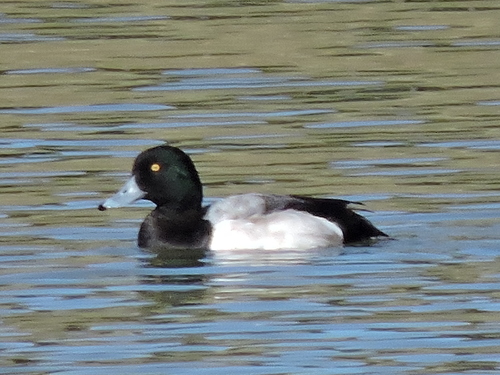
Greater Scaup (Aythya marila) Greater Scaup
Spectacled Eider (Somateria fischeri) Spectacled Eider

Media

Loading…

In short

The Greater Scaup and Spectacled Eider are both waterfowl but differ significantly in appearance and habitat. The Greater Scaup is a diving duck with a rounded head and a distinctive blue-gray bill, while the Spectacled Eider is known for its unique 'spectacled' facial pattern. They occupy different habitats, with Greater Scaup found in freshwater and coastal areas, and Spectacled Eiders in Arctic coastal regions.

Identification tips

  1. Look for the 'spectacled' facial pattern on Spectacled Eiders, especially in males. 2. Note the habitat: Greater Scaup are more likely in freshwater or coastal areas, while Spectacled Eiders are in Arctic regions. 3. Check the head shape and bill: Greater Scaup have a rounded head and blue-gray bill, whereas Spectacled Eiders have a more pronounced facial pattern.

Size

The Greater Scaup is generally smaller than the Spectacled Eider, with a more compact body and shorter neck.

Plumage

Male Greater Scaup have a glossy green head, white sides, and a black breast, while females are brown with a white face patch. Spectacled Eiders, especially males, have a striking pattern with white 'spectacles' around the eyes and a mix of green, white, and black on the body. Females are more subdued but retain the facial pattern.

Behaviour

Greater Scaup are often seen in large flocks on open water, diving for food. Spectacled Eiders are more solitary or found in smaller groups, often in remote Arctic waters.

Habitat

Greater Scaup prefer freshwater lakes, rivers, and coastal bays, while Spectacled Eiders are found in Arctic coastal regions, often near sea ice.

Voice

Vocalizations are not a primary distinguishing feature between these species in the field.

Submit a better description

Use the same sections as the comparison. Your text is published immediately.

The Greater Scaup and Spectacled Eider are both waterfowl but differ significantly in appearance and habitat. The Greater Scaup is a diving duck with a rounded head and a distinctive blue-gray bill, while the Spectacled Eider is known for its unique 'spectacled' facial pattern. They occupy different habitats, with Greater Scaup found in freshwater and coastal areas, and Spectacled Eiders in Arctic coastal regions.

  1. Look for the 'spectacled' facial pattern on Spectacled Eiders, especially in males. 2. Note the habitat: Greater Scaup are more likely in freshwater or coastal areas, while Spectacled Eiders are in Arctic regions. 3. Check the head shape and bill: Greater Scaup have a rounded head and blue-gray bill, whereas Spectacled Eiders have a more pronounced facial pattern.

The Greater Scaup is generally smaller than the Spectacled Eider, with a more compact body and shorter neck.

Male Greater Scaup have a glossy green head, white sides, and a black breast, while females are brown with a white face patch. Spectacled Eiders, especially males, have a striking pattern with white 'spectacles' around the eyes and a mix of green, white, and black on the body. Females are more subdued but retain the facial pattern.

Greater Scaup are often seen in large flocks on open water, diving for food. Spectacled Eiders are more solitary or found in smaller groups, often in remote Arctic waters.

Greater Scaup prefer freshwater lakes, rivers, and coastal bays, while Spectacled Eiders are found in Arctic coastal regions, often near sea ice.

Vocalizations are not a primary distinguishing feature between these species in the field.

Discard your changes?

You have unsaved edits. If you leave now, those changes will be lost.

Greater Scaup · Spectacled Eider · My Tricky Birds