Birdr

Greater Short-toed Lark vs Bimaculated Lark

Calandrella brachydactyla versus Melanocorypha bimaculata

Play a quiz with Greater Short-toed Lark and Bimaculated Lark
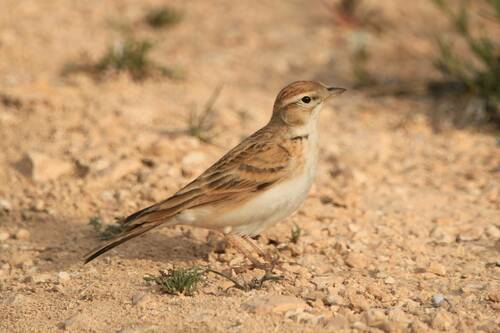
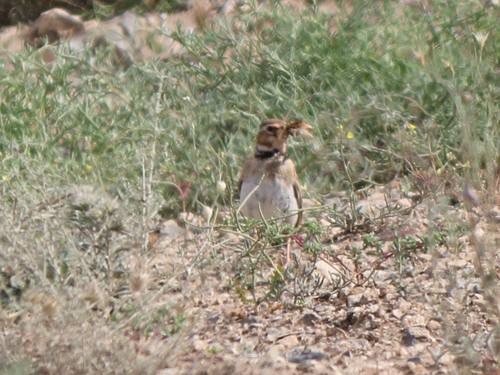
Greater Short-toed Lark (Calandrella brachydactyla) Greater Short-toed Lark
Bimaculated Lark (Melanocorypha bimaculata) Bimaculated Lark

Media

Loading…

In short

The Greater Short-toed Lark and Bimaculated Lark can be distinguished primarily by their structure and plumage. The Greater Short-toed Lark is smaller with a shorter bill and less pronounced markings, while the Bimaculated Lark is larger with a more robust bill and distinct dark patches on the sides of its neck.

Identification tips

  1. Size and Structure: Look for the smaller size and shorter bill of the Greater Short-toed Lark. 2. Neck Patches: Check for the distinctive dark patches on the sides of the neck of the Bimaculated Lark. 3. Plumage Contrast: Note the more contrasting plumage and defined supercilium of the Bimaculated Lark. 4. Habitat: Consider the habitat; rocky areas may suggest Bimaculated Lark. 5. Vocalizations: Listen for the richer song of the Bimaculated Lark, though this can be subtle.

Size

The Greater Short-toed Lark is generally smaller and more compact compared to the larger Bimaculated Lark.

Plumage

Greater Short-toed Lark has a more uniform, sandy-brown plumage with less distinct markings. In contrast, the Bimaculated Lark features more contrasting plumage with noticeable dark patches on the sides of the neck and a more defined supercilium.

Behaviour

Both species exhibit similar ground-feeding behavior typical of larks, but the Bimaculated Lark may appear more robust and deliberate in its movements.

Habitat

Both species inhabit open, arid environments, but the Greater Short-toed Lark is more widespread in dry grasslands and semi-deserts, while the Bimaculated Lark is often found in stony or rocky areas.

Voice

The Greater Short-toed Lark has a more varied song with trills and whistles, whereas the Bimaculated Lark's song is richer and more melodious. Calls of both species can be similar and may require experience to differentiate.

Submit a better description

Use the same sections as the comparison. Your text is published immediately.

The Greater Short-toed Lark and Bimaculated Lark can be distinguished primarily by their structure and plumage. The Greater Short-toed Lark is smaller with a shorter bill and less pronounced markings, while the Bimaculated Lark is larger with a more robust bill and distinct dark patches on the sides of its neck.

  1. Size and Structure: Look for the smaller size and shorter bill of the Greater Short-toed Lark. 2. Neck Patches: Check for the distinctive dark patches on the sides of the neck of the Bimaculated Lark. 3. Plumage Contrast: Note the more contrasting plumage and defined supercilium of the Bimaculated Lark. 4. Habitat: Consider the habitat; rocky areas may suggest Bimaculated Lark. 5. Vocalizations: Listen for the richer song of the Bimaculated Lark, though this can be subtle.

The Greater Short-toed Lark is generally smaller and more compact compared to the larger Bimaculated Lark.

Greater Short-toed Lark has a more uniform, sandy-brown plumage with less distinct markings. In contrast, the Bimaculated Lark features more contrasting plumage with noticeable dark patches on the sides of the neck and a more defined supercilium.

Both species exhibit similar ground-feeding behavior typical of larks, but the Bimaculated Lark may appear more robust and deliberate in its movements.

Both species inhabit open, arid environments, but the Greater Short-toed Lark is more widespread in dry grasslands and semi-deserts, while the Bimaculated Lark is often found in stony or rocky areas.

The Greater Short-toed Lark has a more varied song with trills and whistles, whereas the Bimaculated Lark's song is richer and more melodious. Calls of both species can be similar and may require experience to differentiate.

Discard your changes?

You have unsaved edits. If you leave now, those changes will be lost.

Greater Short-toed Lark · Bimaculated Lark · My Tricky Birds