
Greater Short-toed Lark vs Calandra Lark
Calandrella brachydactyla versus Melanocorypha calandra
Play a quiz with Greater Short-toed Lark and Calandra Lark
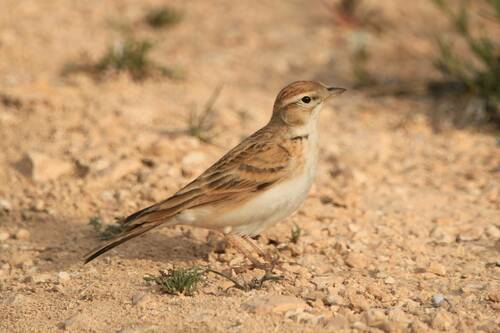 Greater Short-toed Lark
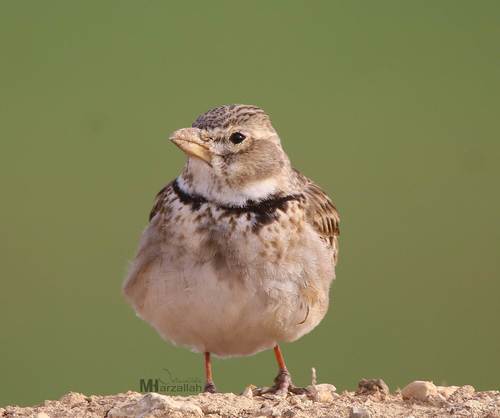 Calandra Lark
In short
The most reliable field mark to separate Greater Short-toed Lark from Calandra Lark is size and overall structure: Calandra Lark is much larger and bulkier, with a heavier build and a distinctly thick bill, while Greater Short-toed Lark is noticeably smaller, slimmer, and more delicate. In flight, Calandra Lark shows broad, dark underwings and a short, white-edged tail, which are absent in Greater Short-toed Lark. Both species have pale supercilia and streaked upperparts, but the Calandra Lark's wing and tail patterns are much more striking in flight. If you see a lark with a compact flocking habit and pale, finely streaked plumage, especially in Europe or North Africa, check for the size and bill shape to avoid confusion.
Identification tips
- Size and Structure: Calandra Lark is much larger and bulkier than Greater Short-toed Lark. If the bird looks robust, thick-necked, and heavy-billed, suspect Calandra. If it is small, slim, and delicate, Greater Short-toed Lark is more likely. This is reliable at all ages and seasons.
- Bill Shape: Calandra Lark has a thick, strong bill with a heavy base, while Greater Short-toed Lark's bill is shorter, finer, and more pointed. This is especially clear when birds are side-by-side or at close range.
- Flight Pattern and Wing Shape: In flight, Calandra Lark shows broad, rounded wings with dark underwings and a short tail with white edges. Greater Short-toed Lark has narrower, more pointed wings, plain pale underwings, and a dark tail without strong white edges. This is most useful on flushed or flying birds of any age.
- Tail Pattern: Look for the short, white-edged tail on Calandra Lark in flight. Greater Short-toed Lark's tail is darker and lacks the bold white edges.
- Plumage Tone: Greater Short-toed Lark is paler and more finely streaked above, with a generally washed-out look. Calandra Lark is darker, with heavier streaking and a more contrasting head pattern.
- Supercilium: Both species have pale supercilia, but Greater Short-toed Lark's is usually clearer and more obvious, especially on paler birds. Calandra Lark's supercilium can be less distinct due to its heavier head pattern.
- Neck Patches: Both species may show dark patches on the sides of the neck, but these are more prominent and sharply defined in Calandra Lark.
- Crown Color: Some western Greater Short-toed Larks show a rufous crown, which is not seen in Calandra Lark. Use this only if the crown is clearly rufous.
- Flocking Behavior: Large, tightly packed, synchronously flying flocks are typical of Greater Short-toed Lark, especially in winter. Calandra Lark is more often seen in smaller groups or pairs.
- Habitat: If the bird is in very dry, bare, or sparsely vegetated ground, Greater Short-toed Lark is more likely. Calandra Lark prefers richer grasslands and cereal fields.
- Song: Calandra Lark's song is rich, melodious, and far-carrying, often given in display flight. Greater Short-toed Lark's song is a dry twitter or simple melody, less musical and quieter.
- Roosting and Watering: Greater Short-toed Lark flocks often fly together to water in the morning and roost in open ground in the evening, each bird in a small depression. This behavior is less typical of Calandra Lark.
- Sexes and Ages: Both species are similar between sexes and do not show strong age-related plumage differences in the field, so rely on structure and flight pattern rather than subtle plumage marks.
- Pitfalls: Beware of confusion with other larks, but between these two, size and flight pattern are the most reliable. Pale, small larks in compact flocks are almost always Greater Short-toed; large, heavy larks with bold wing/tail patterns are Calandra.
- When in Doubt: If you cannot judge size or see the bill, try to flush the bird and watch for the underwing and tail pattern in flight—this is often decisive.
Size
Calandra Lark is substantially larger and heavier than Greater Short-toed Lark, with an adult body mass around 59 g [wikidata], making it one of the bulkiest larks in its range. Greater Short-toed Lark is much smaller and lighter, with a more delicate overall impression. The difference is often obvious even at a distance: Calandra Lark appears robust and thickset, while Greater Short-toed Lark is compact but slim and dainty. This size gap is one of the most immediate and reliable separation points in the field.
Plumage
No age-specific upperwing or juvenile flight pattern marks are described for either species in the sources, so focus is on adult and general plumage. Calandra Lark in flight shows short, broad wings with distinctly dark underwings and a short tail edged in white—this bold contrast is not present in Greater Short-toed Lark, which has plain pale underwings and a dark tail without strong white edges. Both species are streaked brownish above and pale below, but Greater Short-toed Lark is paler overall, with finer streaking and a more washed-out appearance. Calandra Lark's upperparts are darker and more heavily streaked, and its underparts are clean but with prominent dark patches on the sides of the neck. Both have pale supercilia, but Calandra Lark's is often less distinct due to its heavier head pattern. Some Greater Short-toed Larks (especially western birds) may show a rufous crown, which Calandra Lark lacks. Sexes are similar in both species.
Behaviour
Greater Short-toed Lark often forms large, tightly packed flocks, especially in winter, flying in synchrony and moving to water or roost sites together. Calandra Lark is usually seen in smaller groups or pairs, and its flight is slower and more powerful, matching its heavier build. Calandra Lark may appear more sluggish on the ground, while Greater Short-toed Lark is more active and agile, often feeding in open, bare ground and quickly taking flight as a group.
Habitat
Both species favor open country, but Greater Short-toed Lark is more likely to be found in dry, bare, or sparsely vegetated ground, including steppe, semi-desert, and cultivated fields. Calandra Lark also prefers open habitats but tends to select richer grasslands, cereal fields, and more productive steppe, often with taller vegetation. Their ranges overlap in southern Europe and the Mediterranean, but Calandra Lark extends further east into southern Russia and Iran, while Greater Short-toed Lark has a broader range including North Africa and Central Asia.
Voice
Greater Short-toed Lark's song is a dry twittering, sometimes more varied and imitative, but generally less musical than Calandra Lark. Calandra Lark is known for its rich, melodious, and far-carrying song, often delivered in display flight. While both can be heard singing in flight, Calandra Lark's voice is more powerful and complex, whereas Greater Short-toed Lark's is softer and less varied.