Birdr

Greater Short-toed Lark vs Dunn's Lark

Calandrella brachydactyla versus Eremalauda dunni

Play a quiz with Greater Short-toed Lark and Dunn's Lark
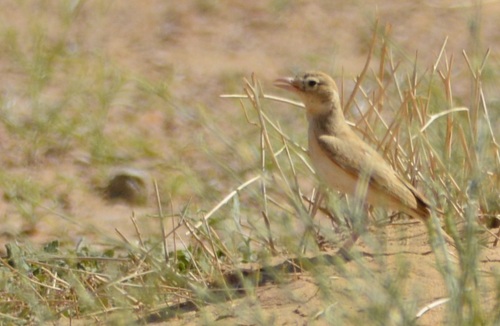
Greater Short-toed Lark (Calandrella brachydactyla) Greater Short-toed Lark
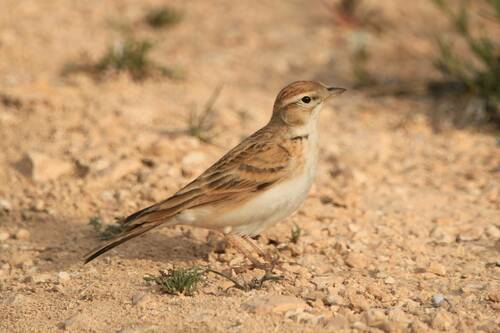
Dunn's Lark (Eremalauda dunni) Dunn's Lark

Media

Loading…

In short

Greater Short-toed Lark and Dunn's Lark can be tricky to differentiate in the field, but structural differences are key. Focus on bill shape and primary projection, as well as habitat preferences, to tell them apart.

Identification tips

  1. Bill shape: Greater Short-toed Lark has a shorter, more conical bill, while Dunn's Lark's bill is longer and slightly decurved. 2. Primary projection: Dunn's Lark has a shorter primary projection compared to Greater Short-toed Lark. 3. Habitat: Note the surrounding environment; Dunn's Lark is more likely in desert regions. 4. Plumage: Look for streaking on the breast and back in Greater Short-toed Lark, which is less pronounced in Dunn's Lark.

Size

Both species are similar in size, but Dunn's Lark may appear slightly more robust.

Plumage

Greater Short-toed Lark generally has a more streaked appearance on the breast and back, whereas Dunn's Lark has a plainer, more uniform plumage with a paler overall tone.

Behaviour

Both species exhibit similar ground-foraging behavior, but Dunn's Lark is known for being more nomadic, especially outside the breeding season.

Habitat

Greater Short-toed Lark prefers open, dry habitats with sparse vegetation, often in agricultural areas. Dunn's Lark is more associated with desert environments, particularly in the Sahara, and is less likely to be found in cultivated lands.

Voice

Vocalizations are not the most reliable distinguishing feature, but Greater Short-toed Lark's song is more complex, while Dunn's Lark has a simpler, repetitive call.

Submit a better description

Use the same sections as the comparison. Your text is published immediately.

Greater Short-toed Lark and Dunn's Lark can be tricky to differentiate in the field, but structural differences are key. Focus on bill shape and primary projection, as well as habitat preferences, to tell them apart.

  1. Bill shape: Greater Short-toed Lark has a shorter, more conical bill, while Dunn's Lark's bill is longer and slightly decurved. 2. Primary projection: Dunn's Lark has a shorter primary projection compared to Greater Short-toed Lark. 3. Habitat: Note the surrounding environment; Dunn's Lark is more likely in desert regions. 4. Plumage: Look for streaking on the breast and back in Greater Short-toed Lark, which is less pronounced in Dunn's Lark.

Both species are similar in size, but Dunn's Lark may appear slightly more robust.

Greater Short-toed Lark generally has a more streaked appearance on the breast and back, whereas Dunn's Lark has a plainer, more uniform plumage with a paler overall tone.

Both species exhibit similar ground-foraging behavior, but Dunn's Lark is known for being more nomadic, especially outside the breeding season.

Greater Short-toed Lark prefers open, dry habitats with sparse vegetation, often in agricultural areas. Dunn's Lark is more associated with desert environments, particularly in the Sahara, and is less likely to be found in cultivated lands.

Vocalizations are not the most reliable distinguishing feature, but Greater Short-toed Lark's song is more complex, while Dunn's Lark has a simpler, repetitive call.

Discard your changes?

You have unsaved edits. If you leave now, those changes will be lost.

Greater Short-toed Lark · Dunn's Lark · My Tricky Birds