
Birdr

Greater Short-toed Lark vs Turkestan Short-toed Lark

Calandrella brachydactyla versus Alaudala heinei

Play a quiz with Greater Short-toed Lark and Turkestan Short-toed Lark
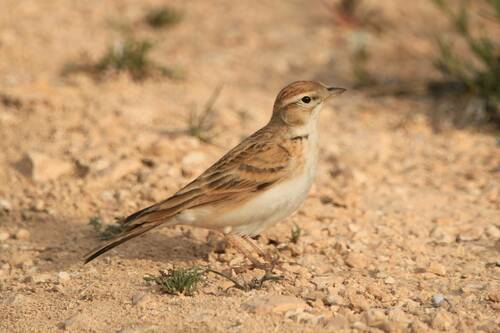
Greater Short-toed Lark (Calandrella brachydactyla) Greater Short-toed Lark
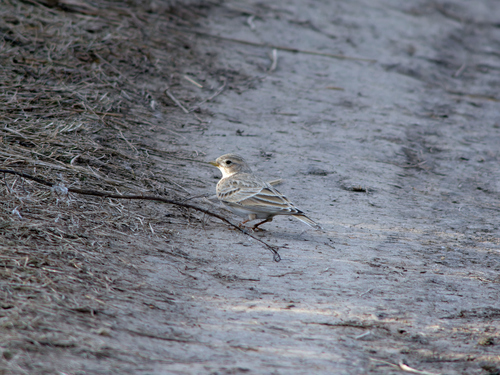
Turkestan Short-toed Lark (Alaudala heinei) Turkestan Short-toed Lark

Media

Loading…

In short

The Greater Short-toed Lark and Turkestan Short-toed Lark are similar in appearance but can be distinguished by subtle differences in structure and habitat preferences. The Greater Short-toed Lark has a slightly longer bill and prefers open, dry habitats, while the Turkestan Short-toed Lark is often found on saline soils and is more migratory.

Identification tips

  1. Bill Length: Look for a slightly longer bill in the Greater Short-toed Lark. 2. Habitat: Note the habitat; saline soils suggest Turkestan Short-toed Lark. 3. Behavior: Observe migratory patterns; more movement suggests Turkestan Short-toed Lark. 4. Plumage Tone: Slightly paler appearance may indicate Greater Short-toed Lark.

Size

Both species are similar in size, typical of small larks.

Plumage

Plumage is generally similar, with both species having streaked upperparts and pale underparts. However, the Greater Short-toed Lark may appear slightly paler overall.

Behaviour

The Greater Short-toed Lark is more sedentary, while the Turkestan Short-toed Lark shows more migratory behavior.

Habitat

The Greater Short-toed Lark prefers open, dry, and often sandy habitats. In contrast, the Turkestan Short-toed Lark is found on saline soils and is more migratory, often moving to different habitats seasonally.

Voice

Vocalizations are similar, with both species having a series of trills and whistles, but specific song patterns may vary regionally.

Submit a better description

Use the same sections as the comparison. Your text is published immediately.

The Greater Short-toed Lark and Turkestan Short-toed Lark are similar in appearance but can be distinguished by subtle differences in structure and habitat preferences. The Greater Short-toed Lark has a slightly longer bill and prefers open, dry habitats, while the Turkestan Short-toed Lark is often found on saline soils and is more migratory.

  1. Bill Length: Look for a slightly longer bill in the Greater Short-toed Lark. 2. Habitat: Note the habitat; saline soils suggest Turkestan Short-toed Lark. 3. Behavior: Observe migratory patterns; more movement suggests Turkestan Short-toed Lark. 4. Plumage Tone: Slightly paler appearance may indicate Greater Short-toed Lark.

Both species are similar in size, typical of small larks.

Plumage is generally similar, with both species having streaked upperparts and pale underparts. However, the Greater Short-toed Lark may appear slightly paler overall.

The Greater Short-toed Lark is more sedentary, while the Turkestan Short-toed Lark shows more migratory behavior.

The Greater Short-toed Lark prefers open, dry, and often sandy habitats. In contrast, the Turkestan Short-toed Lark is found on saline soils and is more migratory, often moving to different habitats seasonally.

Vocalizations are similar, with both species having a series of trills and whistles, but specific song patterns may vary regionally.

Discard your changes?

You have unsaved edits. If you leave now, those changes will be lost.

Greater Short-toed Lark · Turkestan Short-toed Lark · My Tricky Birds