Birdr

Greater Wagtail-Tyrant vs Black-backed Water-Tyrant

Stigmatura budytoides versus Fluvicola albiventer

Play a quiz with Greater Wagtail-Tyrant and Black-backed Water-Tyrant
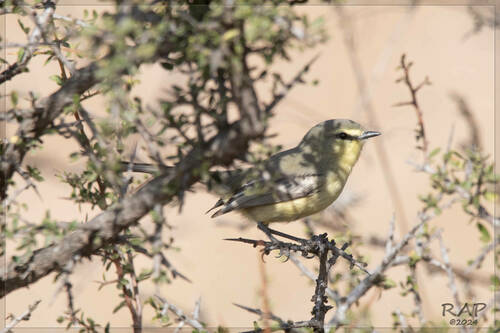
Greater Wagtail-Tyrant (Stigmatura budytoides) Greater Wagtail-Tyrant
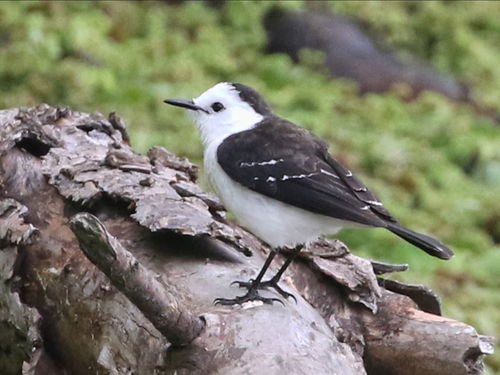
Black-backed Water-Tyrant (Fluvicola albiventer) Black-backed Water-Tyrant

Media

Loading…

In short

The Greater Wagtail-Tyrant and Black-backed Water-Tyrant are both small flycatchers, but they can be distinguished by their tail and back coloration. The Greater Wagtail-Tyrant has a longer tail with a more pronounced wagging behavior, while the Black-backed Water-Tyrant features a distinctive black back and white underparts.

Identification tips

  1. Look for the tail length and wagging behavior: Greater Wagtail-Tyrant has a longer tail and wags it more frequently. 2. Check for back coloration: Black-backed Water-Tyrant has a distinctive black back. 3. Consider the habitat: Black-backed Water-Tyrants are more likely near water. 4. Use plumage contrast: Black-backed Water-Tyrants have a stark black-and-white appearance, unlike the more uniform Greater Wagtail-Tyrant.

Size

Both species are small, but the Greater Wagtail-Tyrant typically appears slightly more elongated due to its longer tail.

Plumage

The Greater Wagtail-Tyrant is generally grayish with a longer tail and lacks the stark black-and-white contrast. In contrast, the Black-backed Water-Tyrant has a striking black back and white underparts, making it more visually contrasting.

Behaviour

Greater Wagtail-Tyrants are known for their tail-wagging behavior, which is more pronounced than in Black-backed Water-Tyrants. The latter may be seen more often near water, reflecting its name.

Habitat

Greater Wagtail-Tyrants are found in more varied habitats, including open woodlands and scrub, while Black-backed Water-Tyrants are typically associated with water bodies like rivers and marshes.

Voice

Vocalizations are not well-documented for both species in the sources, and thus may not be a reliable field mark.

Submit a better description

Use the same sections as the comparison. Your text is published immediately.

The Greater Wagtail-Tyrant and Black-backed Water-Tyrant are both small flycatchers, but they can be distinguished by their tail and back coloration. The Greater Wagtail-Tyrant has a longer tail with a more pronounced wagging behavior, while the Black-backed Water-Tyrant features a distinctive black back and white underparts.

  1. Look for the tail length and wagging behavior: Greater Wagtail-Tyrant has a longer tail and wags it more frequently. 2. Check for back coloration: Black-backed Water-Tyrant has a distinctive black back. 3. Consider the habitat: Black-backed Water-Tyrants are more likely near water. 4. Use plumage contrast: Black-backed Water-Tyrants have a stark black-and-white appearance, unlike the more uniform Greater Wagtail-Tyrant.

Both species are small, but the Greater Wagtail-Tyrant typically appears slightly more elongated due to its longer tail.

The Greater Wagtail-Tyrant is generally grayish with a longer tail and lacks the stark black-and-white contrast. In contrast, the Black-backed Water-Tyrant has a striking black back and white underparts, making it more visually contrasting.

Greater Wagtail-Tyrants are known for their tail-wagging behavior, which is more pronounced than in Black-backed Water-Tyrants. The latter may be seen more often near water, reflecting its name.

Greater Wagtail-Tyrants are found in more varied habitats, including open woodlands and scrub, while Black-backed Water-Tyrants are typically associated with water bodies like rivers and marshes.

Vocalizations are not well-documented for both species in the sources, and thus may not be a reliable field mark.

Discard your changes?

You have unsaved edits. If you leave now, those changes will be lost.

Greater Wagtail-Tyrant · Black-backed Water-Tyrant · My Tricky Birds