Birdr

Greater White-fronted Goose vs Northern Lapwing

Anser albifrons versus Vanellus vanellus

Play a quiz with Greater White-fronted Goose and Northern Lapwing
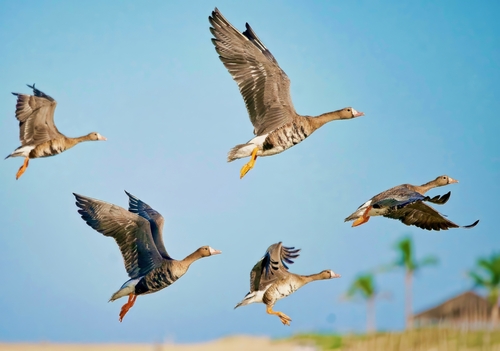
Greater White-fronted Goose (Anser albifrons) Greater White-fronted Goose
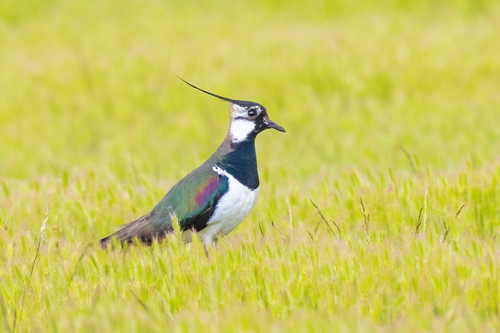
Northern Lapwing (Vanellus vanellus) Northern Lapwing

Media

Loading…

In short

The Greater White-fronted Goose and Northern Lapwing are easily distinguished by their size and appearance. The goose is a large waterfowl with a distinctive white patch at the base of its bill, while the lapwing is a medium-sized bird with striking black and white plumage and a prominent crest.

Identification tips

Look for the white face patch and black belly bars on the Greater White-fronted Goose. For the Northern Lapwing, note the black and white plumage and long crest. Size is a key differentiator, with the goose being much larger. Observe behavior: geese form large flocks, while lapwings have erratic flight.

Size

The Greater White-fronted Goose is significantly larger than the Northern Lapwing, with a robust body typical of geese, whereas the lapwing is more compact and slender.

Plumage

The goose has a gray-brown body with a white face patch and black barring on the belly, while the lapwing features a striking black and white pattern with an iridescent green back and a long black crest.

Behaviour

Greater White-fronted Geese are gregarious and form large flocks, especially during migration, while Northern Lapwings are often seen in smaller groups and exhibit a distinctive, erratic flight pattern.

Habitat

The goose prefers wetlands, grasslands, and agricultural fields, while the lapwing is commonly found in open fields, marshes, and grasslands.

Voice

The Greater White-fronted Goose has a high-pitched, laughing call, whereas the Northern Lapwing's call is a distinctive 'pee-wit' sound.

Submit a better description

Use the same sections as the comparison. Your text is published immediately.

The Greater White-fronted Goose and Northern Lapwing are easily distinguished by their size and appearance. The goose is a large waterfowl with a distinctive white patch at the base of its bill, while the lapwing is a medium-sized bird with striking black and white plumage and a prominent crest.

Look for the white face patch and black belly bars on the Greater White-fronted Goose. For the Northern Lapwing, note the black and white plumage and long crest. Size is a key differentiator, with the goose being much larger. Observe behavior: geese form large flocks, while lapwings have erratic flight.

The Greater White-fronted Goose is significantly larger than the Northern Lapwing, with a robust body typical of geese, whereas the lapwing is more compact and slender.

The goose has a gray-brown body with a white face patch and black barring on the belly, while the lapwing features a striking black and white pattern with an iridescent green back and a long black crest.

Greater White-fronted Geese are gregarious and form large flocks, especially during migration, while Northern Lapwings are often seen in smaller groups and exhibit a distinctive, erratic flight pattern.

The goose prefers wetlands, grasslands, and agricultural fields, while the lapwing is commonly found in open fields, marshes, and grasslands.

The Greater White-fronted Goose has a high-pitched, laughing call, whereas the Northern Lapwing's call is a distinctive 'pee-wit' sound.

Discard your changes?

You have unsaved edits. If you leave now, those changes will be lost.

Greater White-fronted Goose · Northern Lapwing · My Tricky Birds