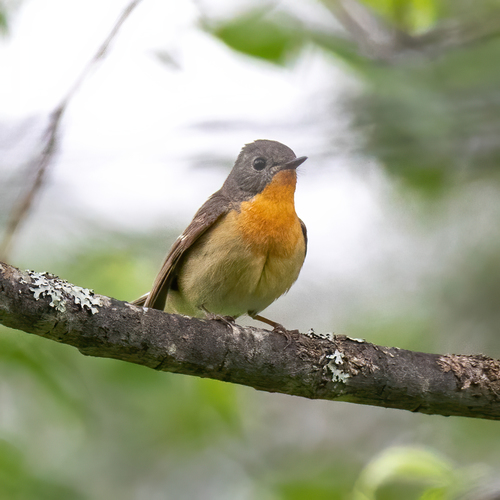
Green-backed Flycatcher vs Mugimaki Flycatcher
Ficedula elisae versus Ficedula mugimaki
Play a quiz with Green-backed Flycatcher and Mugimaki Flycatcher
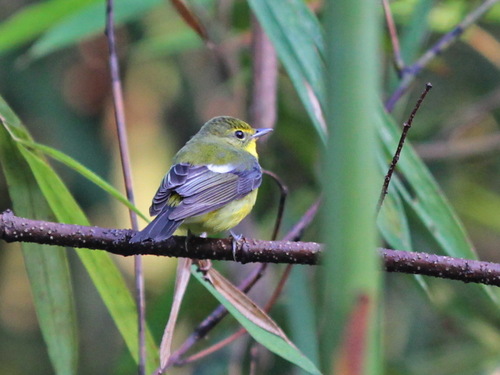
Green-backed Flycatcher
Mugimaki Flycatcher
In short
The Green-backed Flycatcher and Mugimaki Flycatcher can be told apart by their plumage and structural differences. The Green-backed Flycatcher typically has a more uniform greenish back, while the Mugimaki Flycatcher features a distinctive orange throat and breast. Both species belong to the Old World Flycatchers family, making structural and plumage details crucial for identification.
Identification tips
- Plumage: Look for the orange throat and breast of the Mugimaki Flycatcher versus the greenish back of the Green-backed Flycatcher.
- Season: Consider the season and location, as the Mugimaki Flycatcher is migratory and may be seen in different habitats during migration.
- Structure: Note the Mugimaki's more contrasting plumage, especially the white wing patches, which are absent in the Green-backed Flycatcher.
Size
Both species are similar in size, typical of small flycatchers.
Plumage
The Green-backed Flycatcher has a greenish back and yellowish underparts. In contrast, the Mugimaki Flycatcher displays a striking orange throat and breast with a black head and white wing patches. The Mugimaki's contrasting colors are more pronounced.
Behaviour
Both species exhibit typical flycatcher behavior, such as sallying from perches to catch insects. No significant behavioral differences noted.
Habitat
Both species inhabit forested areas, but the Green-backed Flycatcher is more often found in subtropical or tropical moist lowland forests, while the Mugimaki Flycatcher is seen in a broader range of forest types during migration.
Voice
Vocalizations are not well-documented for field differentiation, but the Mugimaki Flycatcher is generally more vocal during migration.
Green-backed Flycatcher · Mugimaki Flycatcher · My Tricky Birds