Birdr

Green-backed Flycatcher vs Narcissus Flycatcher

Ficedula elisae versus Ficedula narcissina

Play a quiz with Green-backed Flycatcher and Narcissus Flycatcher
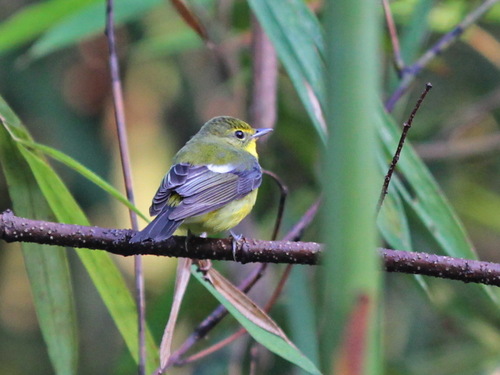
Green-backed Flycatcher (Ficedula elisae) Green-backed Flycatcher
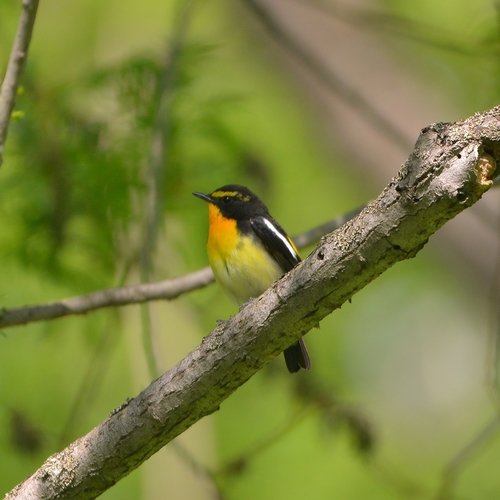
Narcissus Flycatcher (Ficedula narcissina) Narcissus Flycatcher

Media

Loading…

In short

The Green-backed Flycatcher and Narcissus Flycatcher are both small, colorful Old World flycatchers. The male Green-backed Flycatcher is distinguished by its greenish back and yellow underparts, while the male Narcissus Flycatcher has a striking black and yellow plumage with a bright orange throat. Females of both species are more subdued, making them harder to differentiate.

Identification tips

  1. Look for the greenish back and yellow underparts on male Green-backed Flycatchers. 2. Identify male Narcissus Flycatchers by their black and yellow plumage with an orange throat. 3. Listen for the varied, musical song of the Narcissus Flycatcher. 4. Note the habitat; Narcissus Flycatchers may be found in more varied sheltered situations.

Size

Both species are similar in size, typical of small flycatchers.

Plumage

Male Green-backed Flycatchers have a greenish back and yellow underparts, whereas male Narcissus Flycatchers are black with a bright yellow belly and orange throat. Female Green-backed Flycatchers are drab with olive tones, while female Narcissus Flycatchers are also dull but may show some yellowish wash.

Behaviour

Both species engage in typical flycatching behavior, catching insects in flight. They may also consume some fruits.

Habitat

Both species inhabit forested areas, but the Narcissus Flycatcher is more likely to be found in a variety of sheltered situations, including accepting nest boxes.

Voice

The Narcissus Flycatcher's song is highly varied, musical, and mimetic, which can be a distinguishing feature if heard.

Submit a better description

Use the same sections as the comparison. Your text is published immediately.

The Green-backed Flycatcher and Narcissus Flycatcher are both small, colorful Old World flycatchers. The male Green-backed Flycatcher is distinguished by its greenish back and yellow underparts, while the male Narcissus Flycatcher has a striking black and yellow plumage with a bright orange throat. Females of both species are more subdued, making them harder to differentiate.

  1. Look for the greenish back and yellow underparts on male Green-backed Flycatchers. 2. Identify male Narcissus Flycatchers by their black and yellow plumage with an orange throat. 3. Listen for the varied, musical song of the Narcissus Flycatcher. 4. Note the habitat; Narcissus Flycatchers may be found in more varied sheltered situations.

Both species are similar in size, typical of small flycatchers.

Male Green-backed Flycatchers have a greenish back and yellow underparts, whereas male Narcissus Flycatchers are black with a bright yellow belly and orange throat. Female Green-backed Flycatchers are drab with olive tones, while female Narcissus Flycatchers are also dull but may show some yellowish wash.

Both species engage in typical flycatching behavior, catching insects in flight. They may also consume some fruits.

Both species inhabit forested areas, but the Narcissus Flycatcher is more likely to be found in a variety of sheltered situations, including accepting nest boxes.

The Narcissus Flycatcher's song is highly varied, musical, and mimetic, which can be a distinguishing feature if heard.

Discard your changes?

You have unsaved edits. If you leave now, those changes will be lost.

Green-backed Flycatcher · Narcissus Flycatcher · My Tricky Birds