Birdr

Green-backed Flycatcher vs Yellow-vented Flowerpecker

Ficedula elisae versus Pachyglossa chrysorrhea

Play a quiz with Green-backed Flycatcher and Yellow-vented Flowerpecker
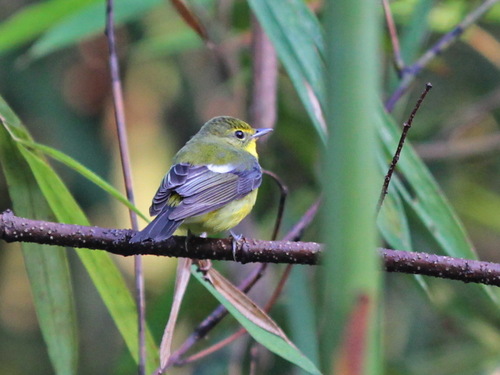
Green-backed Flycatcher (Ficedula elisae) Green-backed Flycatcher
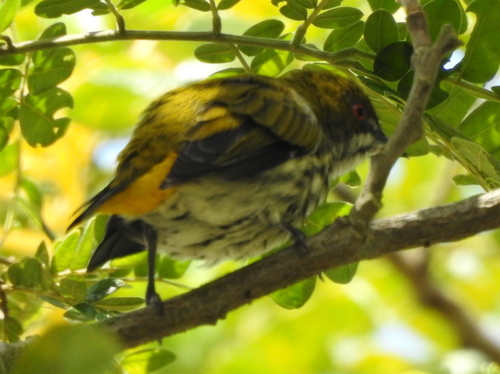
Yellow-vented Flowerpecker (Pachyglossa chrysorrhea) Yellow-vented Flowerpecker

Media

Loading…

In short

The Green-backed Flycatcher and Yellow-vented Flowerpecker can be distinguished by their size, bill shape, and plumage details. The flycatcher is generally larger with a more slender bill, while the flowerpecker is smaller with a short, stout bill. Plumage differences include the flycatcher's greenish back and the flowerpecker's yellow vent.

Identification tips

Size

The Green-backed Flycatcher is slightly larger than the Yellow-vented Flowerpecker.

Plumage

The Green-backed Flycatcher has a greenish back and a more uniform coloration, while the Yellow-vented Flowerpecker features a distinctive yellow vent and often has a more varied plumage with contrasting colors.

Behaviour

The Green-backed Flycatcher typically exhibits flycatching behavior, sallying from perches to catch insects. The Yellow-vented Flowerpecker is more likely to be seen foraging for fruits and nectar, often in a more fluttery manner.

Habitat

Both species can be found in forested areas, but the Green-backed Flycatcher is more often seen in open woodlands and edges, while the Yellow-vented Flowerpecker is more commonly found in dense forests and gardens.

Voice

The Green-backed Flycatcher has a melodic song and a variety of calls, while the Yellow-vented Flowerpecker's vocalizations are simpler, often consisting of high-pitched chirps.

Submit a better description

Use the same sections as the comparison. Your text is published immediately.

The Green-backed Flycatcher and Yellow-vented Flowerpecker can be distinguished by their size, bill shape, and plumage details. The flycatcher is generally larger with a more slender bill, while the flowerpecker is smaller with a short, stout bill. Plumage differences include the flycatcher's greenish back and the flowerpecker's yellow vent.

  • Bill shape: The flycatcher has a slender bill, while the flowerpecker's is short and stout.
  • Plumage: Look for the greenish back of the flycatcher versus the yellow vent of the flowerpecker.
  • Size: The flycatcher is generally larger.
  • Behavior: Note the flycatcher's insect-catching sallying versus the flowerpecker's fruit and nectar foraging.
  • Habitat: Consider the habitat; flycatchers prefer open woodlands, flowerpeckers dense forests.

The Green-backed Flycatcher is slightly larger than the Yellow-vented Flowerpecker.

The Green-backed Flycatcher has a greenish back and a more uniform coloration, while the Yellow-vented Flowerpecker features a distinctive yellow vent and often has a more varied plumage with contrasting colors.

The Green-backed Flycatcher typically exhibits flycatching behavior, sallying from perches to catch insects. The Yellow-vented Flowerpecker is more likely to be seen foraging for fruits and nectar, often in a more fluttery manner.

Both species can be found in forested areas, but the Green-backed Flycatcher is more often seen in open woodlands and edges, while the Yellow-vented Flowerpecker is more commonly found in dense forests and gardens.

The Green-backed Flycatcher has a melodic song and a variety of calls, while the Yellow-vented Flowerpecker's vocalizations are simpler, often consisting of high-pitched chirps.

Discard your changes?

You have unsaved edits. If you leave now, those changes will be lost.

Green-backed Flycatcher · Yellow-vented Flowerpecker · My Tricky Birds