Birdr

Green-headed Tanager vs Swallow Tanager

Tangara seledon versus Tersina viridis

Play a quiz with Green-headed Tanager and Swallow Tanager
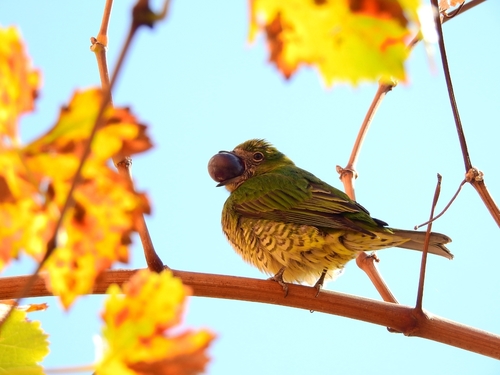
Green-headed Tanager (Tangara seledon) Green-headed Tanager
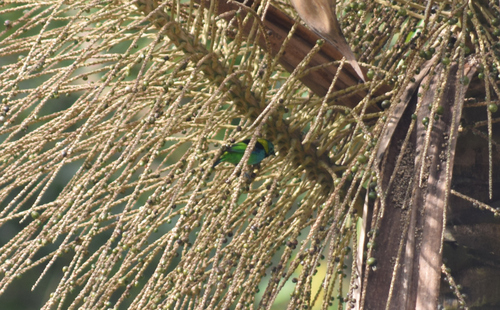
Swallow Tanager (Tersina viridis) Swallow Tanager

Media

Loading…

In short

The Green-headed Tanager and Swallow Tanager can be distinguished by their distinct plumage and behavior. The Green-headed Tanager has a vibrant, multi-colored appearance, while the Swallow Tanager is more uniform with a blue-green tone. Behaviorally, the Swallow Tanager is known for its sallying flight to catch insects, unlike the Green-headed Tanager, which forages by hopping along branches.

Identification tips

1. Plumage: Look for the Green-headed Tanager's vivid green head and contrasting colors. 2. Behavior: Note the Swallow Tanager's sallying flight and larger group sizes. 3. Habitat: Consider the habitat; Green-headed Tanagers favor dense forests, while Swallow Tanagers are more adaptable to open areas.

Size

Both species are small tanagers, but the Swallow Tanager may appear slightly more streamlined due to its longer wings and tail.

Plumage

The Green-headed Tanager is striking with its green head, blue body, and black markings, whereas the Swallow Tanager is predominantly blue-green with less contrast and lacks the vivid color pattern of the Green-headed Tanager.

Behaviour

Swallow Tanagers often sally for insects and can be seen in large groups, while Green-headed Tanagers forage by gleaning from branches and are usually seen in smaller groups or pairs.

Habitat

Both species inhabit forested areas, but the Swallow Tanager is more likely to be found in open areas or edges, while the Green-headed Tanager prefers dense Atlantic Forest regions.

Voice

Vocalizations are not well-documented for distinguishing these species in the field.

Submit a better description

Use the same sections as the comparison. Your text is published immediately.

The Green-headed Tanager and Swallow Tanager can be distinguished by their distinct plumage and behavior. The Green-headed Tanager has a vibrant, multi-colored appearance, while the Swallow Tanager is more uniform with a blue-green tone. Behaviorally, the Swallow Tanager is known for its sallying flight to catch insects, unlike the Green-headed Tanager, which forages by hopping along branches.

1. Plumage: Look for the Green-headed Tanager's vivid green head and contrasting colors. 2. Behavior: Note the Swallow Tanager's sallying flight and larger group sizes. 3. Habitat: Consider the habitat; Green-headed Tanagers favor dense forests, while Swallow Tanagers are more adaptable to open areas.

Both species are small tanagers, but the Swallow Tanager may appear slightly more streamlined due to its longer wings and tail.

The Green-headed Tanager is striking with its green head, blue body, and black markings, whereas the Swallow Tanager is predominantly blue-green with less contrast and lacks the vivid color pattern of the Green-headed Tanager.

Swallow Tanagers often sally for insects and can be seen in large groups, while Green-headed Tanagers forage by gleaning from branches and are usually seen in smaller groups or pairs.

Both species inhabit forested areas, but the Swallow Tanager is more likely to be found in open areas or edges, while the Green-headed Tanager prefers dense Atlantic Forest regions.

Vocalizations are not well-documented for distinguishing these species in the field.

Discard your changes?

You have unsaved edits. If you leave now, those changes will be lost.

Green-headed Tanager · Swallow Tanager · My Tricky Birds