Birdr

Green Heron vs Squacco Heron

Butorides virescens versus Ardeola ralloides

Play a quiz with Green Heron and Squacco Heron
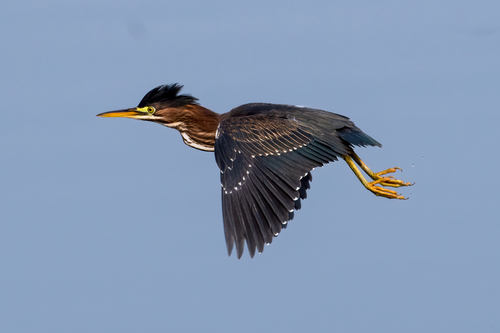
Green Heron (Butorides virescens) Green Heron
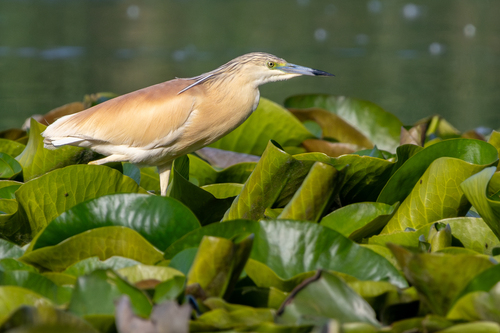
Squacco Heron (Ardeola ralloides) Squacco Heron

Media

Loading…

In short

The Green Heron and Squacco Heron are both small herons but can be distinguished by their structure and plumage. The Green Heron has a more compact build with a shorter neck, while the Squacco Heron is more slender with a longer neck and distinctive breeding plumage.

Identification tips

1. Structure: Look for the Green Heron's shorter neck and compact build versus the Squacco Heron's longer neck and more slender appearance. 2. Plumage: Note the Green Heron's dark cap and back with chestnut neck versus the Squacco Heron's buffy-white plumage with white wing patches. 3. Behavior: Observe for tool use in Green Herons. 4. Habitat: Consider the region and habitat type, as they have different ranges and preferences.

Size

Both species are small herons, but the Squacco Heron appears slightly more elongated due to its longer neck.

Plumage

The Green Heron has a dark, glossy greenish-black cap and back, with chestnut neck and underparts. In contrast, the Squacco Heron is buffy-white with a striking white wing patch visible in flight, and during breeding, it develops long, loose, buffy plumes.

Behaviour

Green Herons are known for their solitary or loosely colonial nesting and unique tool-using behavior to catch fish. Squacco Herons are more often found in small groups and do not exhibit tool use.

Habitat

Green Herons are found in North American wetlands, often in wooded areas near water. Squacco Herons prefer freshwater wetlands in Europe, Africa, and western Asia, often in open areas.

Voice

Green Herons produce a scolding squawk, especially when disturbed. Squacco Herons are generally quieter, with a soft, croaking call.

Submit a better description

Use the same sections as the comparison. Your text is published immediately.

The Green Heron and Squacco Heron are both small herons but can be distinguished by their structure and plumage. The Green Heron has a more compact build with a shorter neck, while the Squacco Heron is more slender with a longer neck and distinctive breeding plumage.

1. Structure: Look for the Green Heron's shorter neck and compact build versus the Squacco Heron's longer neck and more slender appearance. 2. Plumage: Note the Green Heron's dark cap and back with chestnut neck versus the Squacco Heron's buffy-white plumage with white wing patches. 3. Behavior: Observe for tool use in Green Herons. 4. Habitat: Consider the region and habitat type, as they have different ranges and preferences.

Both species are small herons, but the Squacco Heron appears slightly more elongated due to its longer neck.

The Green Heron has a dark, glossy greenish-black cap and back, with chestnut neck and underparts. In contrast, the Squacco Heron is buffy-white with a striking white wing patch visible in flight, and during breeding, it develops long, loose, buffy plumes.

Green Herons are known for their solitary or loosely colonial nesting and unique tool-using behavior to catch fish. Squacco Herons are more often found in small groups and do not exhibit tool use.

Green Herons are found in North American wetlands, often in wooded areas near water. Squacco Herons prefer freshwater wetlands in Europe, Africa, and western Asia, often in open areas.

Green Herons produce a scolding squawk, especially when disturbed. Squacco Herons are generally quieter, with a soft, croaking call.

Discard your changes?

You have unsaved edits. If you leave now, those changes will be lost.

Green Heron · Squacco Heron · My Tricky Birds