Birdr

Green Sandpiper vs Marsh Sandpiper

Tringa ochropus versus Tringa stagnatilis

Play a quiz with Green Sandpiper and Marsh Sandpiper
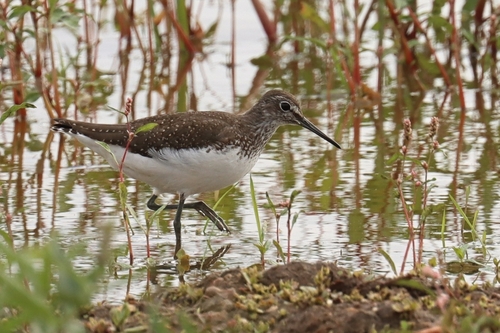
Green Sandpiper (Tringa ochropus) Green Sandpiper
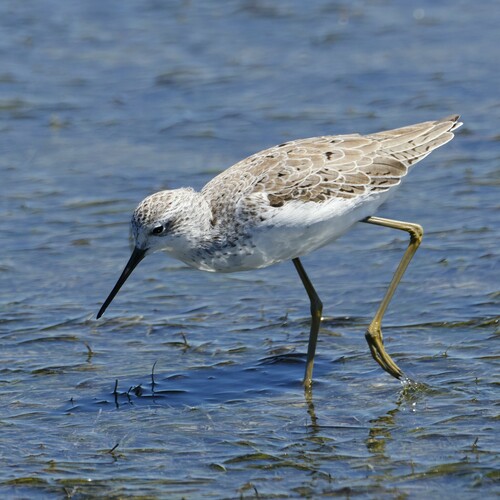
Marsh Sandpiper (Tringa stagnatilis) Marsh Sandpiper

Media

Loading…

In short

The Green Sandpiper is more robust with a shorter, thicker bill and a distinctive white rump visible in flight, while the Marsh Sandpiper is more slender with a longer, needle-like bill and lacks the white rump. Both species have similar plumage but differ in structure and habitat preferences.

Identification tips

Size

The Green Sandpiper is stockier with a more compact build, whereas the Marsh Sandpiper is more delicate and slender.

Plumage

Both species have similar overall plumage with mottled brown upperparts and paler underparts. However, the Green Sandpiper has a more contrasting white belly and a distinct white rump patch visible in flight, which the Marsh Sandpiper lacks.

Behaviour

Green Sandpipers often bob their tails when foraging, while Marsh Sandpipers are more graceful and less likely to bob.

Habitat

Green Sandpipers are typically found in freshwater habitats like small ponds and marshes, often in wooded areas. Marsh Sandpipers prefer open, shallow wetlands and are more likely to be seen in coastal areas.

Voice

Green Sandpipers have a distinctive, sharp 'twee-wee-wee' call, while Marsh Sandpipers have a softer, more melodic call.

Submit a better description

Use the same sections as the comparison. Your text is published immediately.

The Green Sandpiper is more robust with a shorter, thicker bill and a distinctive white rump visible in flight, while the Marsh Sandpiper is more slender with a longer, needle-like bill and lacks the white rump. Both species have similar plumage but differ in structure and habitat preferences.

  • Look for the white rump in flight for Green Sandpiper.
  • Note the bill shape: Green Sandpiper has a shorter, thicker bill; Marsh Sandpiper has a longer, needle-like bill.
  • Observe tail bobbing behavior, more common in Green Sandpiper.
  • Consider habitat: wooded freshwater for Green Sandpiper, open wetlands for Marsh Sandpiper.
  • Listen for calls: sharp for Green Sandpiper, softer for Marsh Sandpiper.

The Green Sandpiper is stockier with a more compact build, whereas the Marsh Sandpiper is more delicate and slender.

Both species have similar overall plumage with mottled brown upperparts and paler underparts. However, the Green Sandpiper has a more contrasting white belly and a distinct white rump patch visible in flight, which the Marsh Sandpiper lacks.

Green Sandpipers often bob their tails when foraging, while Marsh Sandpipers are more graceful and less likely to bob.

Green Sandpipers are typically found in freshwater habitats like small ponds and marshes, often in wooded areas. Marsh Sandpipers prefer open, shallow wetlands and are more likely to be seen in coastal areas.

Green Sandpipers have a distinctive, sharp 'twee-wee-wee' call, while Marsh Sandpipers have a softer, more melodic call.

Discard your changes?

You have unsaved edits. If you leave now, those changes will be lost.

Green Sandpiper · Marsh Sandpiper · My Tricky Birds