Birdr

Grey-and-buff Woodpecker vs Grey-capped Pygmy Woodpecker

Hemicircus concretus versus Yungipicus canicapillus

Play a quiz with Grey-and-buff Woodpecker and Grey-capped Pygmy Woodpecker
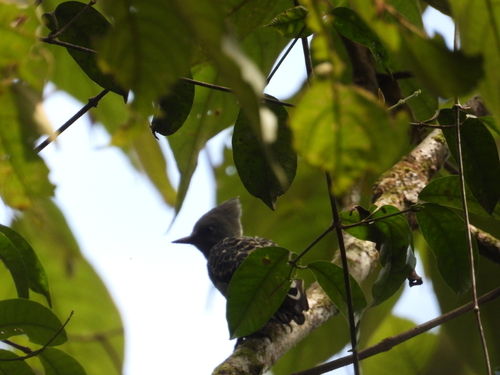
Grey-and-buff Woodpecker (Hemicircus concretus) Grey-and-buff Woodpecker
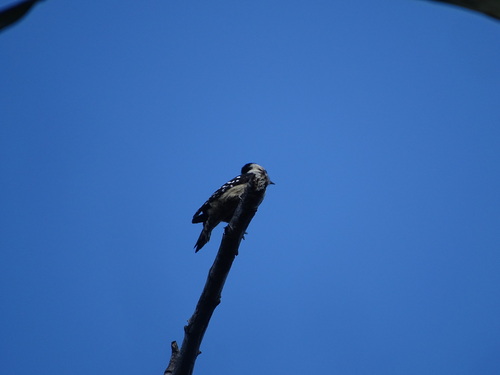
Grey-capped Pygmy Woodpecker (Yungipicus canicapillus) Grey-capped Pygmy Woodpecker

Media

Loading…

In short

The Grey-and-buff Woodpecker and the Grey-capped Pygmy Woodpecker can be distinguished by their tail structure and plumage patterns. The Grey-and-buff has a distinctive short, stubby tail and a heavily spotted mantle, while the Grey-capped Pygmy has a more typical woodpecker tail and less pronounced spotting.

Identification tips

1. Tail Structure: Look for the short, stubby tail of the Grey-and-buff Woodpecker, which is more piculet-like. 2. Crest and Mantle: Note the heavily spotted mantle and crest of the Grey-and-buff, especially the red crest in males. 3. Overall Plumage: The Grey-capped Pygmy has a grey cap and less pronounced spotting. 4. Habitat Context: Consider the elevation and forest proximity, as the Grey-and-buff is more specific to these areas.

Size

The Grey-and-buff Woodpecker is generally small with a stubby appearance, while the Grey-capped Pygmy Woodpecker is also small but with a more typical woodpecker silhouette.

Plumage

The Grey-and-buff Woodpecker features a heavily spotted mantle and a characteristic crest, with males sometimes showing extensive red on the crest. The Grey-capped Pygmy Woodpecker has a grey cap and a more uniform plumage with less spotting.

Behaviour

Both species exhibit typical woodpecker behavior, but the Grey-and-buff's adaptations like the short tail and long fourth toe are notable for drilling and climbing.

Habitat

The Grey-and-buff Woodpecker is found in lower and middle elevations near forests, while the Grey-capped Pygmy Woodpecker's habitat preferences are less specified here but generally overlap in forested areas.

Submit a better description

Use the same sections as the comparison. Your text is published immediately.

The Grey-and-buff Woodpecker and the Grey-capped Pygmy Woodpecker can be distinguished by their tail structure and plumage patterns. The Grey-and-buff has a distinctive short, stubby tail and a heavily spotted mantle, while the Grey-capped Pygmy has a more typical woodpecker tail and less pronounced spotting.

1. Tail Structure: Look for the short, stubby tail of the Grey-and-buff Woodpecker, which is more piculet-like. 2. Crest and Mantle: Note the heavily spotted mantle and crest of the Grey-and-buff, especially the red crest in males. 3. Overall Plumage: The Grey-capped Pygmy has a grey cap and less pronounced spotting. 4. Habitat Context: Consider the elevation and forest proximity, as the Grey-and-buff is more specific to these areas.

The Grey-and-buff Woodpecker is generally small with a stubby appearance, while the Grey-capped Pygmy Woodpecker is also small but with a more typical woodpecker silhouette.

The Grey-and-buff Woodpecker features a heavily spotted mantle and a characteristic crest, with males sometimes showing extensive red on the crest. The Grey-capped Pygmy Woodpecker has a grey cap and a more uniform plumage with less spotting.

Both species exhibit typical woodpecker behavior, but the Grey-and-buff's adaptations like the short tail and long fourth toe are notable for drilling and climbing.

The Grey-and-buff Woodpecker is found in lower and middle elevations near forests, while the Grey-capped Pygmy Woodpecker's habitat preferences are less specified here but generally overlap in forested areas.

Discard your changes?

You have unsaved edits. If you leave now, those changes will be lost.

Grey-and-buff Woodpecker · Grey-capped Pygmy Woodpecker · My Tricky Birds