Birdr

Grey-and-buff Woodpecker vs Heart-spotted Woodpecker

Hemicircus concretus versus Hemicircus canente

Play a quiz with Grey-and-buff Woodpecker and Heart-spotted Woodpecker
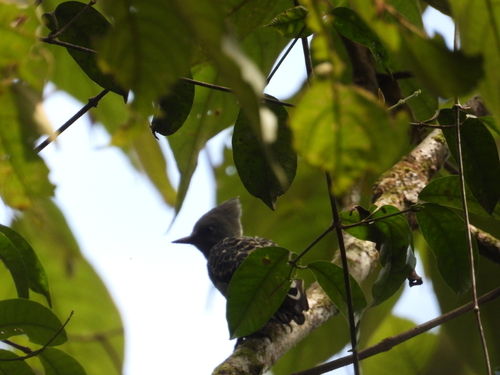
Grey-and-buff Woodpecker (Hemicircus concretus) Grey-and-buff Woodpecker
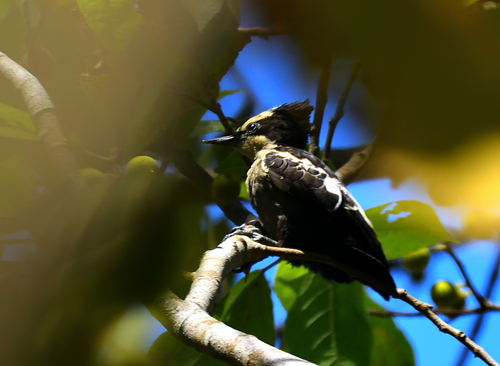
Heart-spotted Woodpecker (Hemicircus canente) Heart-spotted Woodpecker

Media

Loading…

In short

The Grey-and-buff Woodpecker and Heart-spotted Woodpecker are both small, crested woodpeckers with overlapping ranges. Key differences include the plumage pattern and the extent of red on the crest in males. Both species have similar habitats, but their calls can help in identification.

Identification tips

Size

Both species are small, with the Grey-and-buff Woodpecker being slightly more compact.

Plumage

The Grey-and-buff Woodpecker has a heavily spotted mantle and, in some subspecies, a fully red crest in males. The Heart-spotted Woodpecker features distinct heart-shaped spots on its wings and lacks the extensive red crest.

Behaviour

Both species exhibit typical woodpecker behaviors such as climbing and drilling, but the Grey-and-buff Woodpecker is noted for its very short, stubby tail.

Habitat

Both species inhabit forested areas, often at lower to middle elevations, and are typically located by their calls.

Voice

Calls are a reliable way to differentiate these species, though specific details on their vocalizations are not provided.

Submit a better description

Use the same sections as the comparison. Your text is published immediately.

The Grey-and-buff Woodpecker and Heart-spotted Woodpecker are both small, crested woodpeckers with overlapping ranges. Key differences include the plumage pattern and the extent of red on the crest in males. Both species have similar habitats, but their calls can help in identification.

  • Plumage: Look for heart-shaped spots on the wings of the Heart-spotted Woodpecker. Check the extent of red on the crest in males of the Grey-and-buff Woodpecker.
  • Tail: Note the very short, stubby tail of the Grey-and-buff Woodpecker.
  • Calls: Listen for differences in calls, as these can be distinctive.
  • Crest: Observe the crest shape and color, especially in males.

Both species are small, with the Grey-and-buff Woodpecker being slightly more compact.

The Grey-and-buff Woodpecker has a heavily spotted mantle and, in some subspecies, a fully red crest in males. The Heart-spotted Woodpecker features distinct heart-shaped spots on its wings and lacks the extensive red crest.

Both species exhibit typical woodpecker behaviors such as climbing and drilling, but the Grey-and-buff Woodpecker is noted for its very short, stubby tail.

Both species inhabit forested areas, often at lower to middle elevations, and are typically located by their calls.

Calls are a reliable way to differentiate these species, though specific details on their vocalizations are not provided.

Discard your changes?

You have unsaved edits. If you leave now, those changes will be lost.

Grey-and-buff Woodpecker · Heart-spotted Woodpecker · My Tricky Birds