Birdr

Grey-bellied Spinetail vs Rufous-capped Spinetail

Synallaxis cinerascens versus Synallaxis ruficapilla

Play a quiz with Grey-bellied Spinetail and Rufous-capped Spinetail
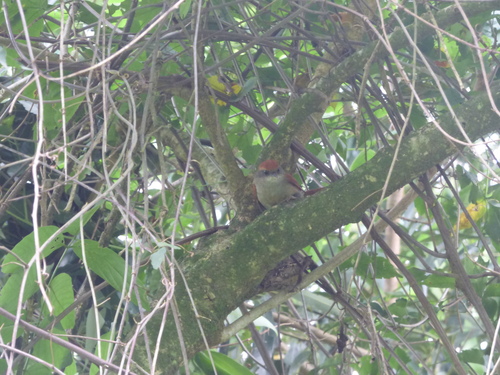
Grey-bellied Spinetail (Synallaxis cinerascens) Grey-bellied Spinetail
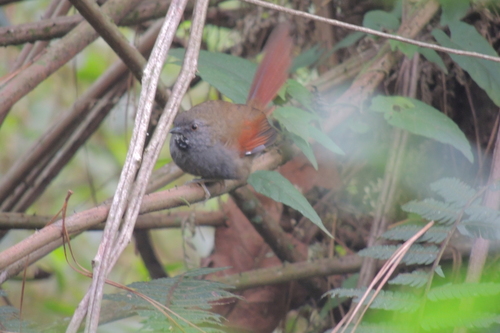
Rufous-capped Spinetail (Synallaxis ruficapilla) Rufous-capped Spinetail

Media

Loading…

In short

The Grey-bellied Spinetail and Rufous-capped Spinetail can be distinguished by their head markings and habitat preferences. The Grey-bellied Spinetail has a dull gray plumage with a small blackish throat mark, while the Rufous-capped Spinetail features a distinctive rufous cap. Both species are secretive, but the Rufous-capped is more often found in bamboo stands.

Identification tips

  1. Look for the rufous cap on the Rufous-capped Spinetail. 2. Note the dull gray plumage and blackish throat mark of the Grey-bellied Spinetail. 3. Consider habitat: Grey-bellied in Atlantic Forest undergrowth, Rufous-capped in bamboo and montane forests. 4. Listen for vocalizations, especially for the elusive Grey-bellied Spinetail.

Size

Both species are similar in size, typical of spinetails.

Plumage

The Grey-bellied Spinetail is generally dull gray with a blackish throat mark and whitish chin. In contrast, the Rufous-capped Spinetail has a notable rufous cap, which is a key distinguishing feature.

Behaviour

The Grey-bellied Spinetail is secretive and often detected by its vocalizations, while the Rufous-capped Spinetail is easier to see and identify compared to others in its genus.

Habitat

The Grey-bellied Spinetail is endemic to the Atlantic Forest, preferring the undergrowth of taller forests. The Rufous-capped Spinetail inhabits montane and tropical lowland evergreen forests and is often associated with bamboo.

Voice

Vocalizations are important for detecting the Grey-bellied Spinetail, but specific differences in calls between these species are not detailed.

Submit a better description

Use the same sections as the comparison. Your text is published immediately.

The Grey-bellied Spinetail and Rufous-capped Spinetail can be distinguished by their head markings and habitat preferences. The Grey-bellied Spinetail has a dull gray plumage with a small blackish throat mark, while the Rufous-capped Spinetail features a distinctive rufous cap. Both species are secretive, but the Rufous-capped is more often found in bamboo stands.

  1. Look for the rufous cap on the Rufous-capped Spinetail. 2. Note the dull gray plumage and blackish throat mark of the Grey-bellied Spinetail. 3. Consider habitat: Grey-bellied in Atlantic Forest undergrowth, Rufous-capped in bamboo and montane forests. 4. Listen for vocalizations, especially for the elusive Grey-bellied Spinetail.

Both species are similar in size, typical of spinetails.

The Grey-bellied Spinetail is generally dull gray with a blackish throat mark and whitish chin. In contrast, the Rufous-capped Spinetail has a notable rufous cap, which is a key distinguishing feature.

The Grey-bellied Spinetail is secretive and often detected by its vocalizations, while the Rufous-capped Spinetail is easier to see and identify compared to others in its genus.

The Grey-bellied Spinetail is endemic to the Atlantic Forest, preferring the undergrowth of taller forests. The Rufous-capped Spinetail inhabits montane and tropical lowland evergreen forests and is often associated with bamboo.

Vocalizations are important for detecting the Grey-bellied Spinetail, but specific differences in calls between these species are not detailed.

Discard your changes?

You have unsaved edits. If you leave now, those changes will be lost.

Grey-bellied Spinetail · Rufous-capped Spinetail · My Tricky Birds