
Grey-capped Pygmy Woodpecker vs Japanese Pygmy Woodpecker
Yungipicus canicapillus versus Yungipicus kizuki
Play a quiz with Grey-capped Pygmy Woodpecker and Japanese Pygmy Woodpecker
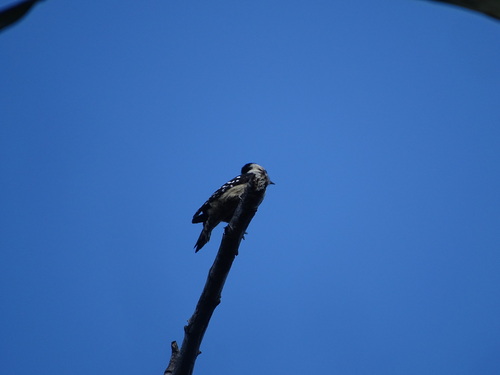
Grey-capped Pygmy Woodpecker
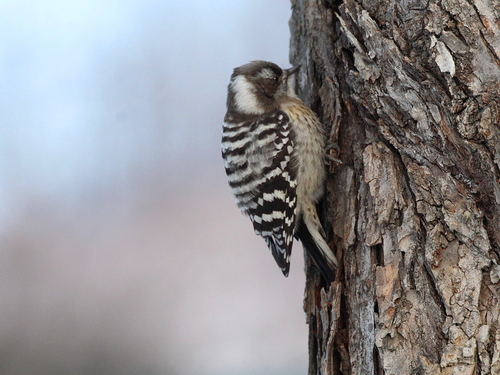
Japanese Pygmy Woodpecker
In short
The Grey-capped Pygmy Woodpecker and Japanese Pygmy Woodpecker are similar in appearance but can be distinguished by their head markings and vocalizations. The Grey-capped has a more distinct grey cap, while the Japanese Pygmy Woodpecker has a more uniform head pattern. Vocalizations also differ, with the Grey-capped having a softer call.
Identification tips
- Look for the grey cap on the Grey-capped Pygmy Woodpecker. 2. Note the more uniform head pattern of the Japanese Pygmy Woodpecker. 3. Listen for softer calls from the Grey-capped. 4. Consider habitat: subtropical for Grey-capped, temperate for Japanese. 5. Use vocalizations as a secondary check when visual cues are unclear.
Size
Both species are small woodpeckers with similar overall size, making size an unreliable distinguishing feature.
Plumage
The Grey-capped Pygmy Woodpecker has a distinct grey cap, while the Japanese Pygmy Woodpecker's head pattern is more uniform. Both have similar barred patterns on their wings and back.
Behaviour
Both species exhibit typical woodpecker behavior, such as climbing tree trunks and branches. Behavior is not a reliable distinguishing feature.
Habitat
Both species inhabit similar forested environments, but the Grey-capped is more often found in subtropical regions, while the Japanese Pygmy Woodpecker is more common in temperate forests.
Voice
The Grey-capped Pygmy Woodpecker has a softer call compared to the Japanese Pygmy Woodpecker. Listening for vocal differences can aid in identification.
Grey-capped Pygmy Woodpecker · Japanese Pygmy Woodpecker · My Tricky Birds