Birdr

Grey Catbird vs Brown Thrasher

Dumetella carolinensis versus Toxostoma rufum

Play a quiz with Grey Catbird and Brown Thrasher
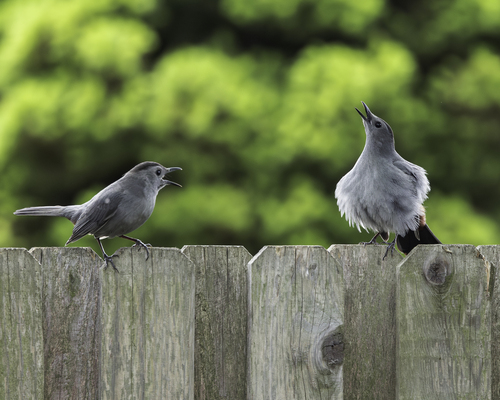
Grey Catbird (Dumetella carolinensis) Grey Catbird
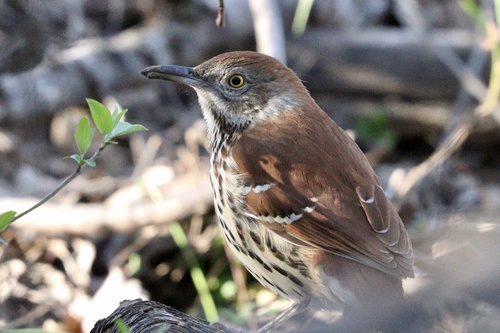
Brown Thrasher (Toxostoma rufum) Brown Thrasher

Media

Loading…

In short

The Grey Catbird and Brown Thrasher are both members of the Mimidae family, but they differ significantly in size and plumage. The Grey Catbird is smaller and uniformly gray with a distinctive black cap, while the Brown Thrasher is larger, with a rich reddish-brown upper body and heavily streaked underparts. Both species are known for their vocal abilities, but their songs and calls differ.

Identification tips

  1. Size and Shape: Look for the larger size and longer tail of the Brown Thrasher. 2. Plumage: Note the uniform gray of the Grey Catbird versus the streaked underparts and reddish-brown back of the Brown Thrasher. 3. Bill Shape: The Brown Thrasher has a longer, slightly curved bill compared to the shorter, straight bill of the Grey Catbird. 4. Vocalization: Listen for the cat-like mew of the Grey Catbird and the complex, repetitive song of the Brown Thrasher.

Size

The Brown Thrasher is noticeably larger than the Grey Catbird, with a longer tail and heavier build.

Plumage

The Grey Catbird is mostly gray with a black cap and a subtle rufous undertail. In contrast, the Brown Thrasher has a reddish-brown back, white underparts with bold black streaks, and a long, slightly curved bill.

Behaviour

Both species are often found in dense vegetation, but the Brown Thrasher is more likely to be seen foraging on the ground, using its long bill to sweep through leaf litter. The Grey Catbird tends to be more arboreal, often seen hopping through shrubs.

Habitat

Both birds prefer dense, shrubby areas, but the Brown Thrasher is more commonly found in open woodlands and forest edges, while the Grey Catbird is often found in thickets and suburban gardens.

Voice

The Grey Catbird is known for its cat-like mewing call and varied song, which includes imitations of other birds. The Brown Thrasher has a more complex and varied song, often repeating phrases twice, and is less likely to mimic other species.

Submit a better description

Use the same sections as the comparison. Your text is published immediately.

The Grey Catbird and Brown Thrasher are both members of the Mimidae family, but they differ significantly in size and plumage. The Grey Catbird is smaller and uniformly gray with a distinctive black cap, while the Brown Thrasher is larger, with a rich reddish-brown upper body and heavily streaked underparts. Both species are known for their vocal abilities, but their songs and calls differ.

  1. Size and Shape: Look for the larger size and longer tail of the Brown Thrasher. 2. Plumage: Note the uniform gray of the Grey Catbird versus the streaked underparts and reddish-brown back of the Brown Thrasher. 3. Bill Shape: The Brown Thrasher has a longer, slightly curved bill compared to the shorter, straight bill of the Grey Catbird. 4. Vocalization: Listen for the cat-like mew of the Grey Catbird and the complex, repetitive song of the Brown Thrasher.

The Brown Thrasher is noticeably larger than the Grey Catbird, with a longer tail and heavier build.

The Grey Catbird is mostly gray with a black cap and a subtle rufous undertail. In contrast, the Brown Thrasher has a reddish-brown back, white underparts with bold black streaks, and a long, slightly curved bill.

Both species are often found in dense vegetation, but the Brown Thrasher is more likely to be seen foraging on the ground, using its long bill to sweep through leaf litter. The Grey Catbird tends to be more arboreal, often seen hopping through shrubs.

Both birds prefer dense, shrubby areas, but the Brown Thrasher is more commonly found in open woodlands and forest edges, while the Grey Catbird is often found in thickets and suburban gardens.

The Grey Catbird is known for its cat-like mewing call and varied song, which includes imitations of other birds. The Brown Thrasher has a more complex and varied song, often repeating phrases twice, and is less likely to mimic other species.

Discard your changes?

You have unsaved edits. If you leave now, those changes will be lost.

Grey Catbird · Brown Thrasher · My Tricky Birds