Birdr

Grey-cheeked Thrush vs Hermit Thrush

Catharus minimus versus Catharus guttatus

Play a quiz with Grey-cheeked Thrush and Hermit Thrush
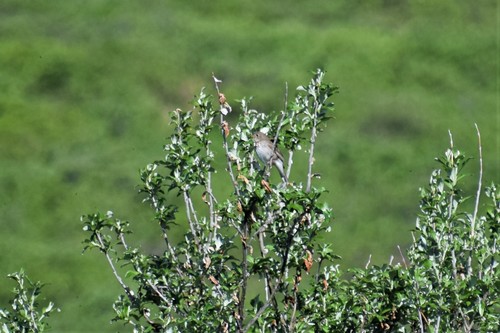
Grey-cheeked Thrush (Catharus minimus) Grey-cheeked Thrush
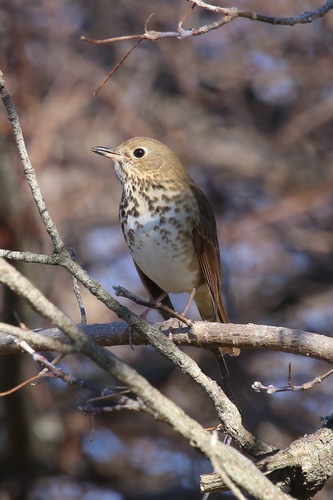
Hermit Thrush (Catharus guttatus) Hermit Thrush

Media

Loading…

In short

The Grey-cheeked Thrush and Hermit Thrush can be distinguished by their tail color and habitat preferences. The Hermit Thrush has a distinct reddish tail, while the Grey-cheeked Thrush lacks this feature. Both species have spotted breasts, but their habitats during breeding and migration differ significantly.

Identification tips

  1. Look for the reddish tail of the Hermit Thrush. 2. Observe the habitat: Grey-cheeked prefers dense undergrowth in coniferous areas. 3. Listen for the Hermit Thrush's musical song. 4. Note any wing flicking or tail raising behavior, indicative of the Hermit Thrush.

Size

Both species are similar in size, typical of small thrushes, making size an unreliable distinguishing feature.

Plumage

The Hermit Thrush is notable for its reddish tail, contrasting with the Grey-cheeked Thrush's uniformly brown tail. Both have spotted breasts, but the Hermit Thrush's spots are often more pronounced.

Behaviour

The Hermit Thrush often flicks its wings and raises its tail when perched, a behavior less commonly observed in the Grey-cheeked Thrush.

Habitat

The Grey-cheeked Thrush prefers brushy willow-alder thickets and conifer forests with dense undergrowth, while the Hermit Thrush is more adaptable, found in a variety of forested habitats and often at lower elevations during migration.

Voice

The Hermit Thrush is celebrated for its ethereal song, which is more musical and complex compared to the Grey-cheeked Thrush's simpler calls.

Submit a better description

Use the same sections as the comparison. Your text is published immediately.

The Grey-cheeked Thrush and Hermit Thrush can be distinguished by their tail color and habitat preferences. The Hermit Thrush has a distinct reddish tail, while the Grey-cheeked Thrush lacks this feature. Both species have spotted breasts, but their habitats during breeding and migration differ significantly.

  1. Look for the reddish tail of the Hermit Thrush. 2. Observe the habitat: Grey-cheeked prefers dense undergrowth in coniferous areas. 3. Listen for the Hermit Thrush's musical song. 4. Note any wing flicking or tail raising behavior, indicative of the Hermit Thrush.

Both species are similar in size, typical of small thrushes, making size an unreliable distinguishing feature.

The Hermit Thrush is notable for its reddish tail, contrasting with the Grey-cheeked Thrush's uniformly brown tail. Both have spotted breasts, but the Hermit Thrush's spots are often more pronounced.

The Hermit Thrush often flicks its wings and raises its tail when perched, a behavior less commonly observed in the Grey-cheeked Thrush.

The Grey-cheeked Thrush prefers brushy willow-alder thickets and conifer forests with dense undergrowth, while the Hermit Thrush is more adaptable, found in a variety of forested habitats and often at lower elevations during migration.

The Hermit Thrush is celebrated for its ethereal song, which is more musical and complex compared to the Grey-cheeked Thrush's simpler calls.

Discard your changes?

You have unsaved edits. If you leave now, those changes will be lost.

Grey-cheeked Thrush · Hermit Thrush · My Tricky Birds