Birdr

Grey-faced Buzzard vs Eastern Marsh Harrier

Butastur indicus versus Circus spilonotus

Play a quiz with Grey-faced Buzzard and Eastern Marsh Harrier
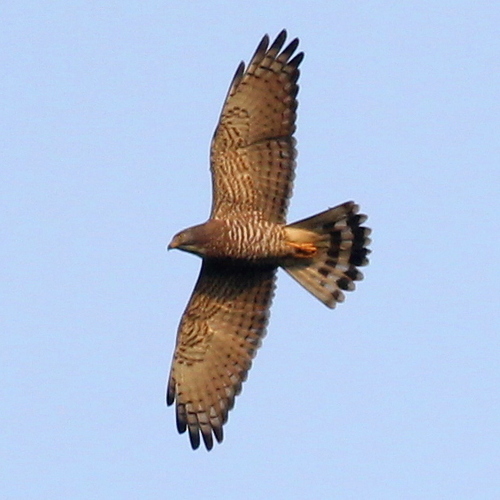
Grey-faced Buzzard (Butastur indicus) Grey-faced Buzzard
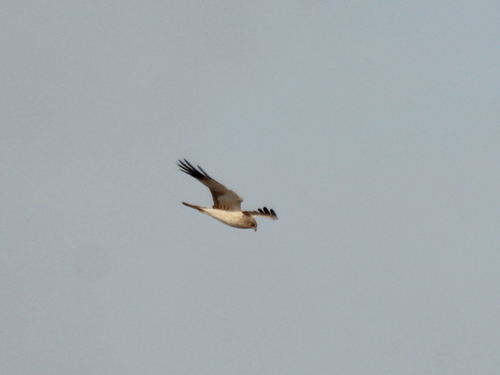
Eastern Marsh Harrier (Circus spilonotus) Eastern Marsh Harrier

Media

Loading…

In short

The Grey-faced Buzzard and the Eastern Marsh Harrier can be distinguished by their structure and plumage. The Grey-faced Buzzard has a more compact build with a shorter tail and broader wings, while the Eastern Marsh Harrier is larger with a longer tail and narrower wings. Plumage differences are also notable, especially in the face and underparts.

Identification tips

  1. Look for the grey face and barred underparts of the Grey-faced Buzzard. 2. Note the longer tail and pale head of male Eastern Marsh Harriers. 3. Observe flight style: soaring for buzzards, low gliding for harriers. 4. Consider habitat: woodlands for buzzards, wetlands for harriers.

Size

The Eastern Marsh Harrier is generally larger with a longer tail and wingspan compared to the more compact Grey-faced Buzzard.

Plumage

The Grey-faced Buzzard has a distinctive grey face and a barred pattern on the underparts, while the Eastern Marsh Harrier often shows a more uniform brown coloration with a pale head in males. Females and juveniles of the harrier are darker and more streaked.

Behaviour

Grey-faced Buzzards often soar with wings held flat and are seen perching on trees or poles. Eastern Marsh Harriers tend to fly low over marshes with a buoyant, gliding flight pattern.

Habitat

Grey-faced Buzzards are typically found in open woodlands and forest edges, whereas Eastern Marsh Harriers prefer marshes, reed beds, and open wetlands.

Voice

Vocalizations are not a primary distinguishing feature in the field, but Grey-faced Buzzards have a clear, whistling call, while Eastern Marsh Harriers are generally quieter.

Submit a better description

Use the same sections as the comparison. Your text is published immediately.

The Grey-faced Buzzard and the Eastern Marsh Harrier can be distinguished by their structure and plumage. The Grey-faced Buzzard has a more compact build with a shorter tail and broader wings, while the Eastern Marsh Harrier is larger with a longer tail and narrower wings. Plumage differences are also notable, especially in the face and underparts.

  1. Look for the grey face and barred underparts of the Grey-faced Buzzard. 2. Note the longer tail and pale head of male Eastern Marsh Harriers. 3. Observe flight style: soaring for buzzards, low gliding for harriers. 4. Consider habitat: woodlands for buzzards, wetlands for harriers.

The Eastern Marsh Harrier is generally larger with a longer tail and wingspan compared to the more compact Grey-faced Buzzard.

The Grey-faced Buzzard has a distinctive grey face and a barred pattern on the underparts, while the Eastern Marsh Harrier often shows a more uniform brown coloration with a pale head in males. Females and juveniles of the harrier are darker and more streaked.

Grey-faced Buzzards often soar with wings held flat and are seen perching on trees or poles. Eastern Marsh Harriers tend to fly low over marshes with a buoyant, gliding flight pattern.

Grey-faced Buzzards are typically found in open woodlands and forest edges, whereas Eastern Marsh Harriers prefer marshes, reed beds, and open wetlands.

Vocalizations are not a primary distinguishing feature in the field, but Grey-faced Buzzards have a clear, whistling call, while Eastern Marsh Harriers are generally quieter.

Discard your changes?

You have unsaved edits. If you leave now, those changes will be lost.

Grey-faced Buzzard · Eastern Marsh Harrier · My Tricky Birds