Birdr

Grey Flycatcher vs Chestnut-backed Chickadee

Empidonax wrightii versus Poecile rufescens

Play a quiz with Grey Flycatcher and Chestnut-backed Chickadee
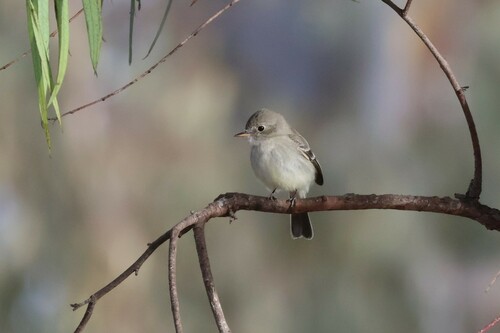
Grey Flycatcher (Empidonax wrightii) Grey Flycatcher
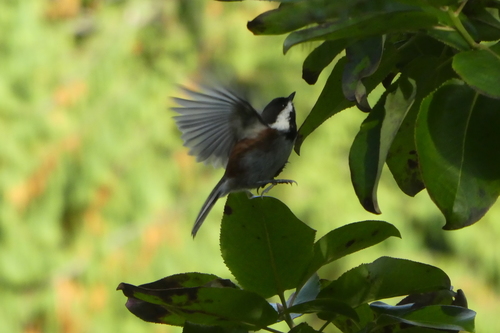
Chestnut-backed Chickadee (Poecile rufescens) Chestnut-backed Chickadee

Media

Loading…

In short

The Grey Flycatcher is best identified by its distinctive tail-wagging behavior, a gentle downward movement unlike other flycatchers. In contrast, the Chestnut-backed Chickadee is notable for its chestnut-colored back and sides, a feature absent in the flycatcher.

Identification tips

Size

The Grey Flycatcher is slightly larger and more slender than the compact Chestnut-backed Chickadee.

Plumage

The Grey Flycatcher has a more uniform greyish-brown plumage with subtle wing bars, while the Chestnut-backed Chickadee features a striking chestnut back and sides with a black cap and white cheeks.

Behaviour

The Grey Flycatcher often wags its tail downward and forages by sallying for insects. The Chestnut-backed Chickadee forages in mixed-species flocks, often in coniferous trees, and is more social.

Habitat

The Grey Flycatcher prefers arid, open woodlands and sagebrush areas, while the Chestnut-backed Chickadee is found in humid coastal forests and coniferous regions of the Pacific Northwest.

Voice

The Grey Flycatcher's song and calls are more subdued and less varied than the Chestnut-backed Chickadee's complex 'chick-a-dee' calls.

Submit a better description

Use the same sections as the comparison. Your text is published immediately.

The Grey Flycatcher is best identified by its distinctive tail-wagging behavior, a gentle downward movement unlike other flycatchers. In contrast, the Chestnut-backed Chickadee is notable for its chestnut-colored back and sides, a feature absent in the flycatcher.

  • Tail-wagging: Look for the Grey Flycatcher's distinctive downward tail wag.
  • Plumage: Note the chestnut back of the chickadee, absent in the flycatcher.
  • Habitat: Consider the habitat; arid for the flycatcher, humid forests for the chickadee.
  • Size and Shape: The flycatcher is more slender, while the chickadee is compact.
  • Vocalization: Listen for the chickadee's varied calls compared to the flycatcher's simpler sounds.

The Grey Flycatcher is slightly larger and more slender than the compact Chestnut-backed Chickadee.

The Grey Flycatcher has a more uniform greyish-brown plumage with subtle wing bars, while the Chestnut-backed Chickadee features a striking chestnut back and sides with a black cap and white cheeks.

The Grey Flycatcher often wags its tail downward and forages by sallying for insects. The Chestnut-backed Chickadee forages in mixed-species flocks, often in coniferous trees, and is more social.

The Grey Flycatcher prefers arid, open woodlands and sagebrush areas, while the Chestnut-backed Chickadee is found in humid coastal forests and coniferous regions of the Pacific Northwest.

The Grey Flycatcher's song and calls are more subdued and less varied than the Chestnut-backed Chickadee's complex 'chick-a-dee' calls.

Discard your changes?

You have unsaved edits. If you leave now, those changes will be lost.

Grey Flycatcher · Chestnut-backed Chickadee · My Tricky Birds